
If your basement windows are foggy, drafty, painted shut, or too small to climb out of, you are not alone — and the fix is more important than most homeowners realize. The right basement window does three jobs at once: it keeps Ontario's cold and moisture out, it brings natural light into a space that usually has too little, and in any room used for sleeping, it can be the difference between a legal bedroom and an unsafe one.
This guide walks you through every type of basement window, the materials and glass that perform best in Ontario's climate, the building-code rules that govern basement bedrooms, and what is actually involved if you need to enlarge an opening to create a legal apartment. For broader context, see our All About Windows overview.
Why Basement Windows Are Different From the Rest of Your House
Basement windows sit partly or fully below grade, which exposes them to challenges the windows on your main floor never face. Soil holds moisture against the foundation. Snow melt and spring runoff collect at ground level, exactly where a basement window sits. And because basements are naturally cooler and more humid, condensation and frost form far more easily on a poorly built basement window during an Ontario winter.
That is why a basement window is not simply a smaller version of an upstairs window. It needs to manage water at grade, resist condensation, seal tightly against drafts, and — depending on the room — meet specific size requirements for emergency escape.
Types of Basement Windows
Hopper Windows
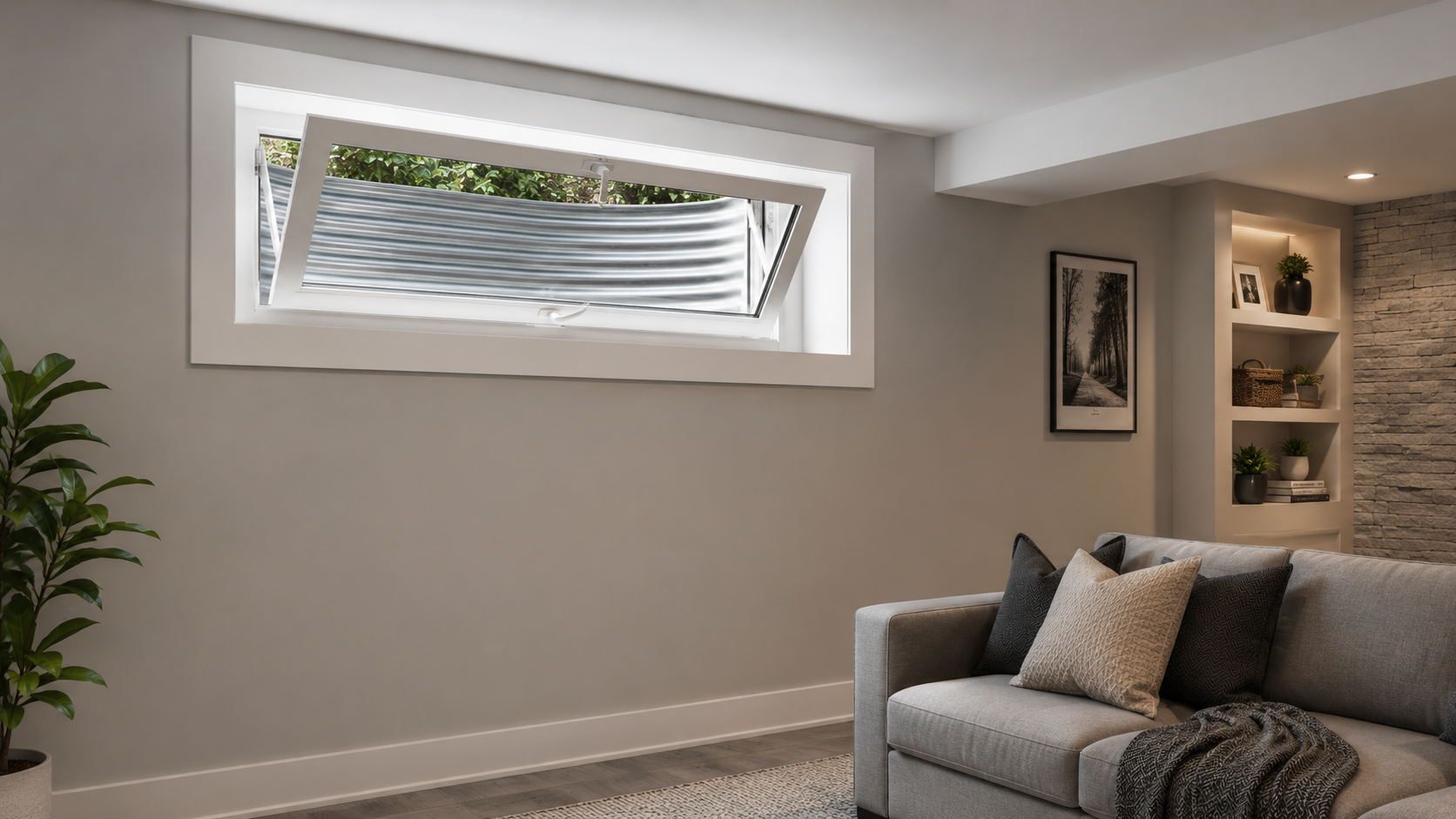
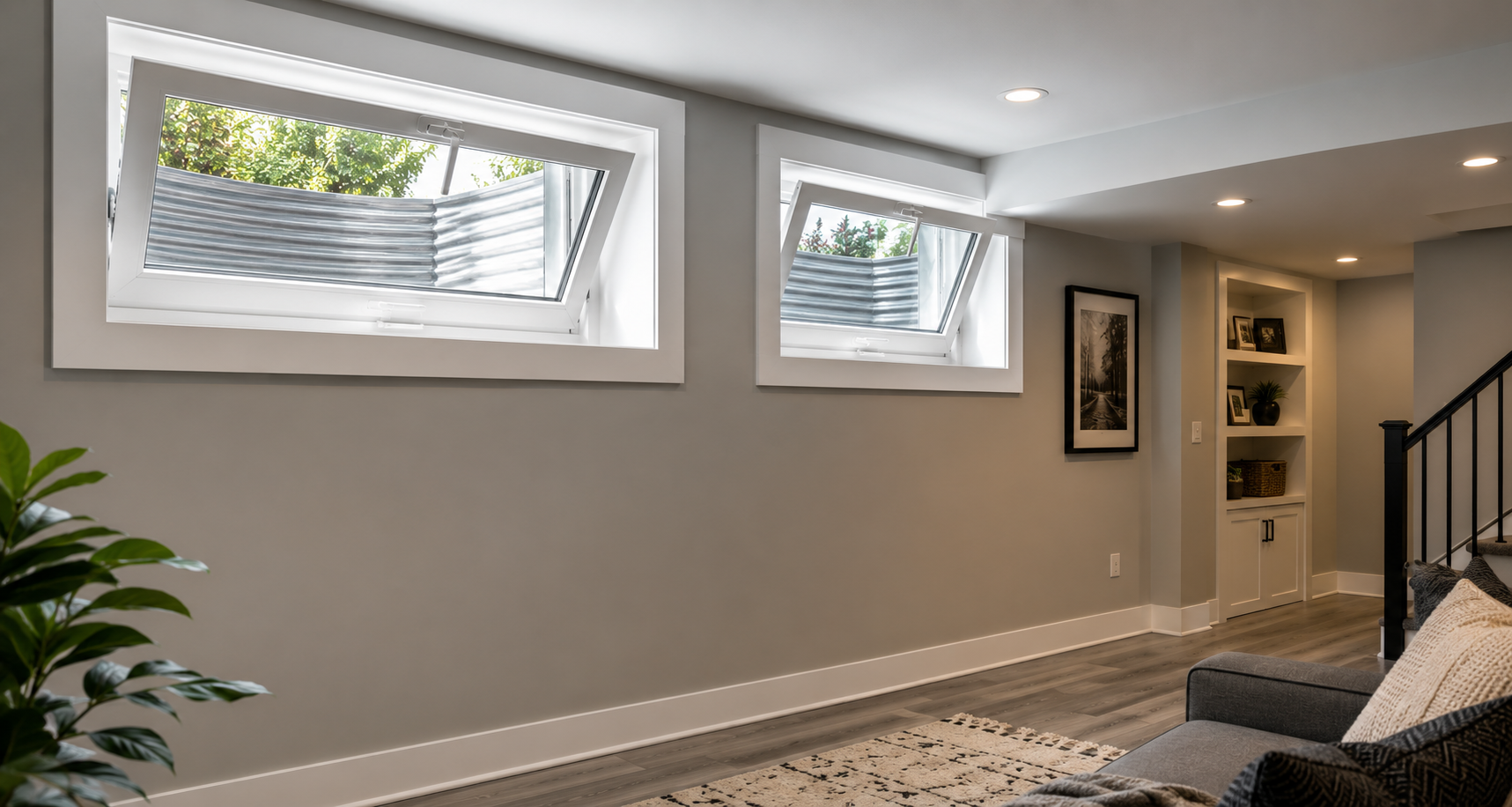
Hopper windows are one of the most practical and popular choices for Ontario basements, and they work very differently from a slider. A hopper window is hinged at the bottom and opens inward from the top, tilting down into the room. Because the entire sash swings open, the full opening is usable.
This matters for two reasons. First, a hopper window has a thinner frame and uses the whole opening, so more of the rough opening becomes clear, usable space. Second, and more importantly, in an emergency the entire window opens — unlike a single-slider basement window, where only one half of the window slides open at a time. With a slider, you lose roughly half the opening to the fixed pane. With a hopper, the whole window clears, which makes escape easier and can make a meaningful difference in meeting egress requirements in a tight opening.
Hopper windows also tend to seal very well against drafts because the sash closes tight against the frame, and their inward-tilting design keeps rain and snow from blowing straight in when they are cracked open for ventilation.
Slider Windows
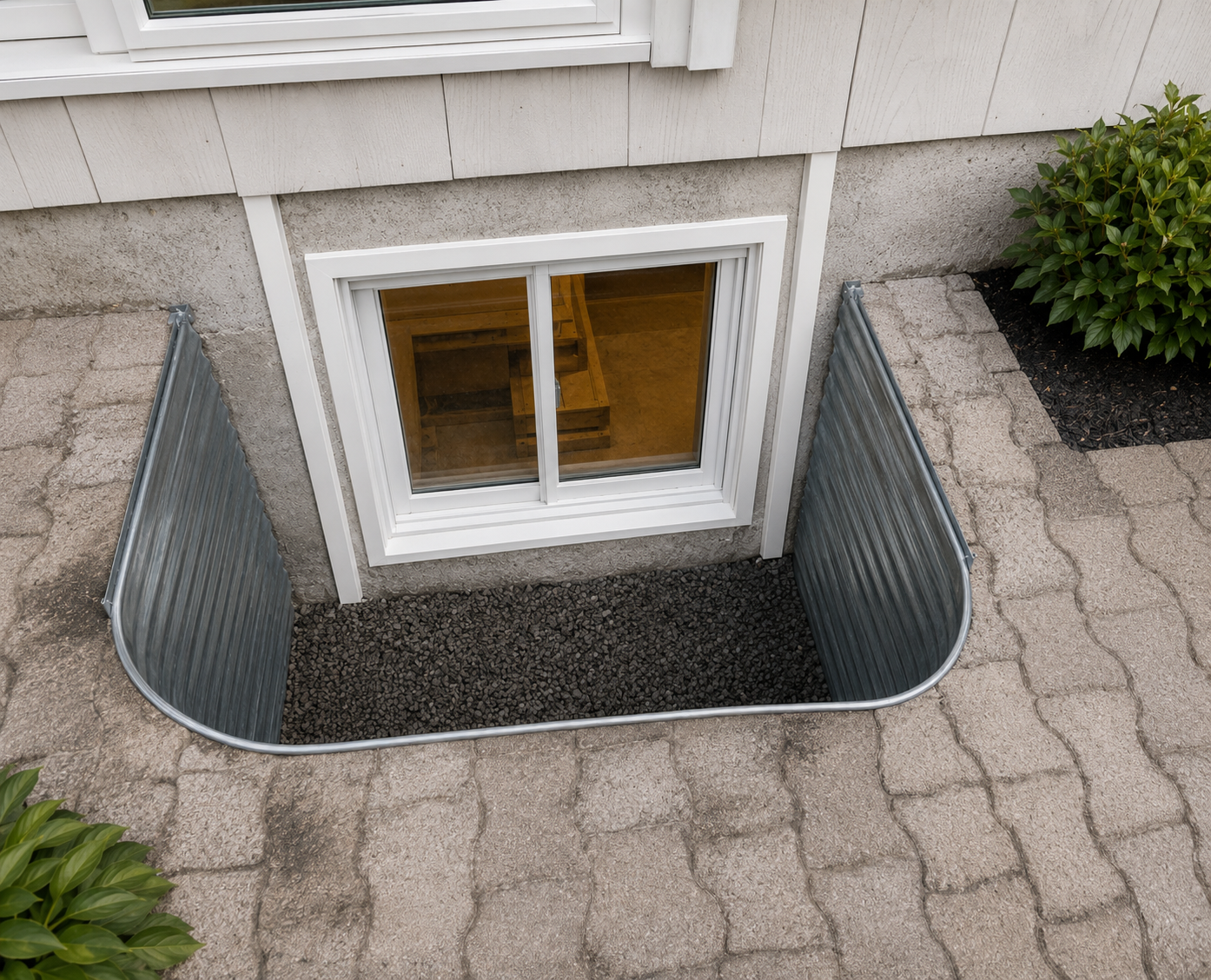
Horizontal slider windows are a common basement choice where the opening is wider than it is tall. One sash slides past the other on a track. Sliders are simple, durable, and easy to operate, but it is important to understand their limitation for escape: because only one side opens, the usable clear opening is about half the total window width. In an opening that is already small, that can be the difference between meeting egress code and falling short — which is exactly why many homeowners creating a basement bedroom choose a hopper or a properly sized casement instead.
Casement-Style and Egress Windows
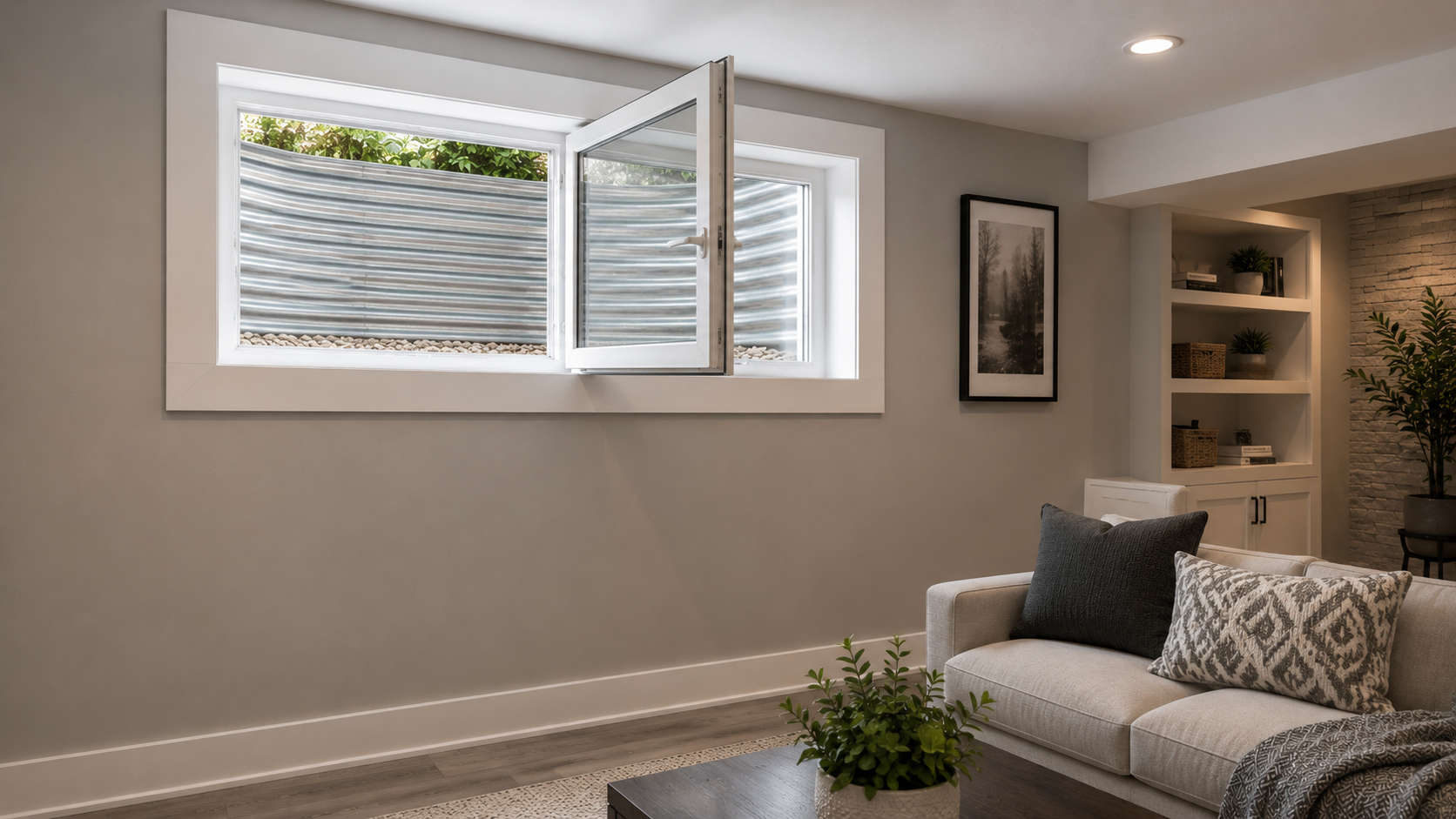
When a basement room will be used as a bedroom, the window often needs to be a true egress window — a window large enough for a person to escape through and for a firefighter in full gear to enter. Casement-style egress windows, which crank open fully to the side, are frequently used here because they provide a large, unobstructed clear opening relative to their size. Learn more on our Egress Windows page.
Basement Bedrooms and Ontario's Egress Requirements
This is the single most important thing to understand if you plan to use a basement room for sleeping or rent it out as an apartment: a bedroom without a proper egress window is not a legal bedroom in Ontario.
The Ontario Building Code requires bedrooms to have a window that provides a minimum unobstructed clear opening for emergency escape and rescue, and below-grade egress windows must be paired with a window well that allows a person to climb out. The exact dimensions, sill-height limits, and window-well clearances are governed by the Building Code and can be interpreted slightly differently by each municipality's building department — which is why this is not a DIY guessing game. An undersized window can mean a basement apartment that cannot be legally rented, problems with insurance, and complications when you sell.
If your existing basement window is too small — which is the case in most older homes across Southern Ontario, from Hamilton and Burlington to Oshawa, Barrie, and beyond — the opening usually has to be enlarged to meet code.
Enlarging a Basement Window for a Legal Apartment
Turning a small, original basement window into a code-compliant egress opening is a structural project, not a simple swap. It involves cutting the foundation wall, installing a correctly sized window, building a proper window well, and securing the right municipal permit. Done wrong, it can cause water infiltration or structural problems. Done right, it transforms a dark, unusable basement into a safe, legal, valuable living space.
If you are looking to enlarge a basement window for a legal-size apartment, Trust Build Windows and Doors will assist you with the proper work from start to finish. Specifically, Trust Build will:
- Enlarge the window opening — cutting the existing foundation wall to the correct egress dimensions with the right structural support, so the new opening is both code-compliant and sound.
- Build a proper window well — sized and positioned to give the required escape clearance, with correct drainage and grading so water is directed away from the foundation rather than collecting against it.
- Explain the process step by step — walking you through exactly how the job is supposed to be done, what to expect at each stage, and why each step matters, so there are no surprises.
- Assist you with the city permit — handling the permit side of the project so the work is properly approved and inspected by your municipality.
Because Trust Build's own crews handle the masonry cut, the window installation, the window well, and the permit coordination, the entire egress conversion is managed by one team — instead of juggling separate contractors for each piece.
Materials and Glass: What Performs Best in Ontario Basements
Frame Materials
Insulated vinyl frames are the most common and practical choice for Ontario basements. They resist moisture, never rot, require no painting, and provide good thermal performance at grade — all important qualities in a damp, below-grade environment. The key is a quality frame with proper internal chambers and weatherstripping, not the thin builder-grade units found in many older homes.
Glass Options
For basements, as with the rest of your home, the choice usually comes down to double-pane versus triple-pane glass:
- Double-pane glass with a Low-E coating and argon gas fill is a solid, cost-effective choice for many basement applications, especially sheltered exposures.
- Triple-pane glass adds a third layer and a second insulating chamber, which meaningfully reduces heat loss and condensation — a real advantage in a cold, humid basement during an Ontario winter, and worth strong consideration for below-grade windows that are prone to frost.
Because the right answer depends on your specific basement, exposure, and budget, this is one of those decisions that is much easier to make when you can see and feel the difference in person rather than guessing from a website. See our full double vs triple-pane comparison for a side-by-side breakdown — or have Trust Build's product specialist bring physical glass samples directly to your home so you can compare them in your own space before deciding.
Common Basement Window Problems (and What They Mean)
- Condensation or frost on the inside of the glass usually points to single-pane or failed-seal glass and poor thermal performance — common in original basement windows.
- Drafts typically mean worn weatherstripping or a frame that no longer seals, often in old metal or wood-framed units.
- Water pooling at the window is frequently a window-well drainage or grading problem, not the window itself — which is why a proper well matters as much as the window.
- Rot or rust around the frame indicates long-term water exposure and is a strong sign the unit should be fully replaced rather than patched.
- A window painted or rusted shut is not just an inconvenience — in a bedroom, it is a serious safety problem, because a window that will not open cannot serve as an escape route.
Energy Efficiency and Comfort
Basement windows have an outsized effect on comfort because cold, heavy air settles at the lowest point in your home. Drafty, single-pane basement windows let that cold in and pull heat out, making the whole lower level uncomfortable and driving up heating costs through Ontario's long winters. Upgrading to a well-sealed, Energy Star–certified basement window with Low-E, argon-filled double or triple-pane glass reduces heat loss, limits condensation, and helps keep the basement usable year-round.
How to Choose the Right Basement Window
Start with the room's purpose. If it is a storage or utility area, your priorities are efficiency, security, and keeping water out — a quality hopper or slider is usually ideal. If the room is or will become a bedroom or apartment, egress compliance comes first, and the window type and size must be chosen to meet code, which often means enlarging the opening and adding a proper well.
From there, consider exposure (how much weather and water the window faces), glass performance (double versus triple-pane), and how the window will actually be used day to day. Seeing the options in person — frame styles, glass samples, and how a hopper opens compared to a slider — makes this decision far clearer, which is exactly what an in-home consultation is for.