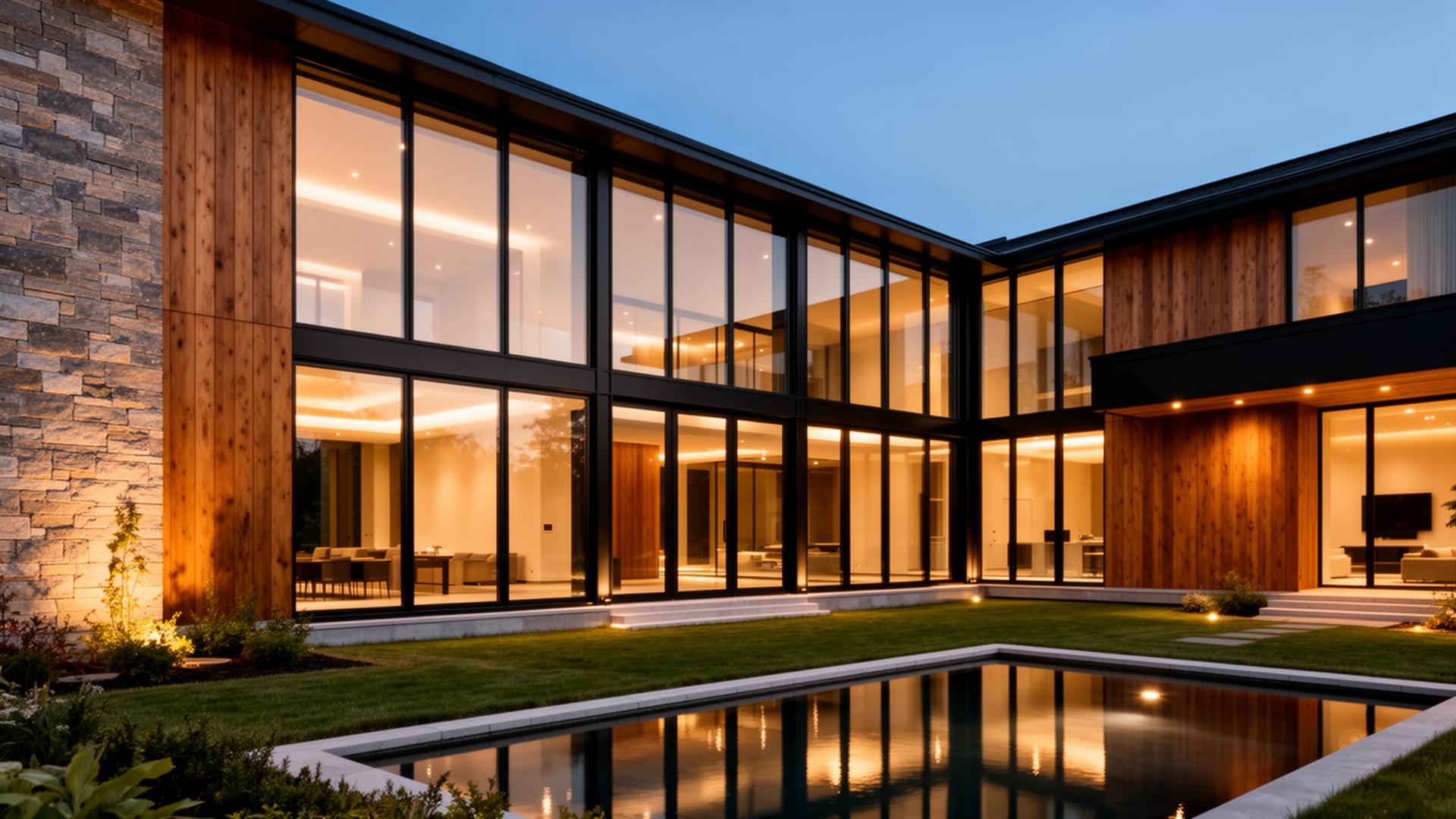
Aluminum windows use a fundamentally different structural approach than vinyl or wood: the frame material itself is strong enough to hold large sheets of glass with a much thinner sightline, which is why they show up most often in additions, sunrooms, and homes with a more contemporary architectural style where the goal is maximizing glass area rather than concealing the frame.
The strength-to-weight ratio is the main advantage. A vinyl or wood frame needs more material to span a large opening without flexing, which means a thicker visible frame. Aluminum can span the same opening with a slimmer profile, so a picture window or a wall of glass reads as more glass and less frame. It also doesn't warp, crack, or rot the way wood can, and it holds paint and factory finishes well over time.
Slimmer Sightlines
Aluminum spans the same opening with less frame material, so a picture window reads as more glass and less frame.
Strength-to-Weight Ratio
The frame itself carries large sheets of glass without flexing, which vinyl and wood need more bulk to achieve.
Dimensionally Stable
Aluminum does not warp, crack, or rot the way wood can, and it holds paint and factory finishes well over time.
Thermally Broken Frames
A non-conductive strip inside the frame interrupts the heat path between the outdoor and indoor aluminum.
Thermal Performance
The honest tradeoff: thermal performance
Raw aluminum conducts heat and cold efficiently — that's true, and any aluminum window sold without addressing it isn't being straight with you. The way modern aluminum windows handle this is a thermal break: a strip of non-conductive material built into the frame that interrupts the direct path between the outdoor-facing and indoor-facing aluminum. Without a thermal break, aluminum performs poorly in an Ontario winter. With one, paired with an Energy Star-rated glass package, it's a legitimate option for our climate — but it's worth asking directly whether a given aluminum window includes a thermal break, because not all of them do.
Best Fit
Where aluminum makes the most sense
Large fixed picture windows, sunroom walls, and additions with a modern or contemporary design tend to be the best fit — anywhere the priority is glass area and a clean, minimal sightline over the coziness of a heavier wood or vinyl frame. It's less commonly the right choice for a typical operable bedroom or living room window replacement, where vinyl usually offers a better balance of cost and thermal performance for most Ontario homes.
What's Included
What's included
Trust Build's aluminum window installations use Energy Star-certified glass packages suited to Ontario winters, come with expert certified installation, and are backed by the same lifetime transferable warranty and 0% interest financing available across our window lineup.
Energy Star-certified glass packages suited to Ontario winters
Expert certified installation
Lifetime transferable warranty
0% interest financing available across our window lineup
Installation Methods
How Trust Build installs your windows
Installation quality is as important as glass performance, Energy Rating (ER), U-Value and SHGC. A premium window installed poorly will underperform a mid-tier window installed correctly. Trust Build is an installation-first company focused on proper building-envelope integration — here are the four methods we use and when each one is the right choice.
Brick-to-Brick Installation
Trust Build Premium Method
Trust Build's most common premium installation. The existing window is removed to the brick opening and the old frame is taken out. The opening and existing insulation are inspected, additional insulation is added where required, the new window is set into the original brick opening, the exterior perimeter is sealed and protected, and new aluminum capping is installed. Interior finishes are preserved where possible — this is not the same as a North American full-tear-out 'full-frame replacement'.
✓Larger glass area than retrofit installation
✓Better air sealing and perimeter insulation
✓Allows inspection of the opening condition
✓Maintains the original window size
✓Preserves interior finishes where possible
Best for: Homeowners who want maximum performance and proper envelope sealing without major interior reconstruction.
The most extensive installation method. The window and surrounding construction materials are removed and the opening is exposed to the structural framing. Damaged materials can be repaired or replaced, openings can be modified or resized, and new insulation and waterproofing are installed before the new window or door is set into the rebuilt opening.
✓Allows structural repairs
✓Allows resizing of openings
✓Allows window-to-door conversions
✓Provides complete access to the building envelope
✓Ideal for egress and major renovation projects
Best for: Enlarging windows, window-to-door conversions, structural repairs, egress window projects and major remodeling projects.
The existing frame remains in place and the new window is installed within it. Interior and exterior finishes stay largely untouched — a faster, lower-cost option when the existing frame is in excellent structural condition. There is a slight reduction in glass area, and full inspection of the rough opening isn't possible.
✓Faster installation
✓Lower installation cost
✓Minimal disruption
✓Preserves existing interior and exterior finishes
Best for: Homes where the existing frame is structurally sound and free of water damage.
A specialized method commonly used with vinyl windows. The exterior portion of the existing frame is removed while the interior frame components remain intact — existing interior casing and trim are preserved, and the new window is integrated into the existing interior frame structure. Provides more glass area than most retrofits and allows exterior weatherproofing upgrades.
✓Preserves interior finishes and existing trim
✓Minimizes drywall and repainting work
✓More glass area than most retrofits
✓Allows exterior waterproofing and capping upgrades
Best for: Homes with premium interior wood trim, recently renovated interiors, and vinyl window replacement projects where preserving interior finishes matters.
Not every home qualifies for retrofit or split-frame
Before recommending an installation method, Trust Build evaluates existing frame condition, moisture exposure, structural integrity, air leakage and the overall condition of the opening. The right method is determined after on-site inspection to ensure long-term performance and durability — not chosen on price alone.
Installation quality is equally important as glass performance, Energy Rating (ER), U-Value and SHGC values.
FAQ
Aluminum Windows — Frequently Asked Questions
Only with a thermal break in the frame and an appropriate Energy Star-rated glass package — without both, aluminum underperforms vinyl in our climate.
Generally yes, largely due to the more complex frame engineering required for good thermal performance, but the cost is usually justified by the design goals (larger glass area, slimmer sightlines) rather than being a straight upgrade over vinyl.
Yes — aluminum takes factory finishes and powder coating well and holds colour longer than many other frame materials, with less risk of peeling or fading compared to some painted wood finishes.
Explore More
Keep exploring what Trust Build can do for your home
Tell us about the openings you're glazing and we'll confirm whether an aluminum system with a thermal break is the right fit, along with the glass package suited to your exposure.
Thermally broken frame options
Energy Star-certified glass packages
Expert certified installation
Lifetime transferable warranty
Get Your Free, No-Obligation Quote
Tell us a little about your project and we'll get back to you. Takes under a minute — no pressure, no pushy calls.