By Trust Build Windows and Doors ·
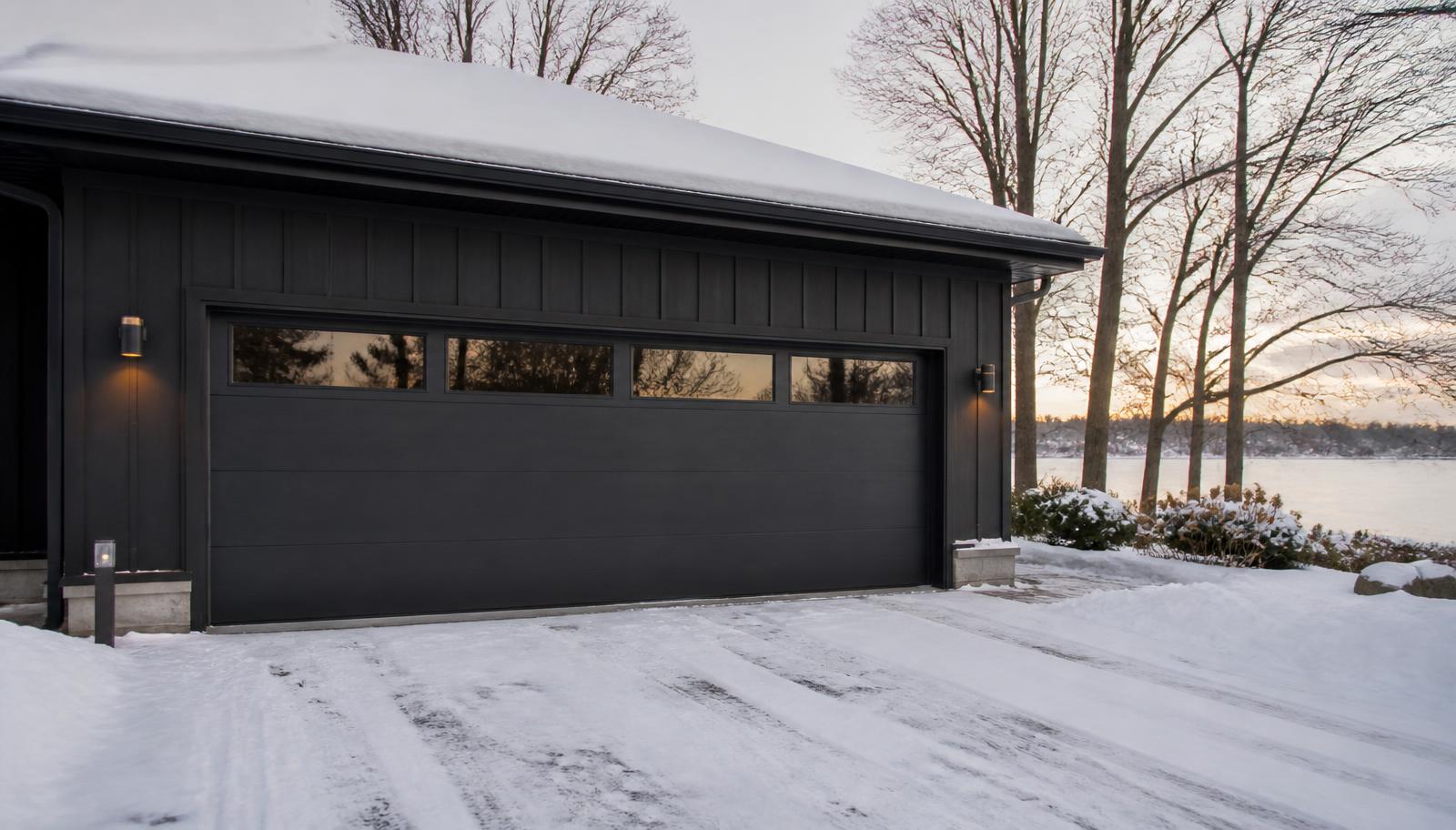
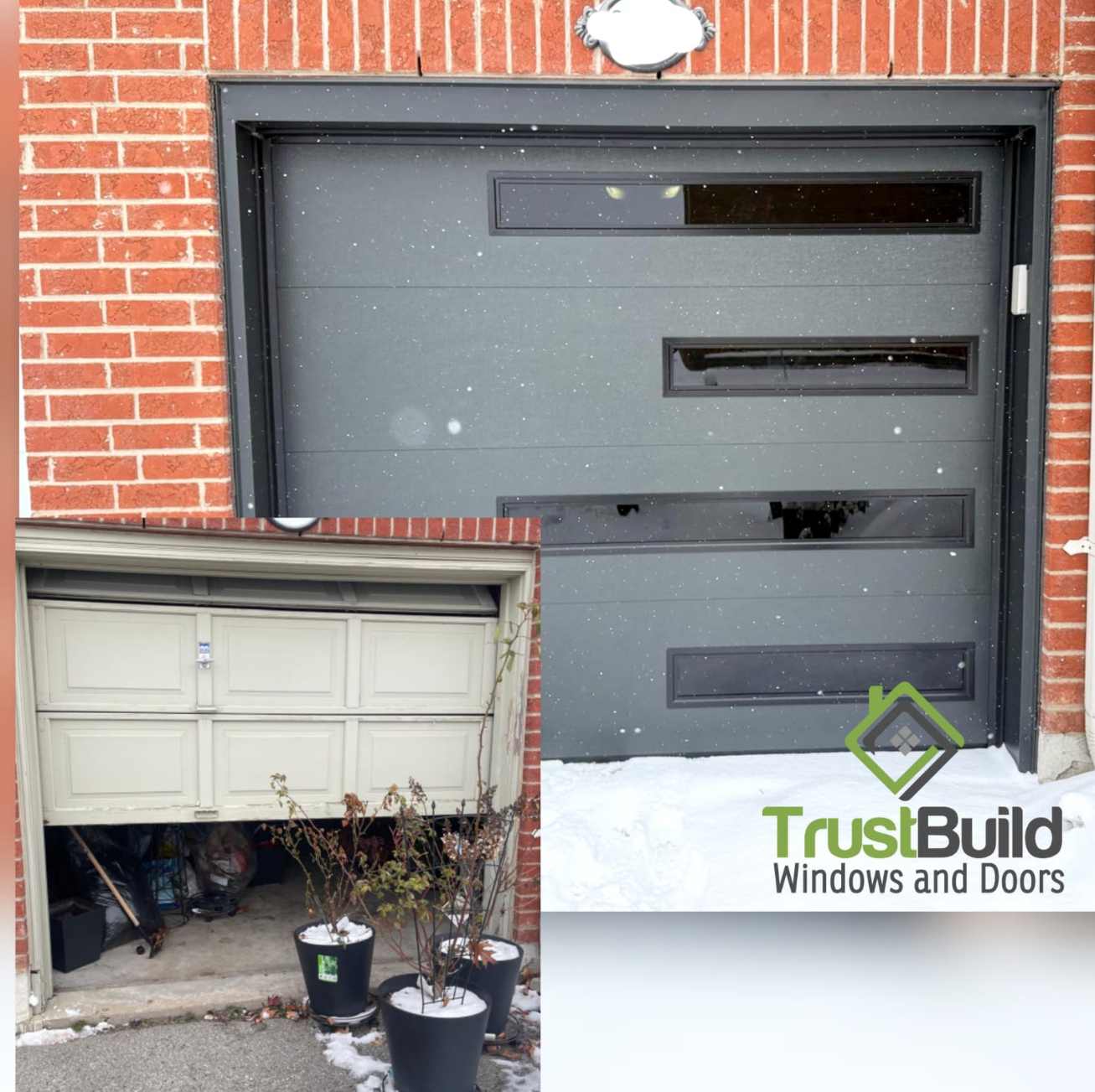
A finished garage door installation — the spring, cables and opener get replaced as one system along with the panel, not patched around.
A two-car garage door is heavy — a single-layer steel slab is no lightweight, and a triple-layer insulated model with windows is heavier still. Lift one by hand with the opener disconnected and it should rise with barely any effort, almost floating under your palm. That's not the opener doing the work. The opener hasn't even engaged yet. That's a torsion spring, wound tight on a steel shaft above the door, doing almost all of the lifting before the motor contributes anything at all.
Most homeowners never think about the spring until it isn't there anymore — a loud bang from the garage, the door refusing to budge, or worse, still halfway up and refusing to come down. Understanding what that spring is actually doing changes how you think about a garage door that's acting up, and it explains why almost every garage door technician will tell you the same thing: this is the one repair on the whole system not worth attempting yourself.
How the counterbalance actually works
A torsion spring sits on a steel shaft mounted horizontally above the closed door, usually centred over the opening. Cable drums sit at each end of that shaft, with lift cables running down to the bottom corners of the door. When the door is down, the spring is wound tight, storing rotational energy the same way a wind-up clock stores it in its mainspring. As the door closes, that spring winds up further; as it opens, it unwinds and the stored energy pulls the cables, lifting the weight of the panel through the drums. A correctly sized spring does nearly all of the actual lifting. The opener's job is to control speed and direction and to hold the door in place — it was never designed to lift that much dead weight on its own, which is exactly why a door with a broken spring will stall an opener that worked perfectly the week before.
Older installations, and some lower-end doors still sold today, use extension springs instead — a pair of springs running along the horizontal tracks on either side of the door, stretching under tension rather than twisting. They do the same job but store the energy differently, and that difference matters when something fails. A torsion spring's energy stays contained on the shaft even if a coil snaps. An extension spring under full tension, if it isn't threaded through a safety cable, can let go and travel the length of the track. Safety cables have been standard for years, but plenty of older Ontario garages that haven't had the door touched since the original build still don't have them retrofitted.

Why winter actually shortens spring life
Springs are rated for a number of open-and-close cycles, not a number of years, and that number depends on the wire gauge and how precisely the spring was sized to the door's weight. Ontario's climate affects this less by damaging the spring directly than by changing what's working against it. Steel grows more brittle at low temperatures, so a spring already partway through its cycle life is measurably more likely to let go on a minus-20 January morning than on a humid July afternoon under the same load. Cold also thickens the lubricant on the coils and shaft bearings, part of why an older door groans and hesitates on the coldest mornings — friction the spring wasn't fighting in August.
There's a use factor too. A garage that's the fastest way in and out of the house tends to get cycled more in winter, not less, and more cycles against a spring that's already stiffer from the cold adds up faster than most homeowners expect.
The mismatch nobody thinks to check
Cycle count isn't the only number that matters, either — a spring has to be matched to the specific weight of the door it's lifting, which is a calculation, not a guess based on the previous spring. Replace a single-layer steel door with a heavier triple-layer insulated one and keep the old spring, and the door will usually still open, just sluggishly and unevenly, with the opener motor straining to cover what the spring used to. That strain doesn't stay isolated — it shows up in the opener's gears and drive mechanism months or years earlier than it should.

Why this one isn't a weekend project
A fully wound torsion spring stores enough force to cause a serious injury if it releases while someone's hands are on it, which is why the trade uses a matched pair of solid steel winding bars sized to the specific winding cone, never a screwdriver or an adjustable wrench substituted in a pinch. Technicians who've done this for years still treat a loaded spring with the same caution on their thousandth job as their first — not an exaggeration built to sell a service call, just respect for stored energy that doesn't forgive a slipped grip.
If your garage door has started sagging unevenly, closing with a visible jolt partway down, or making a noise that sounds like a snap rather than a squeak, that's worth a look before the spring fails completely and leaves a few hundred pounds of door with nothing holding it in place. Trust Build replaces the spring, the cables, and the opener together as a matched system on every garage door installation, rather than treating any one part as something to patch around the others.