By Trust Build Windows and Doors ·
Here's a call that comes up in Port Dalhousie more often than you'd think: a window that's been "fixed" three times already — new glass twice, fresh caulk every spring, a bead of spray foam last year. None of it held. The sill is soft enough that a screwdriver sinks in without much push, and the drywall below has a faint brown ring that keeps returning no matter how often it gets repainted.
That's not a glass problem. That's a frame problem, and around the Henley Canal and Lakeside Park, it's more common than people expect.
Port Dalhousie has one of the older housing stocks in St. Catharines — plenty of homes built in the 1920s through the 1950s, originally as summer cottages winterized and lived in year-round decades later. The walls behind the plaster are often single-wythe brick or wood-frame with minimal insulation, built for a different era of weather. Decades of lake humidity off Lake Ontario, winter freeze-thaw cycling, and the odd DIY caulk job that trapped moisture instead of blocking it eventually rot the framing itself — the jack studs, the header, the sill plate — not just the window sitting inside them.
Why a simple swap doesn't fix this
Many window replacements in St. Catharines are a retrofit or insert installation: the old sashes come out, the existing frame stays in place, and a new window gets fitted inside that frame, so the trim stays mostly untouched. It's faster, less invasive, and usually cheaper. We do a lot of them, and for a sound opening it's the right call. Where the existing jamb and casing are still sound enough to keep, a split-frame (hybrid) installation is another lighter-touch option, depending on the frame's condition.
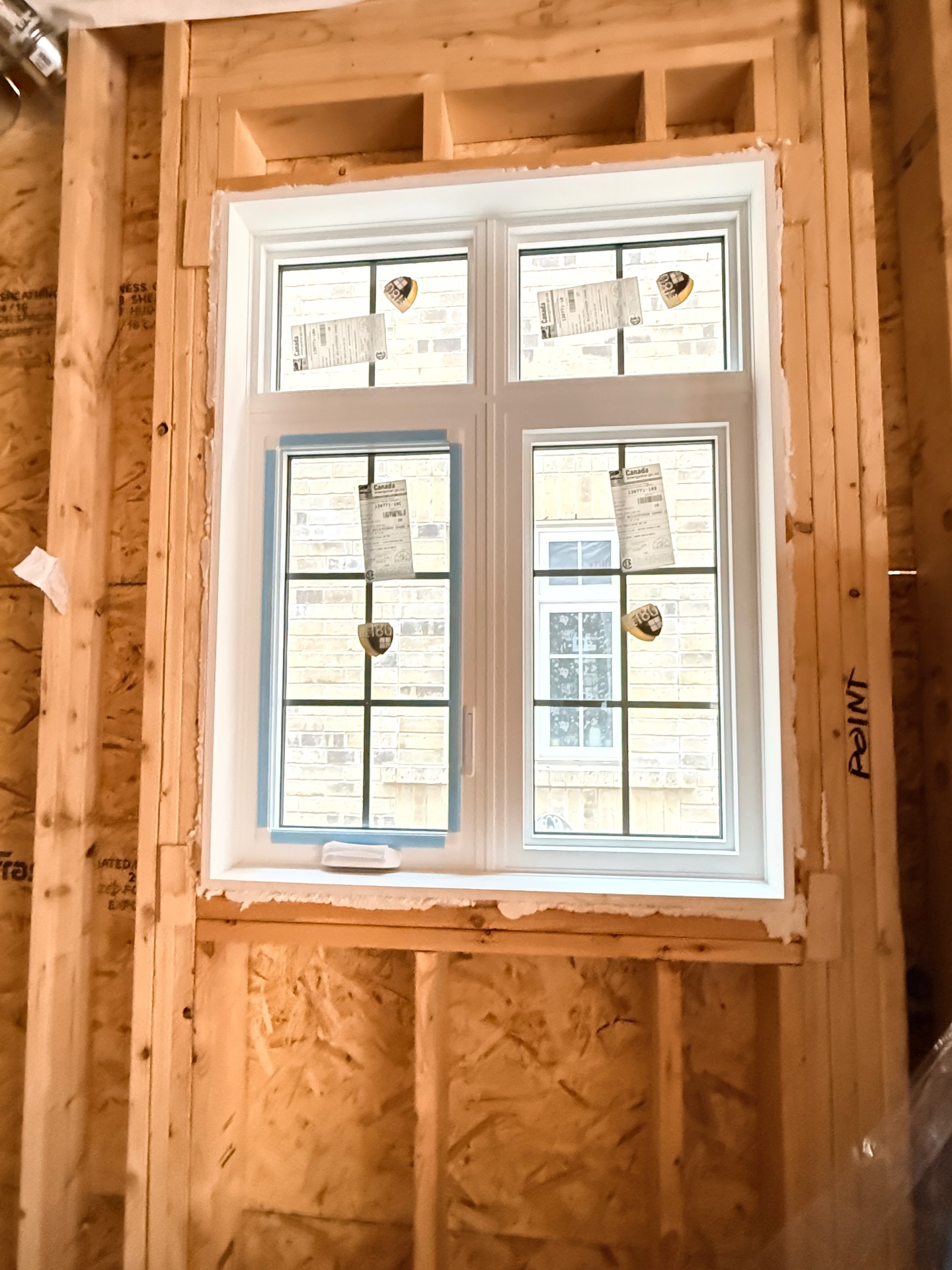
Stud-to-stud installation is different. The window and its surrounding frame come out entirely, down to the rough opening — back to the studs, as the name says — and anything damaged in that opening gets rebuilt before a new window goes in. It's more labour and more mess, and the interior trim around the opening usually has to come off and get rebuilt to match, with the exterior finish right at the opening adjusted where needed. But putting a brand-new window into a rotten opening just buys a few quiet years before the same stain shows up again, usually worse.
I'd rather tell a Port Dalhousie homeowner that upfront than sell them a retrofit that looks fine on installation day and fails again in five years. If you're staying in the house long-term, the full-frame approach is usually the better investment even though the quote runs higher.
How to tell which one your house needs
A few signs point toward stud-to-stud rather than a standard swap: soft or spongy wood around the frame, especially at the bottom corners where water collects; drafts around the frame even when it's closed and locked; staining or bubbling paint on nearby drywall that keeps returning after repainting; a window that's visibly out of square, hard to open, or gapping on one side. Near the canal or lakeshore specifically, add anything close to grade, where ground moisture has had decades to work into the framing from below.
None of that is something you can diagnose from a photo. A proper assessment means pulling back trim or cladding at the opening to see what the wood actually looks like, not just what the window looks like.
What the process actually involves
Once the scope is confirmed, the old window and frame come out completely. Rotted framing gets cut back to solid wood and rebuilt — sometimes just a section of sill plate, sometimes more. The opening gets flashed and sealed before the new window goes in, which matters more here than almost anywhere else in the region given the lake humidity. Then the window is set, shimmed level and square, insulated around the perimeter, and the trim or cladding rebuilt around it.
For a heritage-style Port Dalhousie home, that last part is worth asking about directly — matching existing wood trim profiles takes more care than a standard subdivision install, and it's fair to ask for examples of that finish work before you commit.
Many homeowners pair this kind of repair with Energy Star-rated vinyl windows, which handle the Niagara Peninsula's humidity swings without the painting and sealing upkeep the original wood frames needed. For a lakeside home losing heat through failed framing, that efficiency gain compounds the structural fix — you're stopping the rot and cutting the draft that was driving up the heating bill.