By Trust Build Windows and Doors ·
If you've got a slider window in your house that's gotten hard to push, rattles when a truck goes by on Industrial Parkway, or has a screen that popped out of its track two summers ago and never quite found its way back, you're not imagining a problem. You're describing exactly how a vinyl slider window fails — slowly, then all at once, usually a few years after the rollers start sticking.
A lot of Alliston's housing stock went up fast through the 1980s and 90s, in the subdivisions that filled in once the Honda plant started pulling workers and their families into New Tecumseth. Bungalows and raised ranches with a horizontal slider in the rec room or over the kitchen sink are everywhere in those neighbourhoods, and they're hitting the age where the original glass is failing and the frames have gone soft in the corners. Newer builds closer to Fletcher's Creek and the subdivisions off Young Street tend to use sliders in bedrooms and basements too, mostly because they're cheaper to size for a wide, low opening than a tall casement would be.
That's really the whole case for a slider window: it's the practical choice for a wide opening where you don't need, or can't fit, a window that cranks open. Basements, additions, laundry rooms, and anywhere ceiling height is tight all lean toward sliders for a reason. They move side to side on a track instead of swinging out, so there's no arm hardware to fail and no risk of catching a deck railing or a shrub on the way open. For a lot of Alliston homes with narrow side yards or window wells, that's not a minor detail — it's the difference between a window that opens easily for twenty years and one you give up opening after year three.
Where sliders lose ground to other styles is airtightness. Because the sash rides on a track rather than compressing against a fixed frame the way a casement does, there's inherently more seal to maintain. A well-built vinyl slider with a tight multi-chamber frame and a good compression seal performs fine in an Ontario winter — plenty of Trust Build installs in New Tecumseth and across Simcoe County are sliders doing exactly that — but it's not the style to reach for if you're chasing the absolute lowest possible air leakage on a south-facing great room wall. That's a casement's job. For a basement bedroom, a laundry room, or a kitchen window you mostly use for ventilation, the difference is close to academic.
Glass matters more than frame style, honestly. Whatever the sash shape, a double or triple-glazed unit with a Low-E coating is doing most of the heavy lifting against an Alliston winter — cutting the radiant heat loss that makes a window feel cold to stand near, even with the furnace running. If you're comparing quotes and one contractor can tell you which Low-E coating is in the glass and why, and the other can't, that's worth noting. Trust Build's slider windows come with Energy Star-certified glass packages built for exactly this kind of climate, and they're installed by the same certified crews doing casements and bays down the street — the glass spec matters more here than which name is on the invoice.
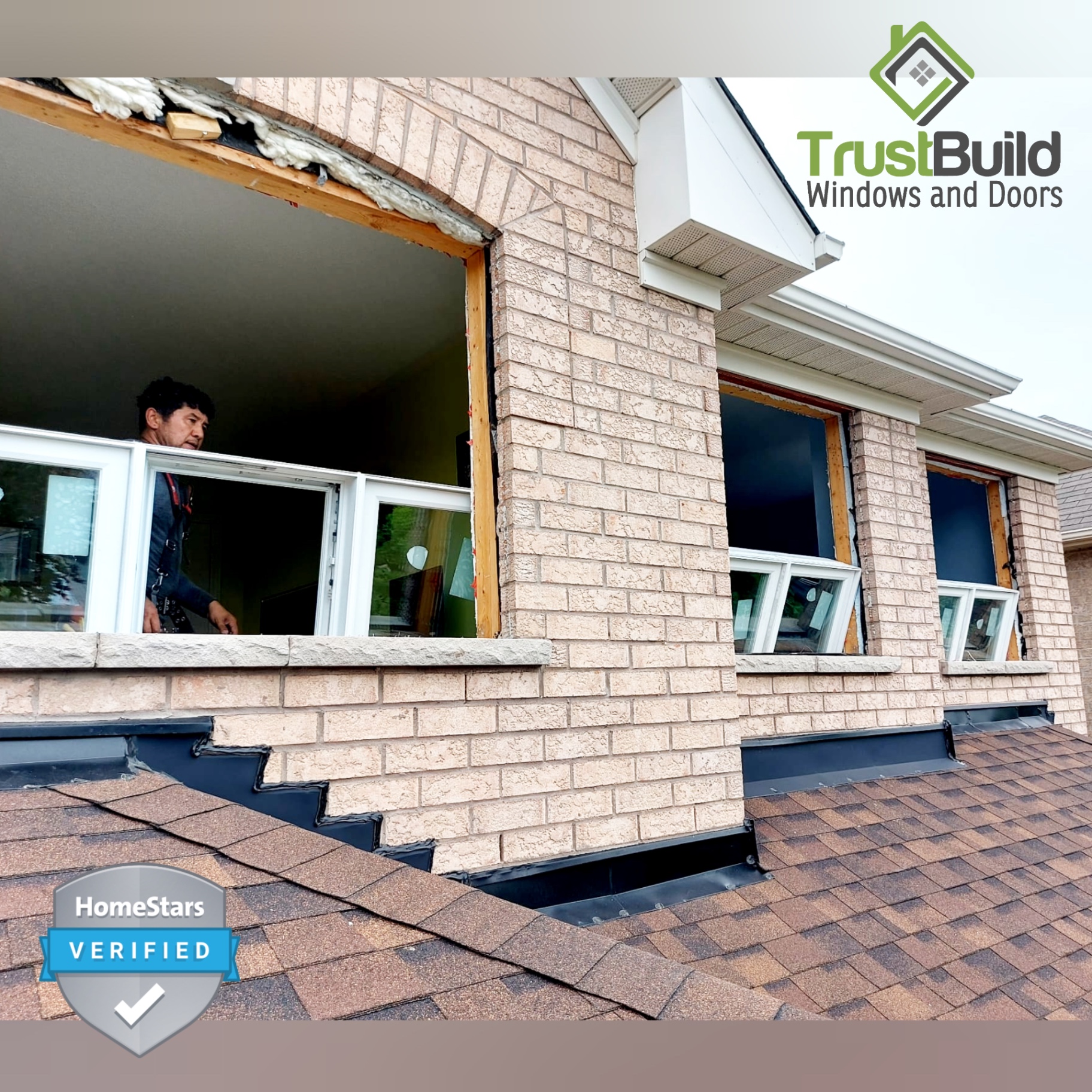
Installation method matters just as much as the window itself, and this is where a lot of Alliston homeowners get surprised. If your existing frame is square and the surrounding wall isn't damaged, a retrofit install — new window built to fit inside the old frame — is usually faster and less disruptive than tearing out to the studs. But if there's rot, a frame that's shifted, or you're changing the window's size (which happens a lot when people are converting an old slider into something larger for more light), a full stud-to-stud replacement is the only way to actually fix the problem instead of building a new window on top of an old one. Skipping that step is how you end up with a window that looks new on day one and is drafty again by the following winter.
One thing worth saying plainly: vinyl sliders are not a downgrade. They're a different tool for a different job, and for the right opening — wide, low to the ground, tight on headroom, or just budget-conscious — they're often the smarter pick over forcing a casement or awning window where it doesn't belong. The mistake is choosing a style based on habit rather than the actual opening and the actual room.