You invested in new windows, and now there's condensation on the glass — which can feel alarming, like something already went wrong. In most cases it's the opposite. Window condensation comes in three distinct forms, and telling them apart matters: one is actually a sign your new windows are working, one is an easy humidity fix, and only one points to a real problem. Here's how to read each type in an Ontario home.
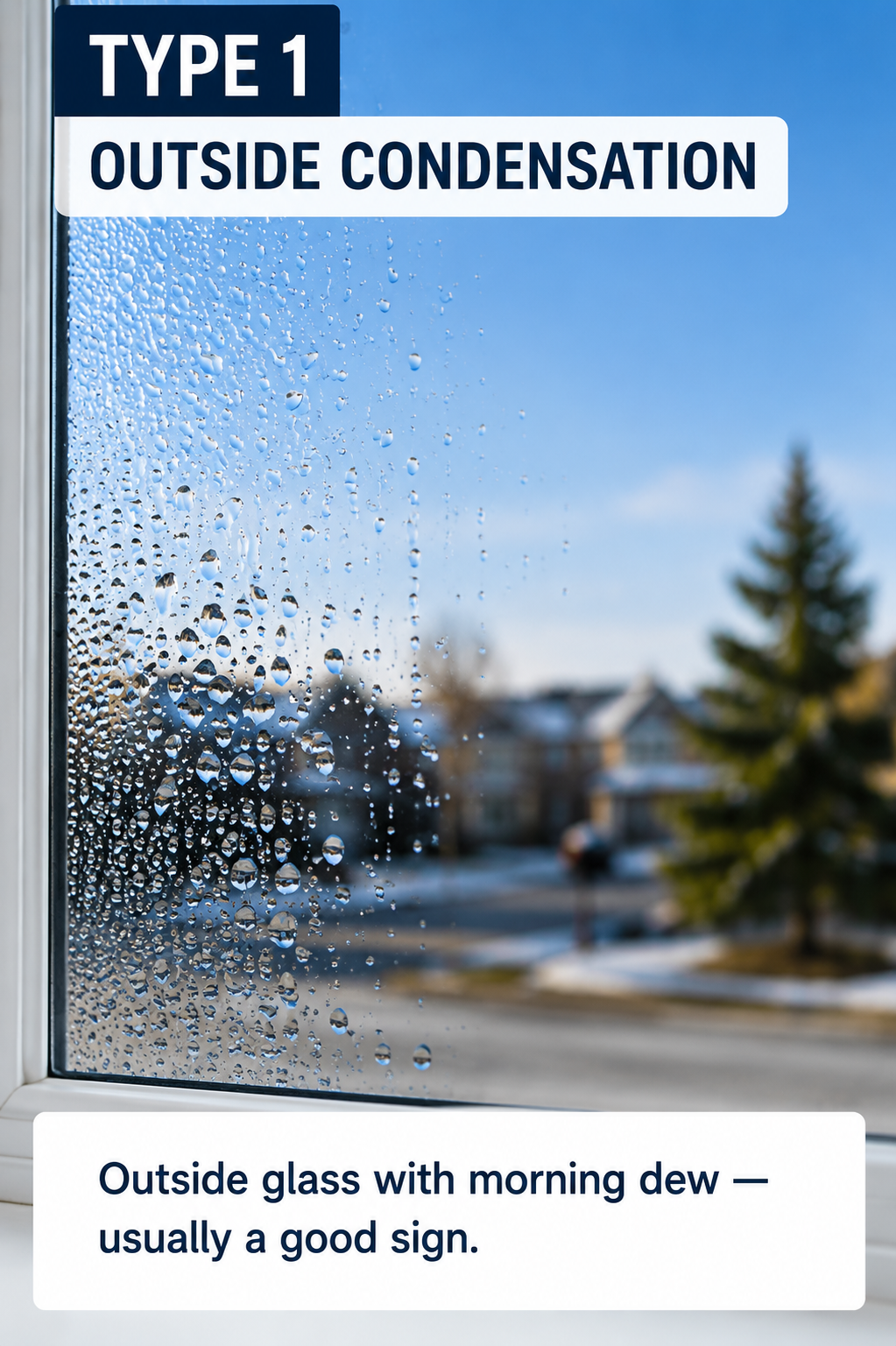
Type 1 — Condensation on the Outside of the Glass (Usually a Good Sign)
This is dew on the outer surface of the glass, facing the street — and on a new window, it's often a sign of quality, not a flaw. It tends to appear on clear, calm mornings and disappears as the sun warms the glass.
Here's why it shows up after an upgrade. Your old windows were likely drafty, letting interior heat leak outward and keep the exterior glass warm and dry. A new, fully insulated window with a Low-E coating keeps that heat inside where it belongs, so the outer pane stays cool overnight and dips below the dew point — and morning moisture forms on it, just like dew on a car or a lawn. If you never saw this before and do now, it usually means your new windows are sealing and insulating the way they should.
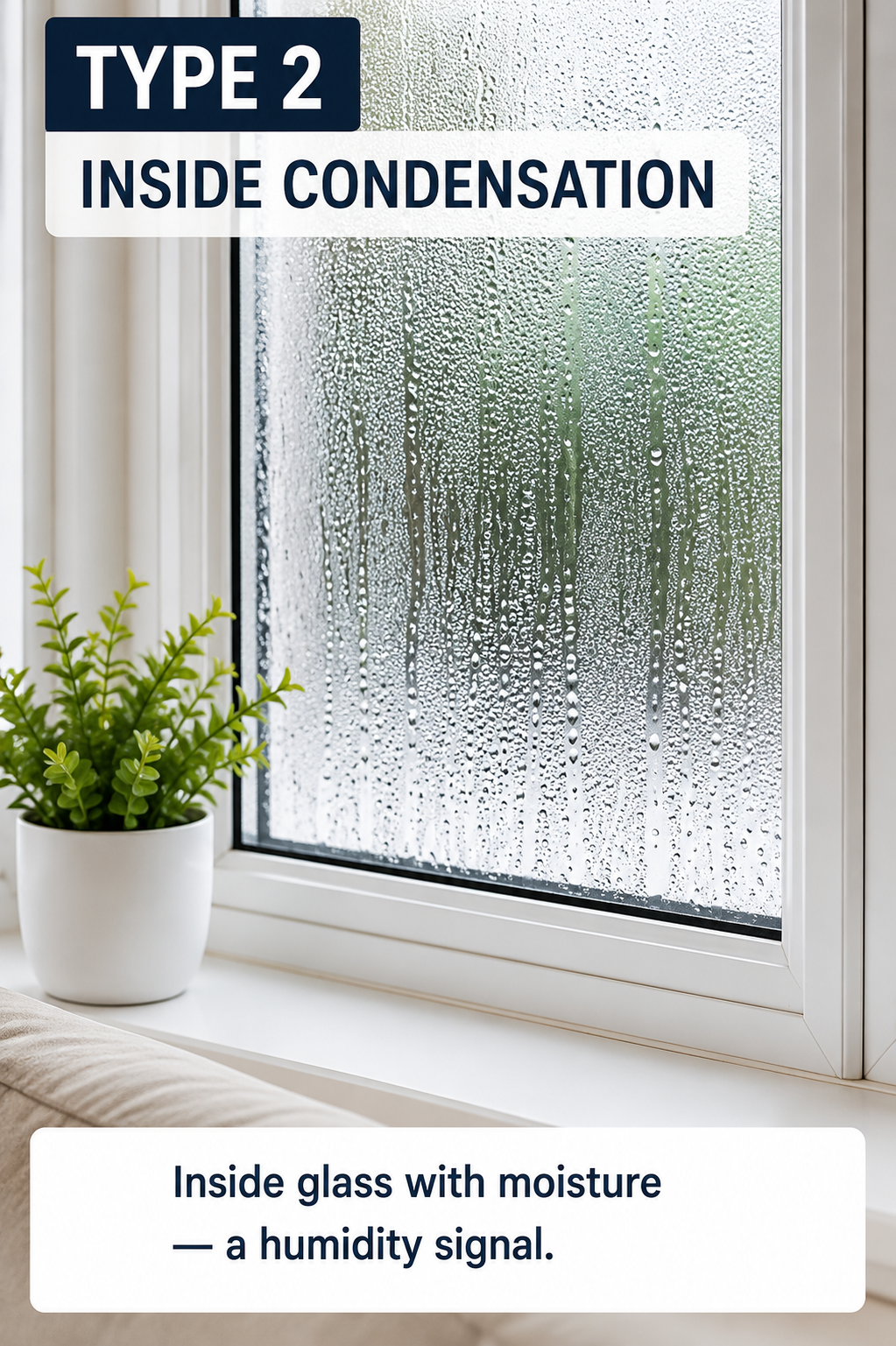
Type 2 — Condensation on the Inside of the Glass (a Humidity Signal)
This is moisture on the indoor-facing surface of the glass, and it's the type you can act on. It forms when humid indoor air meets a cold glass surface. A little on a very cold morning is normal; persistent fogging or dripping means the air in your home is holding more moisture than the windows can handle, often because that damp air isn't circulating.
Practical ways to reduce it:
- Lower your indoor humidity. Many furnaces have a humidifier attached — check it and turn it down or off in winter. Aim to keep relative humidity roughly between 30% and 50%, toward the lower end in the coldest weeks.
- Let air reach the glass. Open curtains, blinds, and shutters during the day so warm household air can circulate across the window instead of trapping cold, damp air against it.
- Clear the airflow path. If a floor vent (the universal boot) sits beneath the window, make sure furniture isn't blocking it, so warm air flows straight up the glass.
- Ventilate. Run kitchen and bathroom exhaust fans, and open a window briefly even in winter to exchange stale, humid air for fresh.
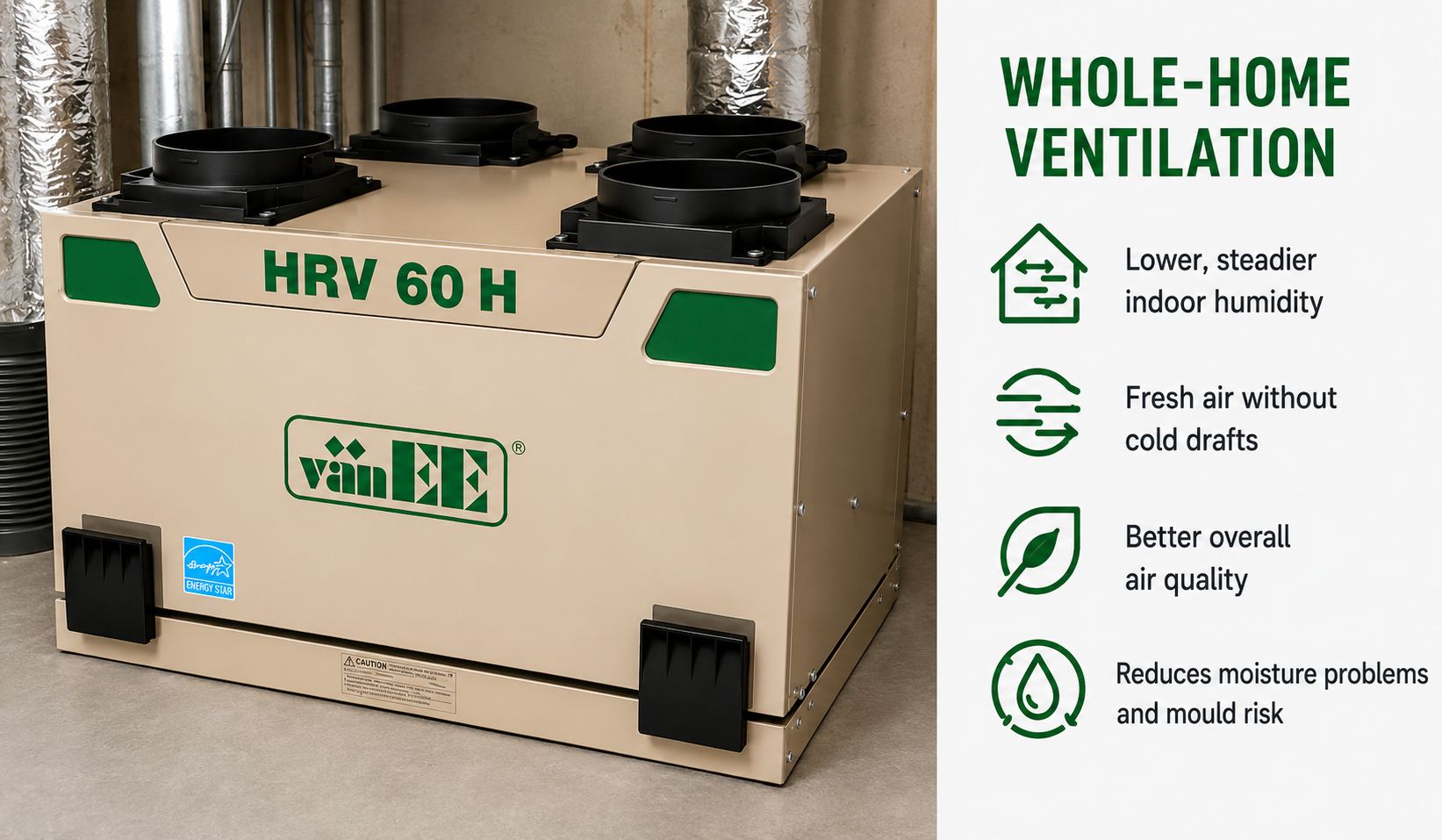
Whole-Home Ventilation: The HRV Option
For homes that stay stubbornly humid in winter, a heat recovery ventilator (HRV) is one of the most effective long-term tools for controlling indoor moisture. An HRV continuously exchanges stale, humid indoor air for fresh outdoor air — and, importantly for our climate, it recovers most of the heat from the outgoing air so you're not simply throwing your heating dollars outside. The benefits homeowners notice most:
- Lower, steadier indoor humidity, which directly reduces condensation on windows.
- Fresh air without a cold draft, since incoming air is pre-warmed by the air leaving.
- Better overall air quality in tightly sealed, energy-efficient homes that don't "breathe" much on their own.
- Reduced moisture problems elsewhere — less risk of dampness, musty air, and mould.
Please note: Trust Build does not supply or install HRV systems. This is specialized HVAC work, and an HRV should be sized, installed, and balanced by a licensed local HVAC company for your specific home. If persistent humidity is your issue, that's the right trade to call — we're simply flagging it as an effective solution to consider.
What About Frost or Ice on the Inside?
In extreme cold, a thin film of interior frost or ice where warm air meets very cold glass can be normal — it is not automatically a sign of a failed window. Managing indoor humidity and airflow, as above, is what keeps it in check.
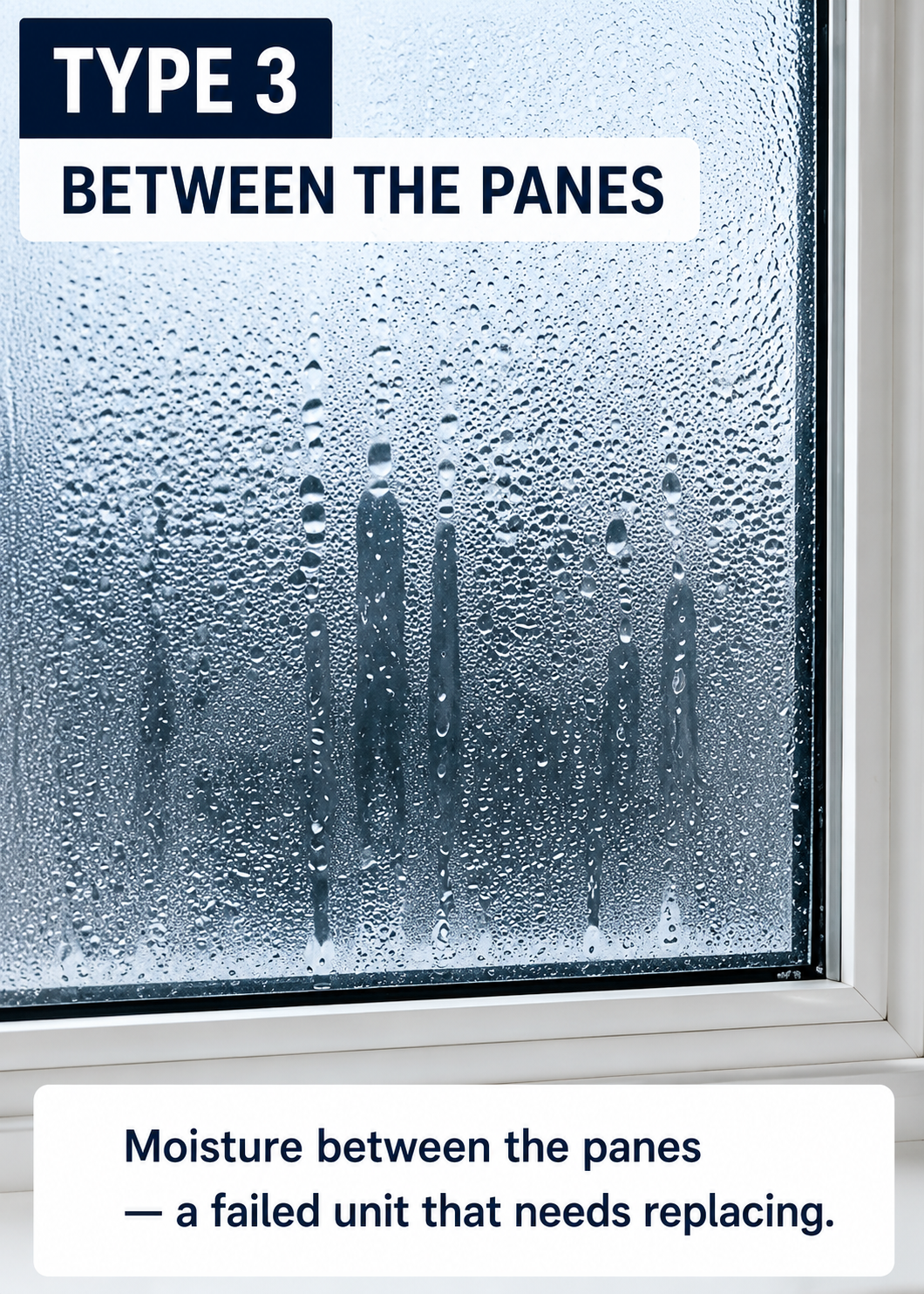
Type 3 — Condensation Between the Panes (the One That Needs Action)
This is the only type that signals a defect. If you see fog or droplets sealed between the panes of glass — moisture that no cleaning can reach — the sealed unit has failed and the insulating gas has escaped. A unit in this state can't be repaired; the glass needs to be replaced. Quality seals and warm-edge glass technology are specifically designed to resist this kind of failure and keep the sealed unit performing for the long term.
Quick Guide: Which Type Do You Have?
- On the outside surface, clears with the sun: exterior condensation — usually a sign of good insulation.
- On the inside surface, worse in humid or poorly ventilated rooms: interior condensation — manage indoor humidity and airflow.
- Sealed between the panes, can't be wiped away: a failed unit — the glass needs replacing.
Interior condensation is also worth addressing promptly because ongoing moisture on sills and frames is what eventually feeds mould around windows.
Windows Built to Manage Ontario's Winters
The less condensation you fight, the warmer and drier your home stays. Every window Trust Build installs is Energy Star certified for the Canadian climate zone, with Low-E coatings and warm-edge sealed units that keep the interior glass surface warmer and hold their seal over time. Installation is handled by trained, certified crews, with 0% financing available so the whole home can be done in one project. If your current windows are fogging between the panes or dripping every winter morning, energy-efficient replacement windows are the long-term fix. More than 8,700 Ontario homeowners have already upgraded.
Not Sure Which Type You Have?
If you're seeing condensation and aren't sure whether it's normal or a sign your glass needs replacing, reach out at hello@trustbuildwindows.com and we can help you figure it out.