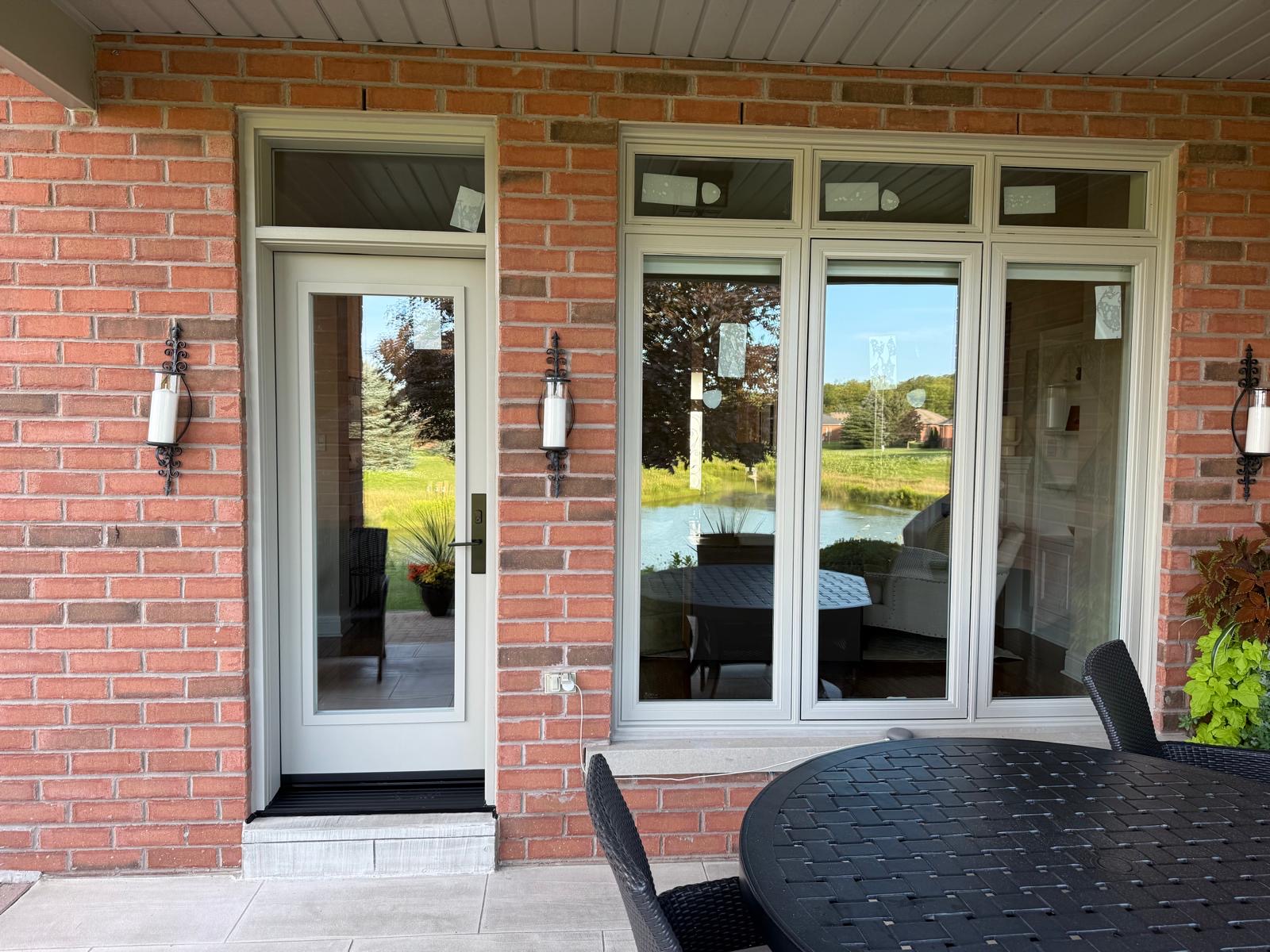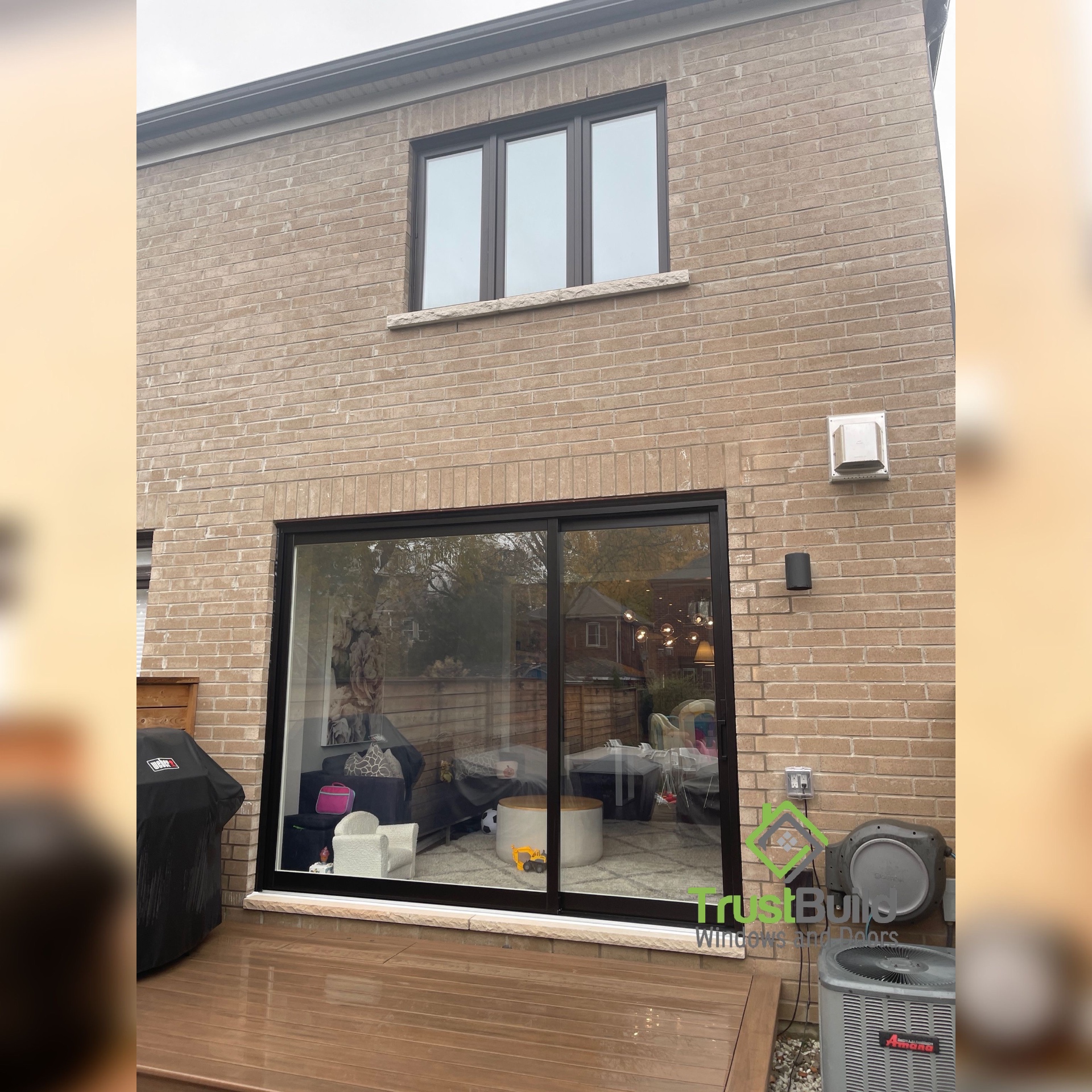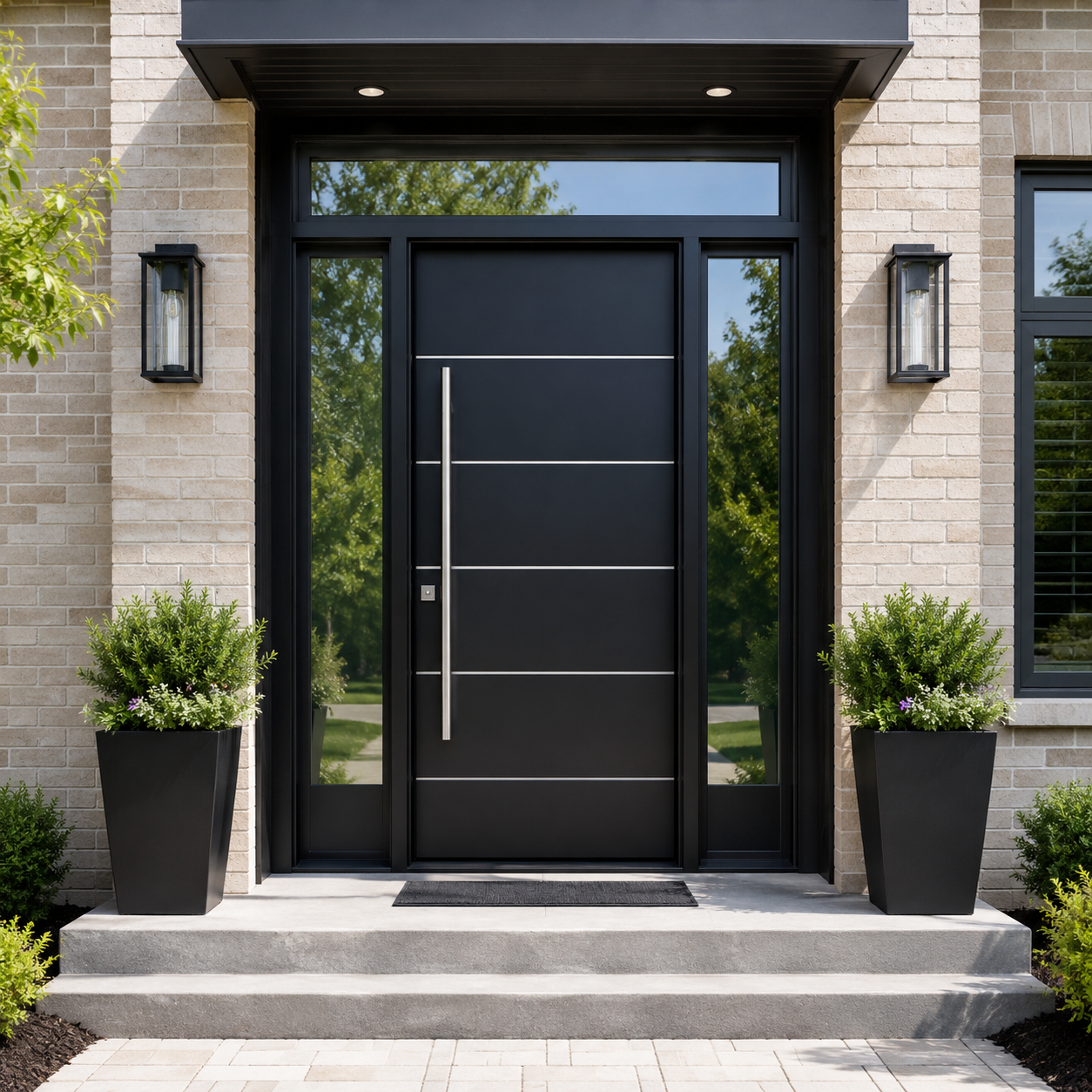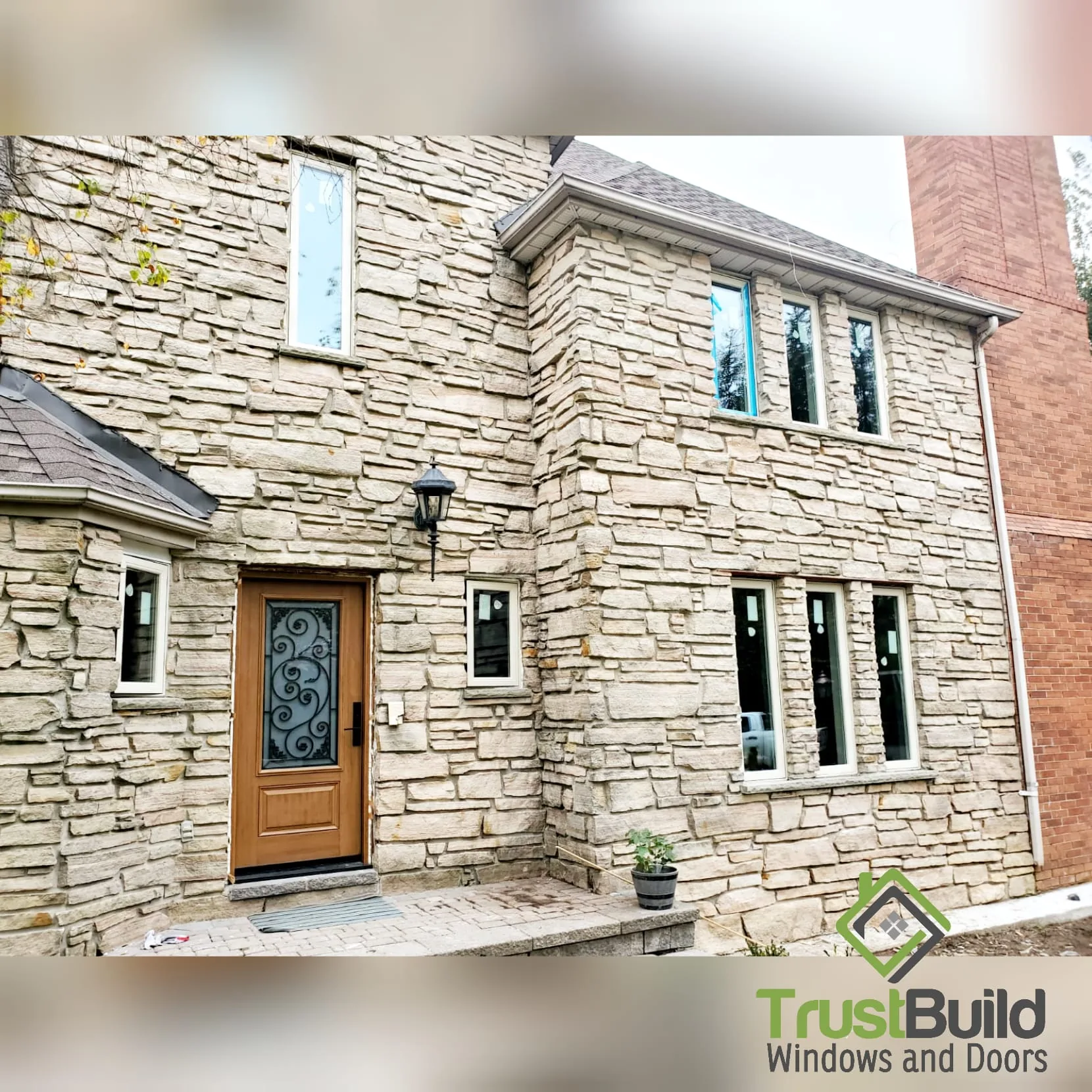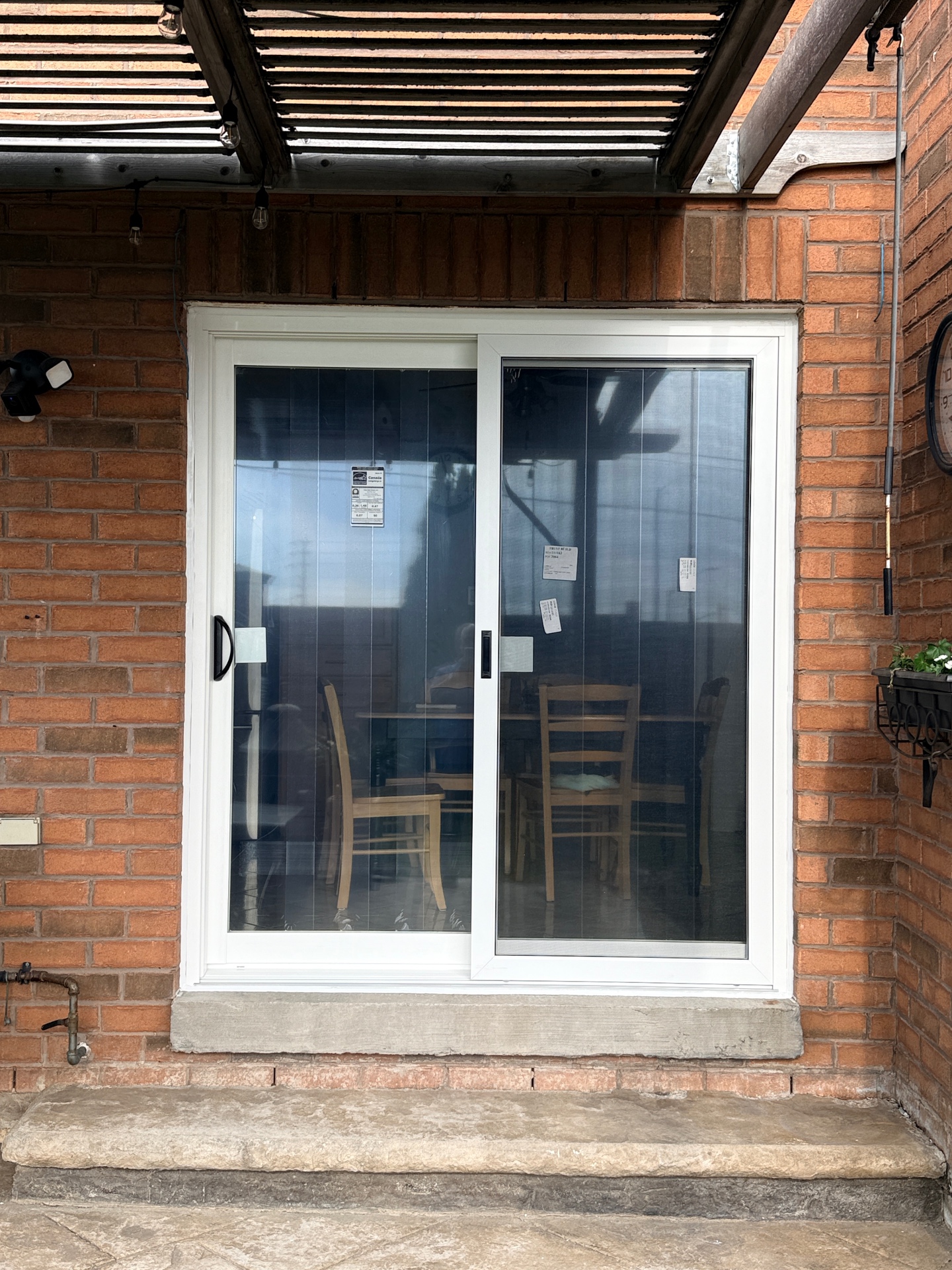
The Nguyens on a quiet crescent off Kingston Road East called us about their kitchen slider before they called about anything else. Not the windows, not the front entry — the patio door, because by July it had gotten to the point where the whole family used their knee to get it moving. That's usually how it starts. Nobody plans to replace a sliding patio door; they just eventually get tired of fighting one.
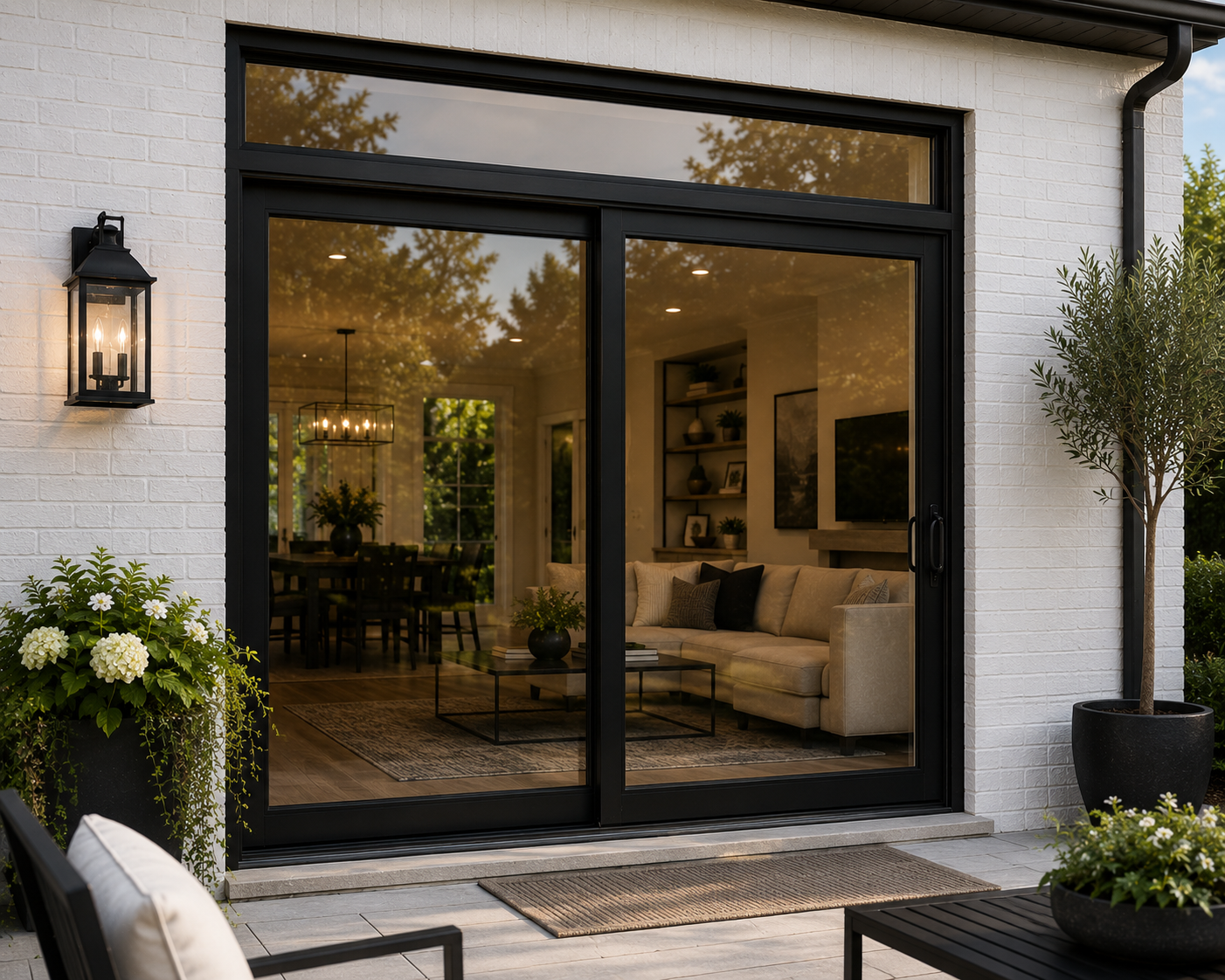
Ajax has a lot of homes built for exactly this kind of door. Walk through the subdivisions off Salem Road and Williamson Drive, or the older streets around Pickering Village near the GO station, and you'll find a pattern repeating itself: a kitchen or family room with a slider leading straight out to a deck or patio, usually facing a backyard that backs onto a ravine, a park, or another row of houses close enough that privacy and light both matter. Builders leaned on sliding doors here because they let in more daylight than a swing door without eating into usable deck space, and because they're simple to frame into a standard opening. Northeast Ajax's newer builds along Audley and Rossland still follow the same logic, just with bigger openings — some now stretching eight or even twelve feet across in multi-panel configurations.
The trouble is that a lot of these doors, especially in homes built through the 1990s and early 2000s, are original. Twenty-five-plus years of Ajax winters wears down a track and a roller system in ways that aren't always obvious until the door starts dragging, whistling in a west wind, or fogging between the panes. That fogging is the tell that matters most — it means the seal on the insulated glass unit has failed and moisture has gotten between the panes. At that point you're not looking at a hardware adjustment. The glass unit, and usually the whole door, is due for replacement.
Sizing is the first real decision, and it's not as obvious as it sounds
Standard sliding patio doors run 5-foot and 6-foot widths, which cover most kitchen and family room openings in Ajax's older stock. But if you're renovating rather than doing a like-for-like swap — say, opening up a dated dinette wall to bring more light into a north-facing kitchen — you're now choosing between a wider two-panel slider, a three-panel unit that lets you stack the doors to one side for a fully open wall, or in some cases a garden door instead. Wider openings change the structural picture too; anything past a standard opening usually means confirming header sizing with whoever's doing the install, which is worth sorting out before you fall in love with a particular configuration.
Glass performance matters more here than people expect
Ajax sits close enough to Lake Ontario that wind off the water adds a real chill factor to west- and south-facing walls in winter, even when the temperature itself isn't extreme. A patio door with a poorly performing glass unit turns into a cold wall you can feel from six feet away — and because sliders have more glass surface than almost any other opening in the house, a weak unit costs you more in comfort and heating bills than a similarly aged window would. Energy Star-certified doors with Low-E coated, argon-filled glass address this directly, and it's worth asking specifically about the coating rather than assuming all Low-E glass performs the same. There's a real difference between a general-purpose Low-E coating and one tuned for solar heat gain control, which matters if your slider faces south or west and turns your kitchen into a greenhouse every July afternoon.
Frame material is the second half of that equation. Vinyl frames with multi-chamber construction handle Ajax's freeze-thaw cycles well and don't need repainting, which is a fair trade-off for most homeowners who want a door that performs consistently without upkeep. Fiberglass is worth considering on larger multi-panel units where frame rigidity matters more, though it comes at a higher price point.
What actually drives the cost
Size and panel count are the biggest factors — a straightforward 6-foot two-panel replacement runs a fraction of what a 12-foot, four-panel unit costs. Beyond that, glass package (double vs. triple-glazed), frame material, and whether the opening needs any structural modification all move the number. If you're doing a full renovation rather than a swap, expect the door itself to be a smaller line item than the framing and finishing work around it.
For homeowners weighing the upfront cost, 0% interest financing through Financeit is worth asking about specifically, since it lets you spread a bigger renovation — say, a patio door and an adjacent window — across manageable payments rather than delaying the work another winter. And because a patio door takes more daily wear than almost anything else in a house — foot traffic, pets, kids, the weight of the panel itself moving thousands of times a year — the quality of both the hardware and the glass unit is one of the few things worth being genuinely picky about when comparing options.
If your slider is still opening fine but you're noticing drafts along the bottom track or condensation creeping in between the panes, it's usually more cost-effective to replace now than to wait for the seal to fail completely. A door that's already fogging has no fix short of full glass or unit replacement, and putting it off just means living with the cold spot through another Ajax winter.