By Trust Build Windows and Doors ·
Picture a homeowner in Old North pulling the aluminum capping off a window in her 1920s two-storey, expecting rot underneath. Instead she finds intact original wood casing, painted shut through a dozen coats, with a reveal — the gap between the window frame and the wall — that doesn't match anything a standard vinyl replacement window would need. She isn't dealing with a window problem anymore. She's dealing with a trim problem that happens to have a window attached to it.
That split comes up often in Woodstock, and it's the part most window conversations skip. Everyone wants to talk about glass packages and frame material. Almost nobody asks about the strips of material framing the opening — until the old casing is in a dumpster and the new window doesn't fit the hole it left behind.
What Casing Actually Does
Casing is the trim framing a window, inside and out. Inside, it covers the gap between the drywall and the window frame and gives the opening a finished edge. Outside, it's usually called brick moulding, and its job is less about looks than most people assume: it sheds water away from the frame and seals the transition between the window and the siding or brick. Get that wrong on an Ontario house and you're not looking at a cosmetic problem next year — you're looking at water getting behind the cladding during spring thaw.
Woodstock is a good place to see why this matters, because the city has two very different kinds of housing stock a few kilometres apart. Downtown Woodstock and Old North have century homes with deep window reveals and, in some cases, fluted casing with rosette corner blocks — millwork nobody installs new anymore because of what it costs to reproduce. Sally Creek and Havelock are a different animal: thin, vinyl-wrapped builder trim, flat stock, installed fast and meant to be low-maintenance rather than ornamental. Neither is wrong. They're answering different questions, and a window project needs to know which one it's actually answering before anyone picks a style.
The Styles Homeowners Actually Choose Between
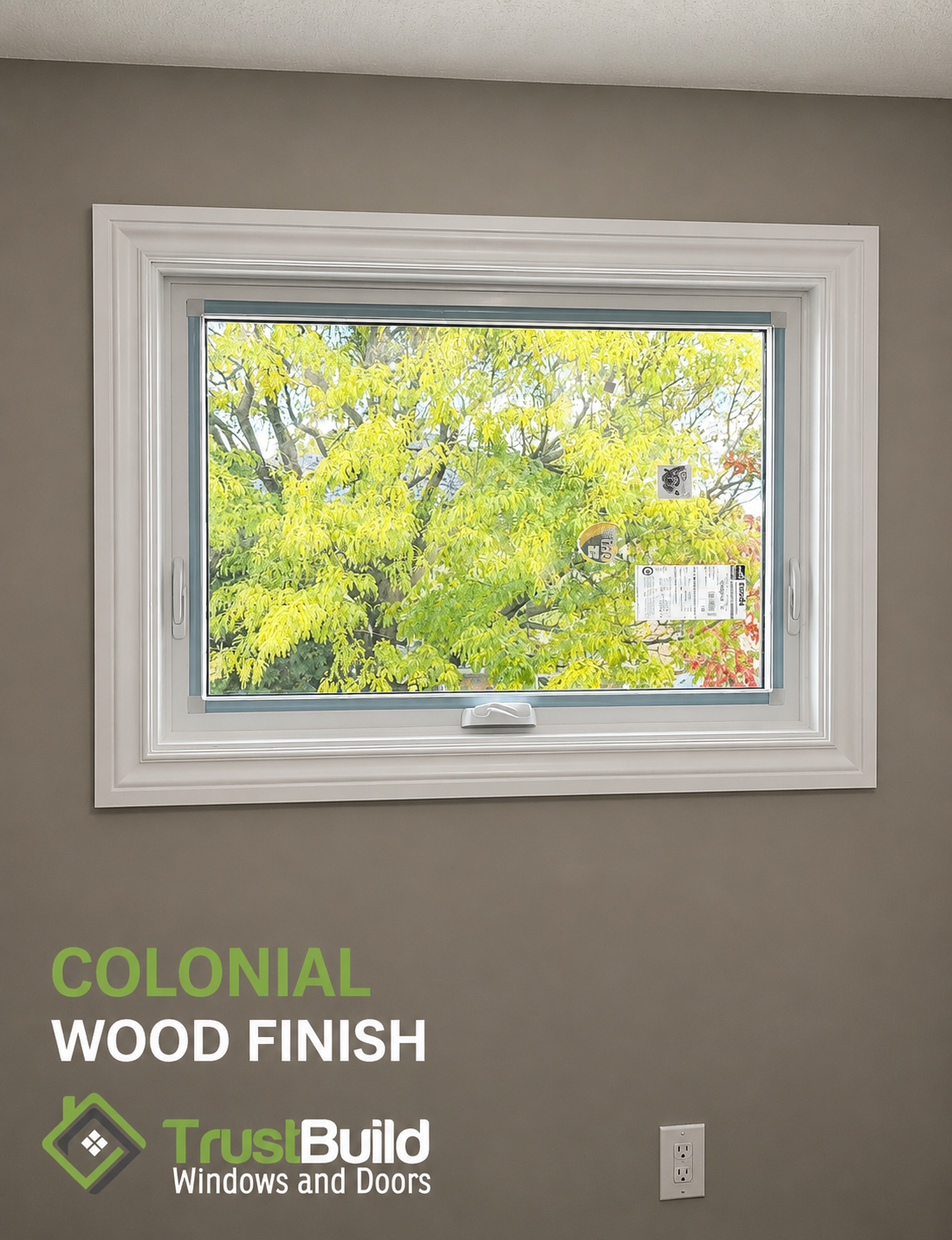
Flat (Colonial) casing is the default — simple, square-edged boards, usually 2 1/4 to 3 1/2 inches wide, that work in almost any home from a 60s bungalow to a newer two-storey. Craftsman casing uses the same flat stock with a plain header cap across the top, which reads as more substantial without much added cost. Clamshell or ranch casing is thinner and rounded, common in budget builds from the 70s and 80s — if your Woodstock home dates to that era, there's a decent chance that's what's already on your walls. Back-banded casing adds a raised strip around the outer edge of flat casing for more visual weight in rooms with higher ceilings, and fluted casing with corner rosettes is the style behind a lot of the original millwork downtown, skipping mitered corners for decorative blocks instead.
Outside, the real decision isn't style so much as material. Painted wood casing looks right on a century home but needs real upkeep against freeze-thaw cycling. Aluminum-capped or PVC exterior casing gives up some of that historic look in exchange for not repainting a sill every few years — a trade a lot of homeowners make without really deciding to, just because it's what came with a past renovation.
Replacing the Window Without Wrecking the Casing
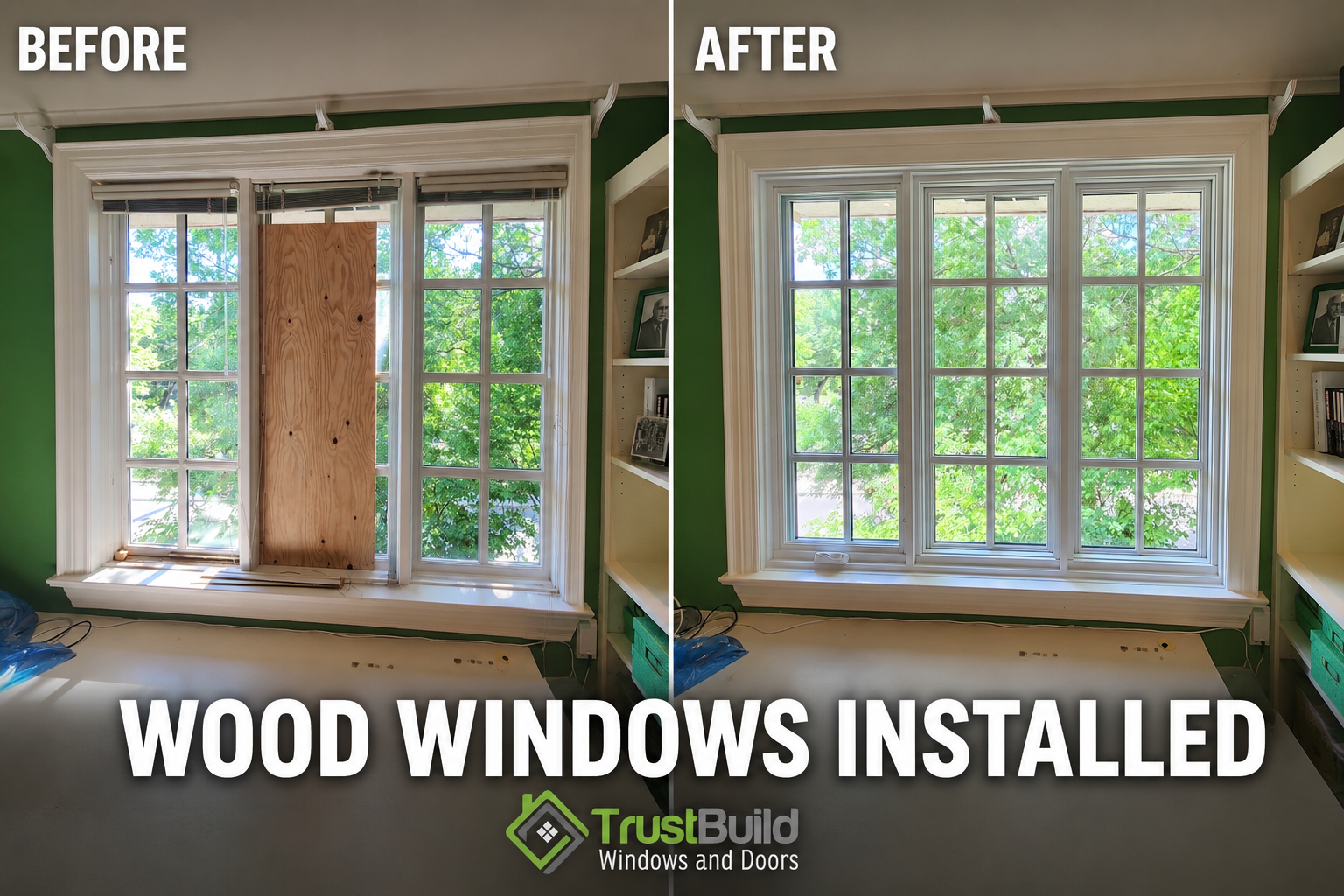
This is where the installation method matters. A retrofit (insert) replacement slides the new window into the existing frame — when that frame is sound, square and dry — and largely leaves the original casing alone, the right call when that trim is worth keeping. A full stud-to-stud or brick-to-brick replacement takes the old window, frame, jambs and casing out back to the stud opening, which means the casing comes off too and new casing goes on either way. If you've got original millwork in an Old North or Downtown Woodstock home worth keeping, that should drive the installation decision, not the other way around.
The mistake I see most in Woodstock is homeowners putting the whole budget into Energy Star-certified glass and a vinyl windows upgrade, then letting whoever's doing the install grab whatever flat stock trim is in the truck — on a house where the original casing was arguably half the reason the room looked the way it did. Window performance matters. So does what's framing it.