Not every window replacement is about upgrading a home's look. Sometimes the goal is the opposite: keep the character exactly as it was, and only change what's failing. That was the brief on a recent Collingwood project — a home with genuine wood windows and traditional SDL (simulated divided lite) detailing, where the wood itself had aged out, but the design behind it hadn't.
Before: A Window Worth Saving, Not Starting Over
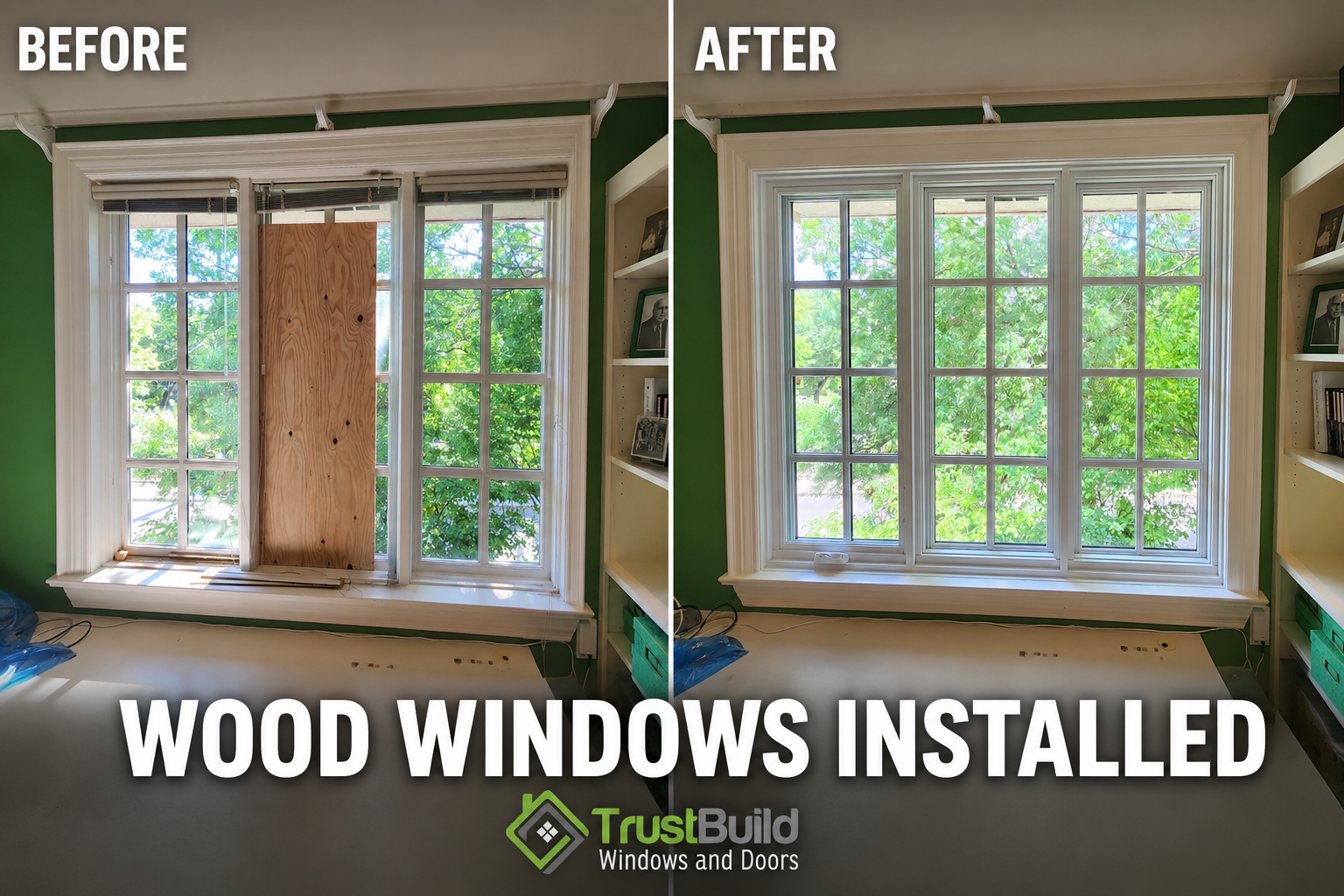
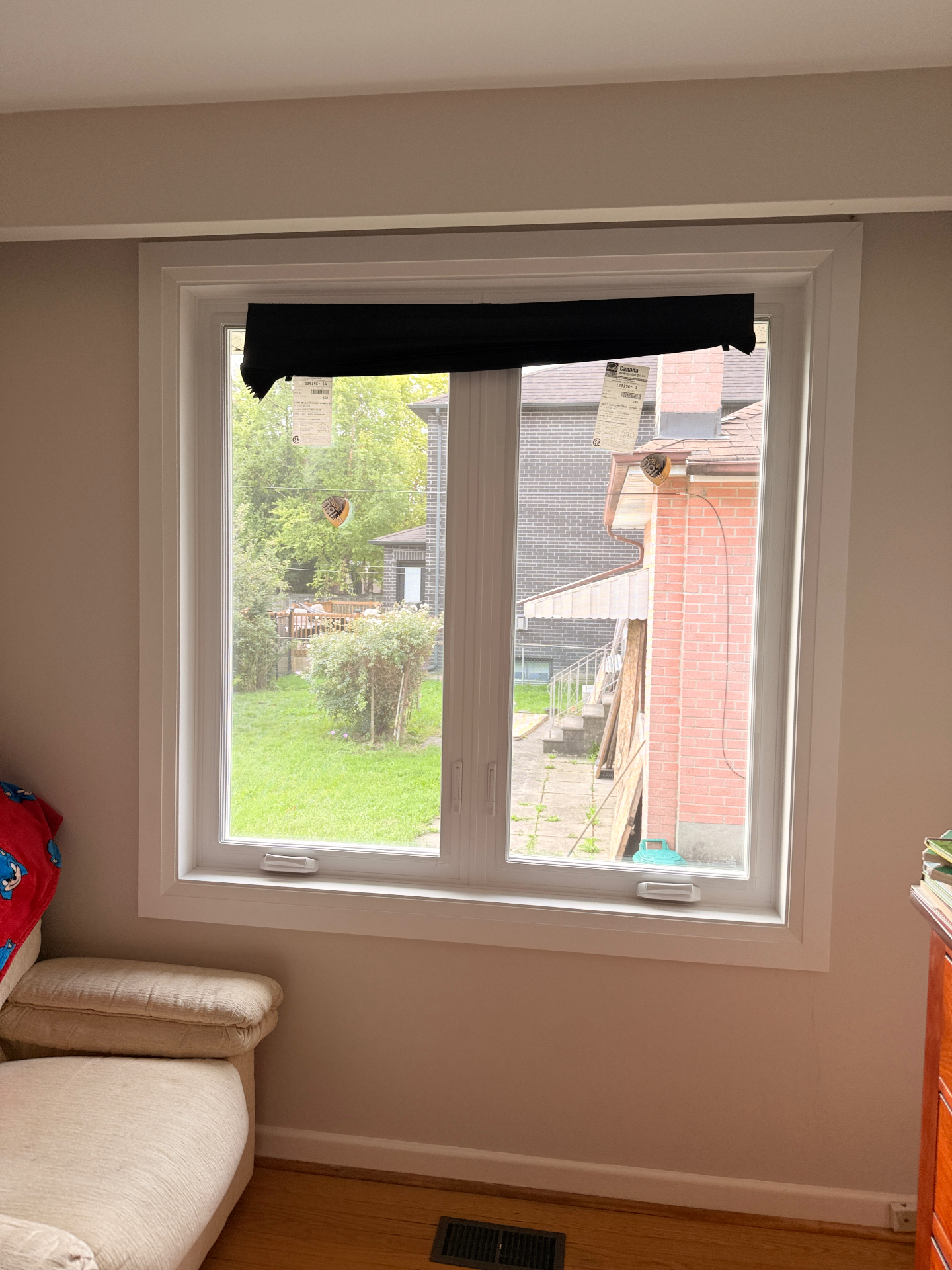
The original windows carried real architectural character — true divided-lite proportions, wood grain visible from both sides, and the kind of frame detailing that gets lost in mass-produced replacements. But years of direct exposure to Ontario's freeze-thaw cycles had taken a toll on the exterior wood. In at least one section of the window, deterioration had progressed far enough that it was boarded over with plywood rather than left exposed — a visible sign that the exterior wood had reached the end of what refinishing could fix, even though the window's underlying design was still worth preserving.
This is the tension that comes up constantly with older wood windows: the wood that gives the window its warmth on the inside is the same wood that takes the weather beating on the outside.
The Challenge: Why This Wasn't a Simple Swap
For a home with this kind of detailing, "replace the windows" isn't really one decision — it's several. Standard vinyl replacement windows solve the durability problem, but they solve it by changing the equation entirely: thicker sightlines, flat-applied or between-glass grilles standing in for true divided lites, and a frame profile that reads differently against original trim and proportions, especially up close.
The homeowner's brief was specific on this point: improve the window's performance and durability, but don't change how the house looks. That ruled out a standard vinyl swap as the right fit here — not because vinyl is a lesser product, but because the project's actual goal was architectural preservation, not modernization.
The Solution: Custom Wood Windows With Aluminum-Clad Exteriors
The approach Trust Build used keeps wood on the interior — where it's protected from weather and does the visual work of matching the home's original character — and adds an aluminum-clad exterior, which takes on the job the original exterior wood couldn't sustain long-term: standing up to direct Ontario weather exposure without repainting or refinishing on a multi-year cycle.
Getting the "invisible" part right took more attention than the material choice itself. Matching the original meant working through the interior wood finish, the window's proportions relative to the opening, the traditional frame and sash detailing, and reproducing the SDL grille configuration so the divided-lite pattern reads the same as it always did — not an approximation of it. Trust Build's premium wood window line is built around exactly this kind of interior finish work, which is what made matching the original detailing possible rather than settling for "close enough."
After: The Same Character, With the Problem Solved
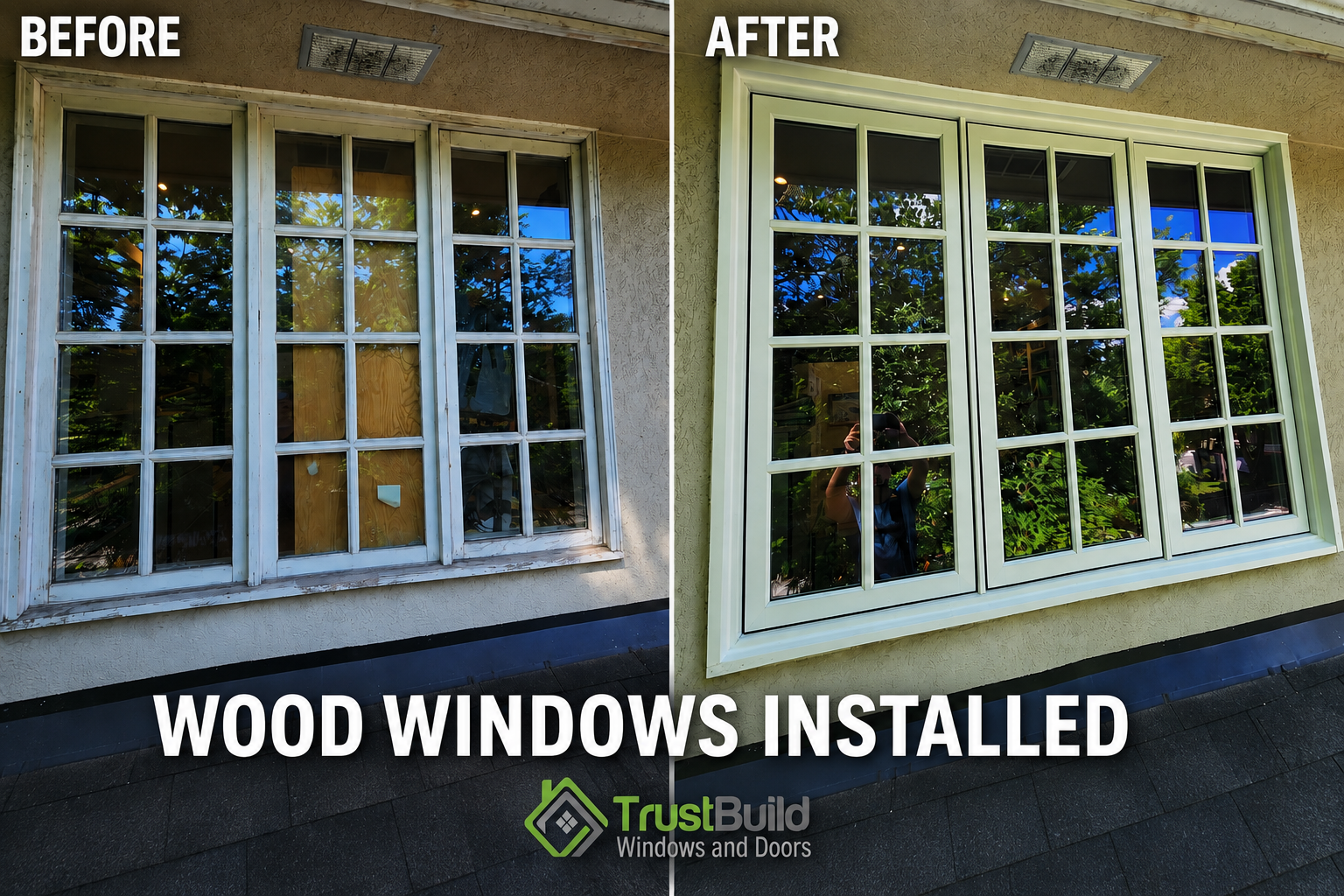
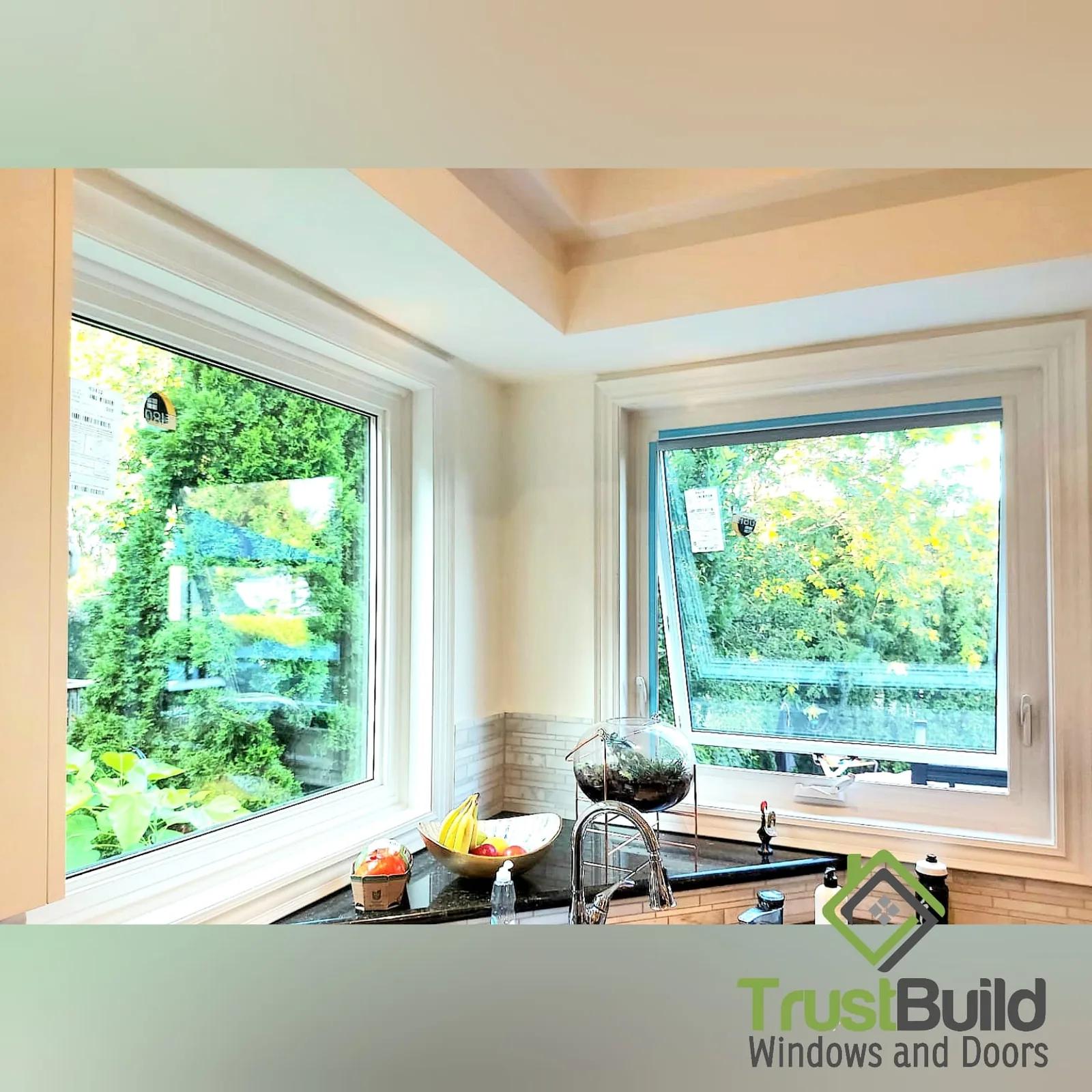
From inside the room, the finished window reads as the original did — same proportions, same grille pattern, same warm wood tone, filling the room with the same light through the same divided-lite configuration homeowners chose it for in the first place. From the exterior, the difference is in what's no longer a concern: no boarded sections, no peeling paint, and a clad surface built to handle the next several Ontario winters without the maintenance cycle the original wood needed.
That's really the whole point of a project like this. The goal was never to make the home look newer or different — it was to keep exactly what made the original windows worth having, while fixing the one part of them that couldn't hold up on its own anymore.