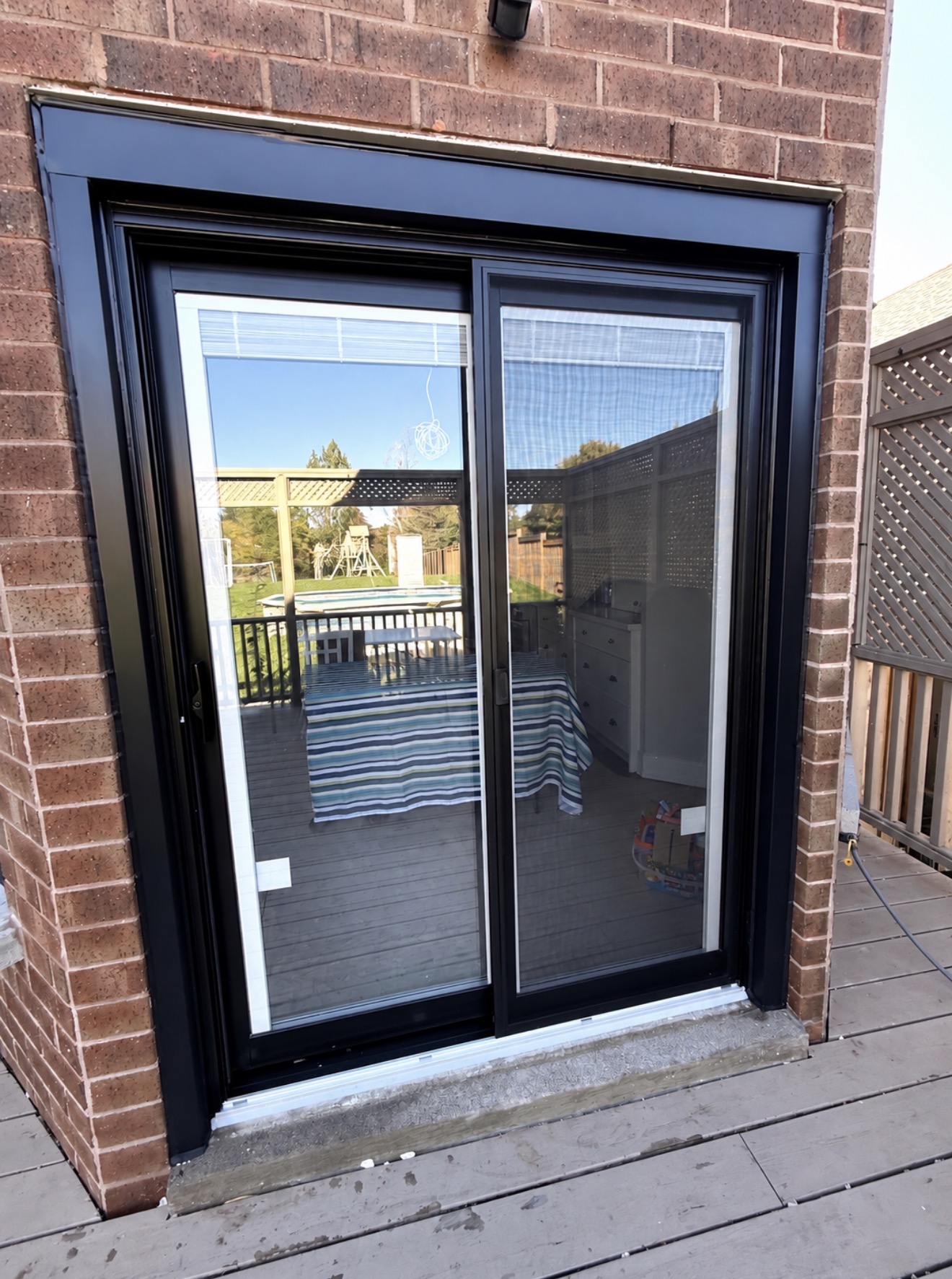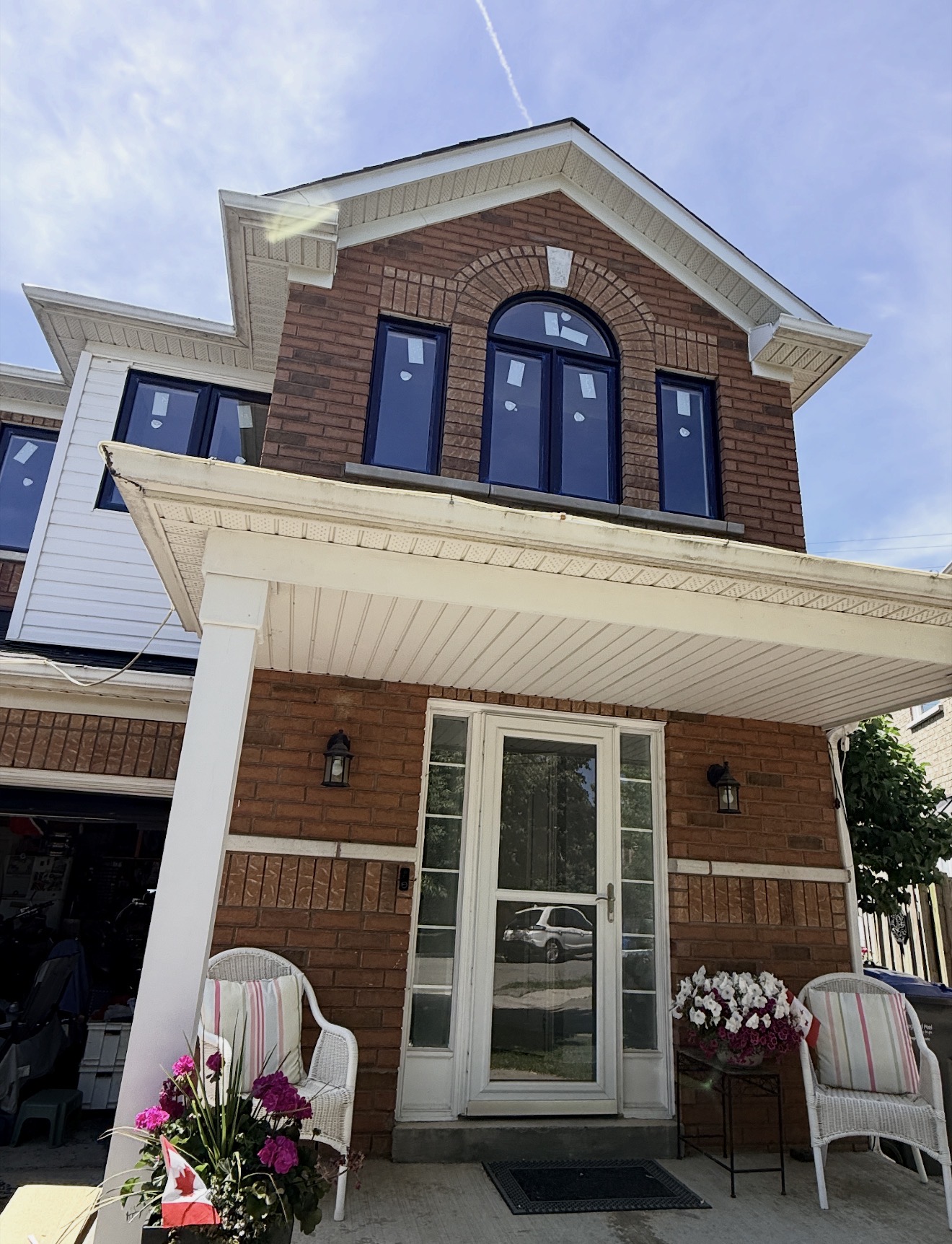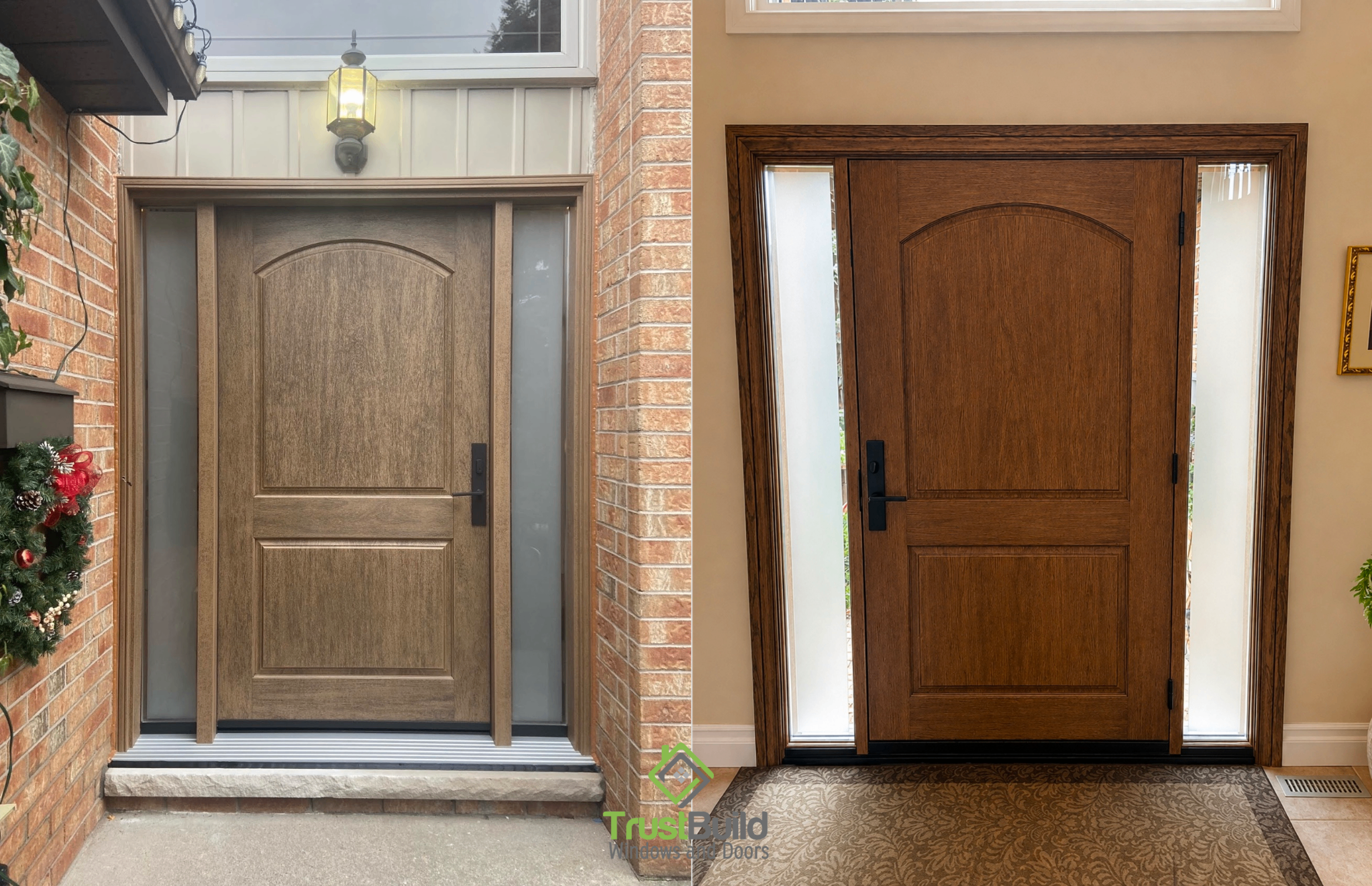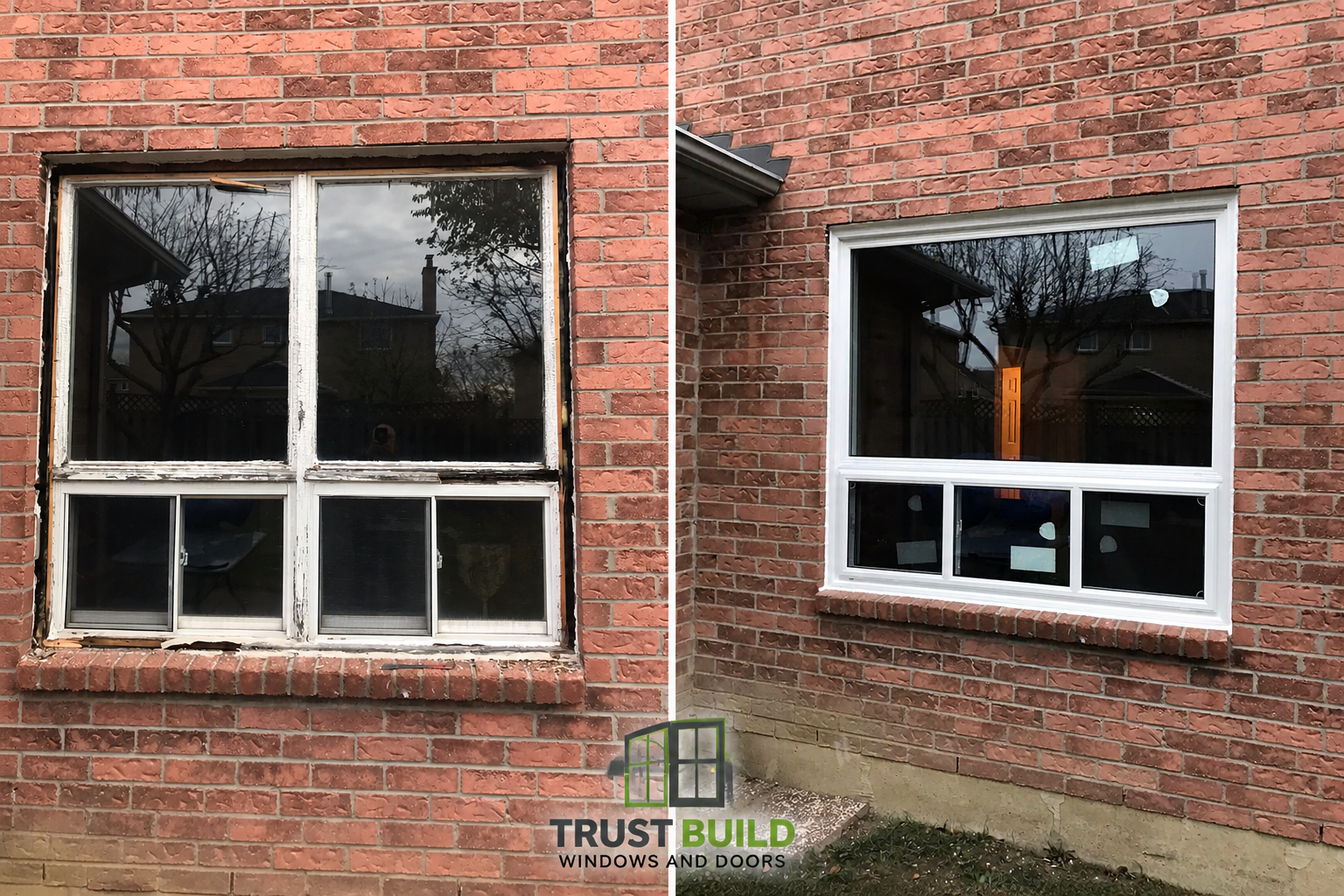
This North York window measured roughly 36 square feet, but of that entire glass area, only about 3 square feet — a small slider at the bottom — actually opened. That's just under 10% of the window's total size providing any real airflow at all. The old aluminum frame was also showing condensation between the panes, a sign the seal inside the glass unit had failed, and the drywall used to form the interior ledge had been damaged by the moisture problem. This was a full rebuild, not a patch: new triple-pane double casement windows, a proper wood ledge in place of the drywall, and a ventilation setup that actually uses the size of the opening it's built into.
Why so little of a 36-square-foot window could actually open
A small sliding section at the bottom of a large window is a common way older window openings were built: most of the glass area is fixed, and one small section handles all the ventilation for the entire opening. On this window, that meant only about 3 of the 36 total square feet was ever capable of moving air, regardless of how badly the room needed it. That's not a minor inconvenience — it's a design where the vast majority of a large opening contributes nothing to actual airflow.
What condensation between the glass actually means
Condensation forming between the panes, rather than on the interior or exterior surface of the glass, is one of three distinct types of window condensation, and it specifically means the seal inside the insulated glass unit has failed, letting moisture into the sealed air space between the panes. Unlike surface condensation, which responds to humidity control, between-pane condensation can't be wiped away or fixed with a dehumidifier. Once that seal fails, the glass unit itself needs to be replaced.
Why drywall was never the right material for the ledge
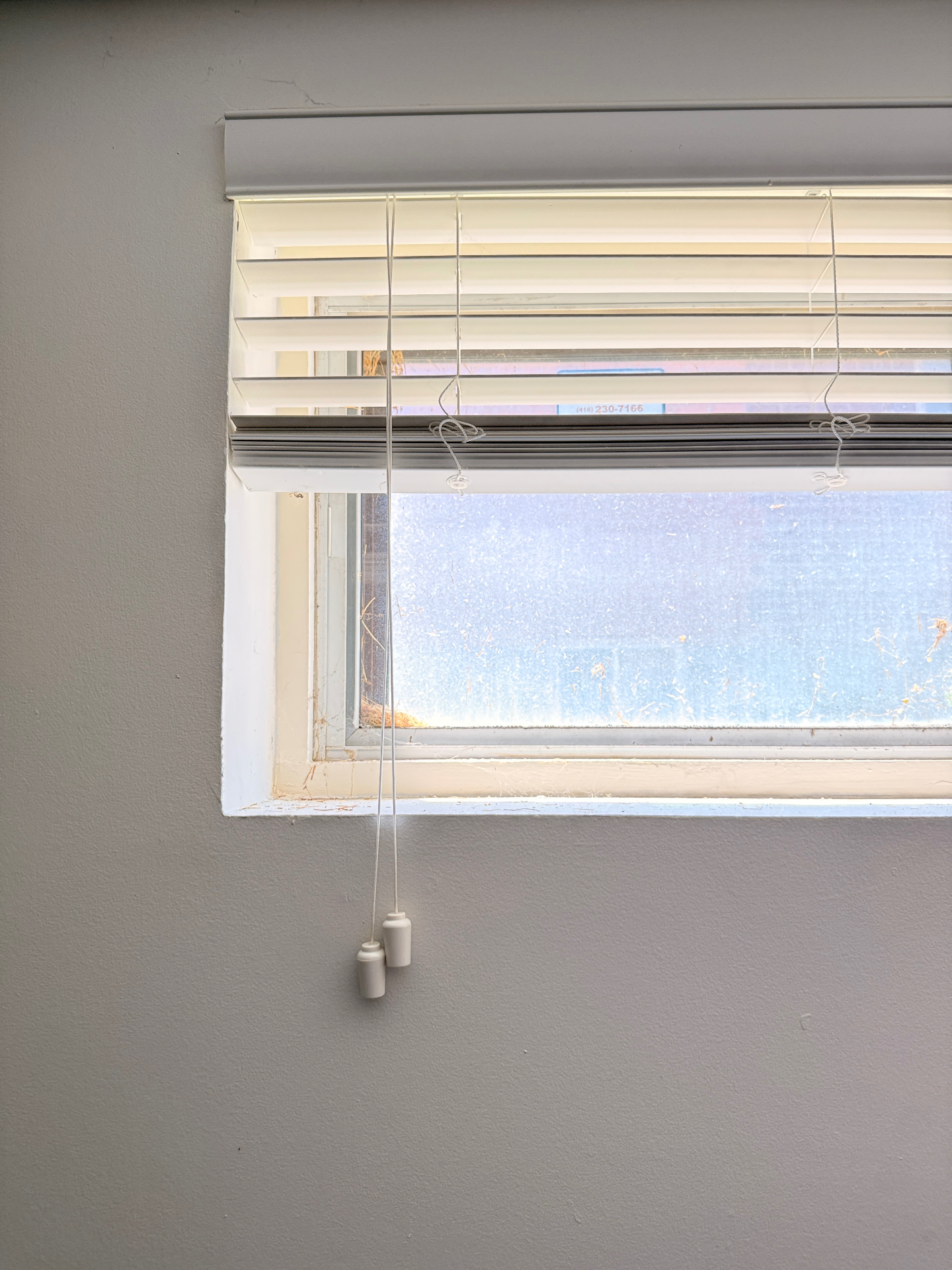
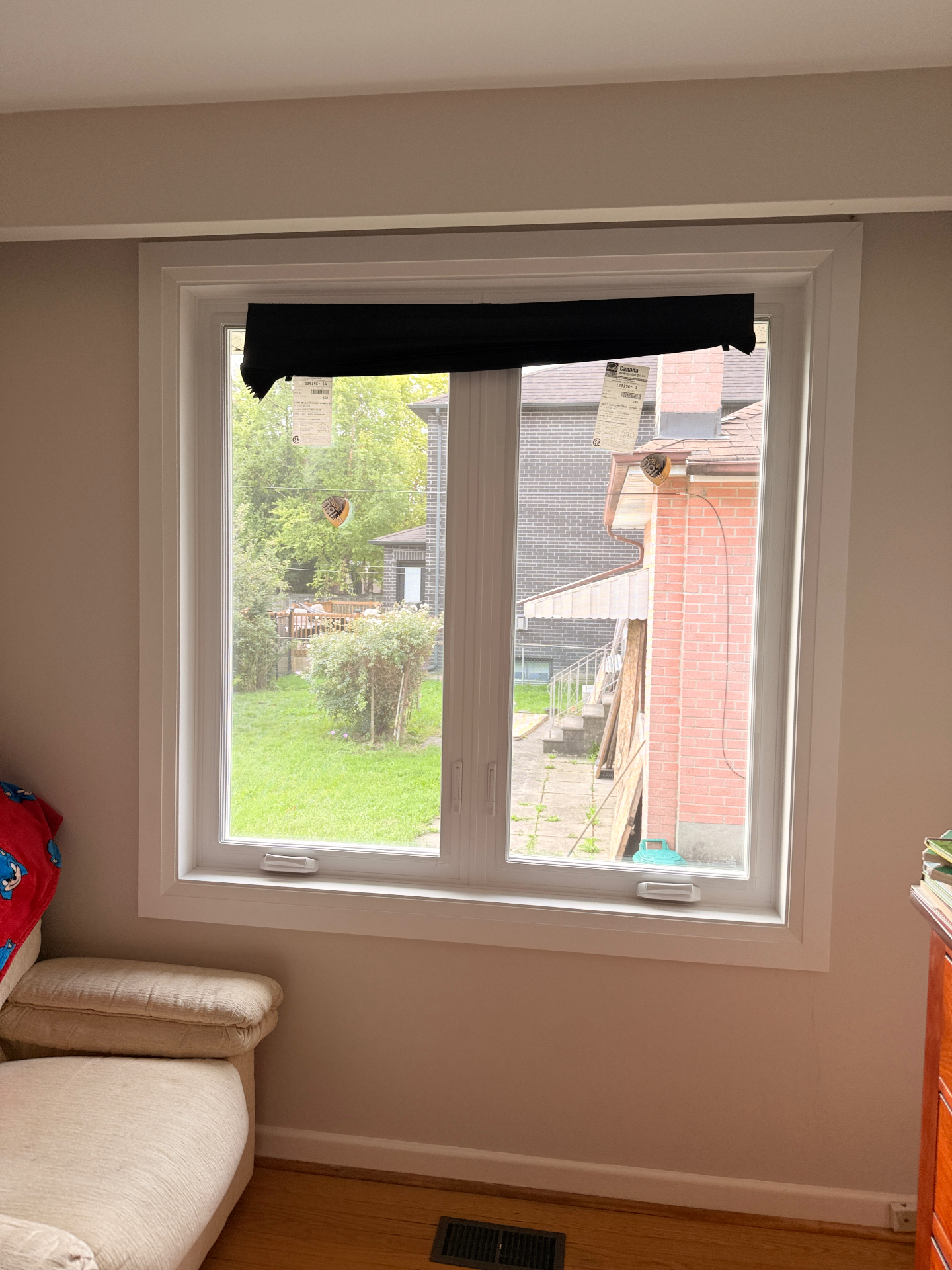
The original interior ledge beneath the window was built from drywall rather than proper wood. Drywall isn't designed to handle direct moisture exposure, and once condensation or seal failure introduces water at the base of a window, a drywall ledge is exactly the kind of material that deteriorates quickly. The rebuild replaced it with a proper wood ledge, finished with stepped casing around the opening for a layered, more finished trim profile than a single flat board.
Double casements: solving the airflow problem for real
The replacement uses two casement windows instead of one large fixed pane with a small slider. With both casements able to open to a full 90 degrees, the homeowner can now access airflow across a much larger share of the opening than the original 3-square-foot sliver ever allowed, particularly when both sashes are opened at once. Each casement operates with a roto handle connected to a multi-point locking system, and both units came with a screen, so the added ventilation doesn't come at the cost of keeping insects out.
Rebate note: Window replacements like this one may qualify for up to $100 per rough opening under the Home Renovation Savings™ program when you bundle two or more eligible upgrades. ENERGY STAR® certified products are required, and eligibility and approval depend on the current program requirements and administrator, with an energy assessment needed before work begins. For another full-rebuild project in the same neighbourhood, see this North York bow window rebuild.
Frequently asked questions
Why did the original window have so little operable area for its size?
Many older large window openings were built with most of the glass fixed and only a small section, often a bottom slider, designed to open. This keeps the design simple but leaves the vast majority of the opening contributing nothing to actual ventilation.
Can condensation between the glass panes be fixed without replacing the window?
No. Condensation between the panes means the seal inside the insulated glass unit has failed, allowing moisture into the sealed space. This requires replacing the glass unit itself, since it can't be cleaned or resolved through humidity control the way surface condensation can.
Why replace a drywall window ledge with wood instead of repairing the drywall?
Drywall isn't built to handle direct moisture exposure, so a ledge that's already been damaged by condensation or a leak is likely to fail again in the same spot. A proper wood ledge holds up to that exposure far better long-term.
Have a large window that barely opens?
If your window's actual usable airflow feels disconnected from how big it looks, a reconfigured casement layout can solve that without shrinking the view. Every Trust Build installation is completed by our own in-house crews and backed by a lifetime transferable warranty, with 0% financing available.