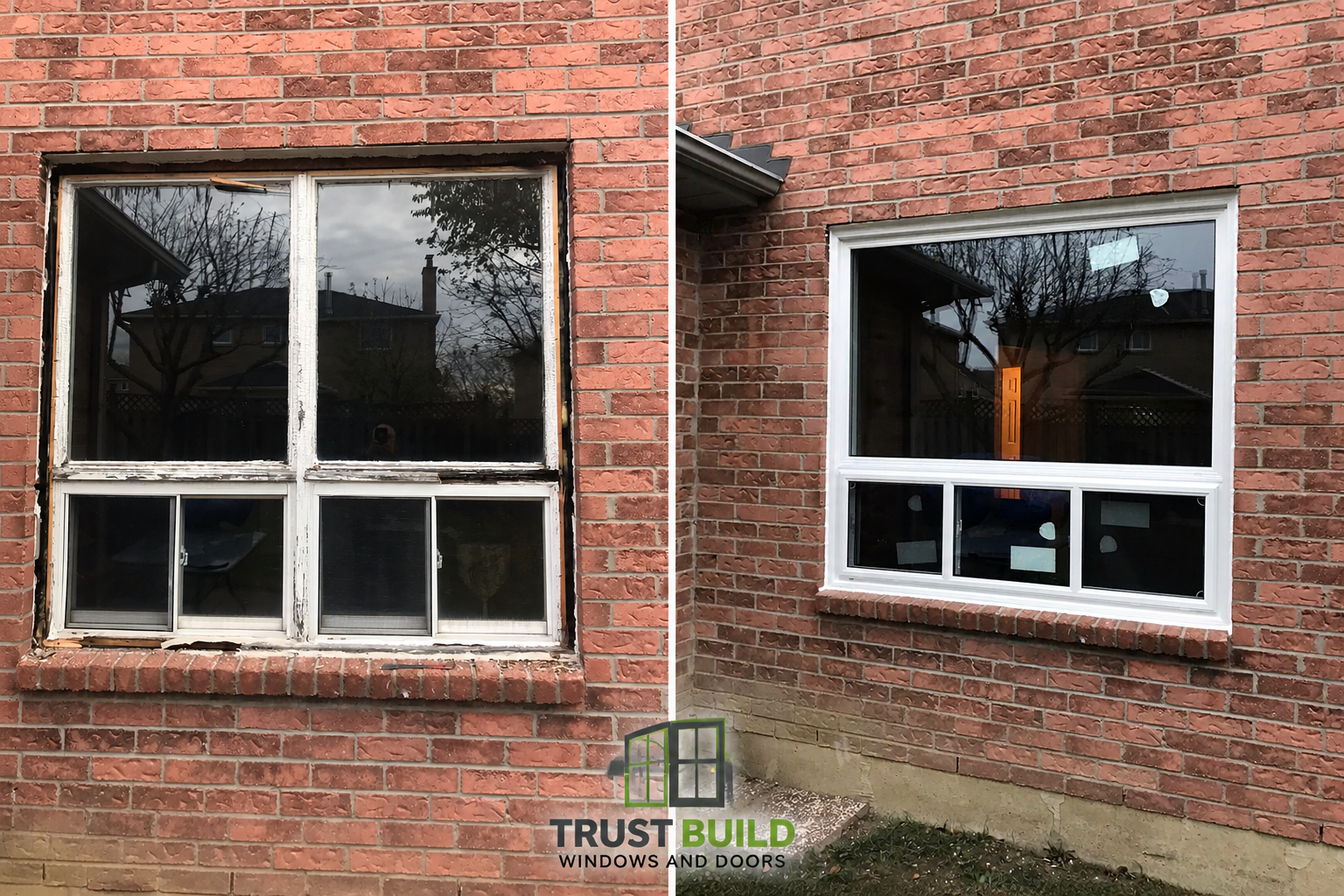
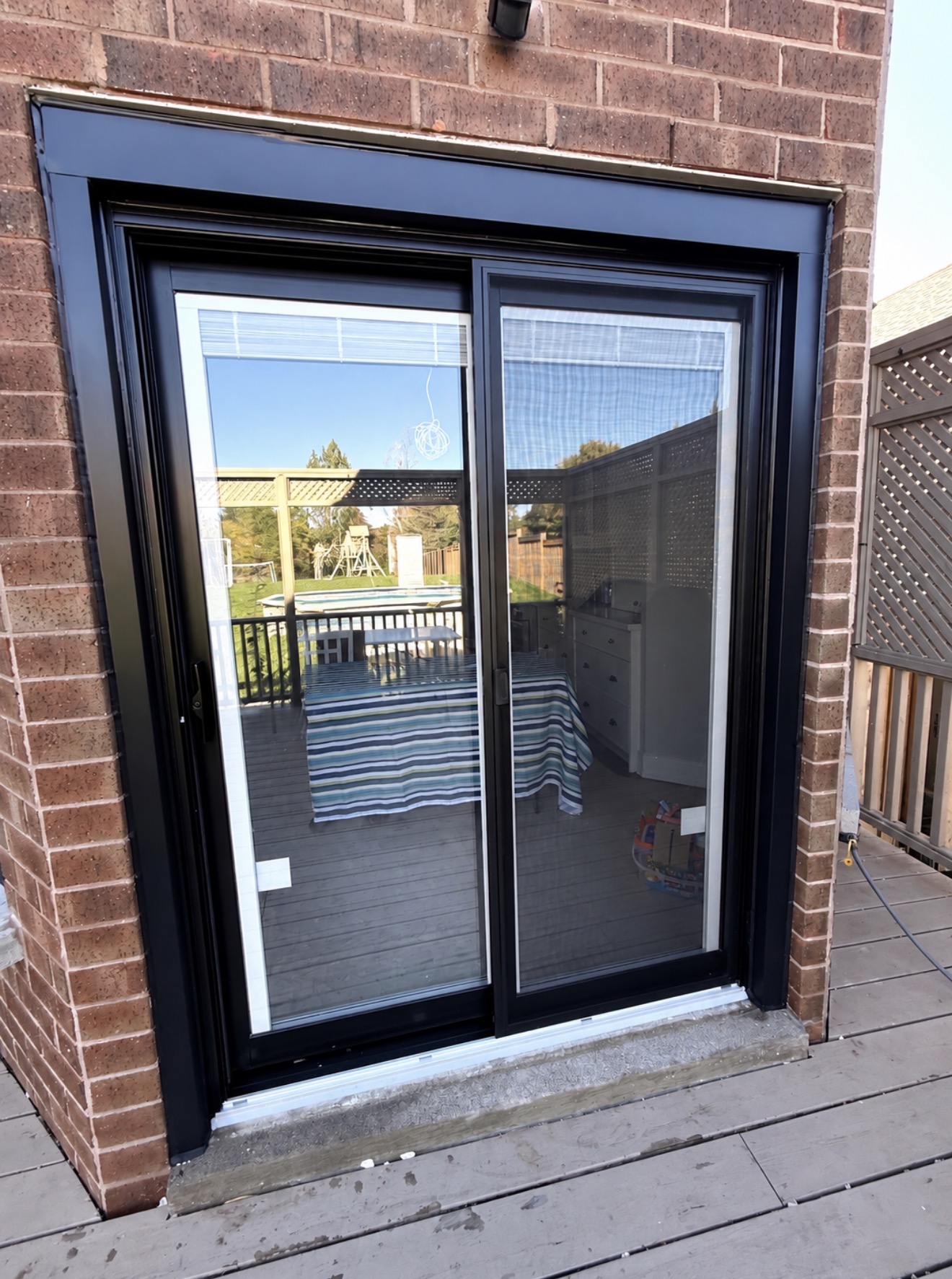
An old sliding patio door in Cobourg was replaced brick-to-brick, finished in black on the exterior with a white interior, and fitted with a high-security multipoint lock. The finish is the part most people notice first. The part that actually matters longer term is the frame underneath it: reinforced aluminum, specifically chosen so the screen keeps sliding freely for years instead of starting to bind after a season or two.
Why the frame reinforcement is a lake-specific detail
Homes closer to the Cobourg waterfront deal with more humidity, temperature swings, and salt-air exposure than homes further inland, and a patio door frame that isn't built to handle that kind of cycling can warp or flex slightly over time. That's exactly what causes a sliding screen to start binding in its track: not a screen problem, a frame problem. A reinforced aluminum frame resists that flexing, which is why the screen on this door keeps operating smoothly rather than developing the sticking and misalignment that shows up on lighter-duty frames after a few years near the water.
Why brick-to-brick, not an insert
This was a full brick-to-brick installation: the entire door assembly removed down to the masonry opening, not a new slab fitted into the existing frame. On a patio door specifically, that matters because the frame is doing more structural work than a standard window frame, supporting a much larger, heavier sliding panel. Starting from the masonry opening rather than building on top of whatever the old frame's condition happened to be gives the new door a properly square, properly sealed foundation to operate from.
The lock: multipoint, not a single latch
Security on this door comes from a multipoint locking system rather than a standard single-point patio door latch. A sliding patio door is a common target for forced entry specifically because a basic latch only secures the door at one point along its length; a multipoint system engages the frame at several points at once from a single motion. On a sliding door this is typically a hook-bolt style mechanism that engages the frame along the sliding panel and track, which is a different hardware approach than the lift-handle multipoint systems used on hinged entry doors.
Rebate note
Door replacements like this one may qualify for up to $100 per rough opening under the Home Renovation Savings™ program when you bundle two or more eligible upgrades. ENERGY STAR® certified products are required, and eligibility and approval depend on the current program requirements and administrator, with an energy assessment needed before work begins. For a full look at patio door options and specs, see our sliding patio doors page.
Frequently asked questions
Why does a sliding patio door screen start sticking after a few years?
It's usually a frame issue, not a screen issue. If the surrounding frame flexes or warps slightly over time, especially from repeated humidity and temperature cycling, the screen track shifts out of alignment and starts binding. A reinforced, more rigid frame resists that flexing and keeps the screen operating smoothly.
Is a multipoint lock necessary on a patio door specifically?
It's a meaningful upgrade given how much glass surface area and length a patio door has compared to a standard entry door. A single-point latch only secures one spot along that length, while a multipoint system engages the frame at several points at once from a single motion.
Do homes near water need different patio door construction than homes further inland?
Homes with more direct exposure to humidity, salt air, and temperature swings benefit from more reinforced, corrosion-resistant frame materials, since standard-duty frames are more likely to warp or degrade faster under that kind of repeated exposure.
Replacing a patio door near the water?
A reinforced frame and a real multipoint lock matter more on a lakefront property than they do further inland. Every Trust Build installation is completed by our own in-house crews and backed by a lifetime transferable warranty, with 0% financing available.