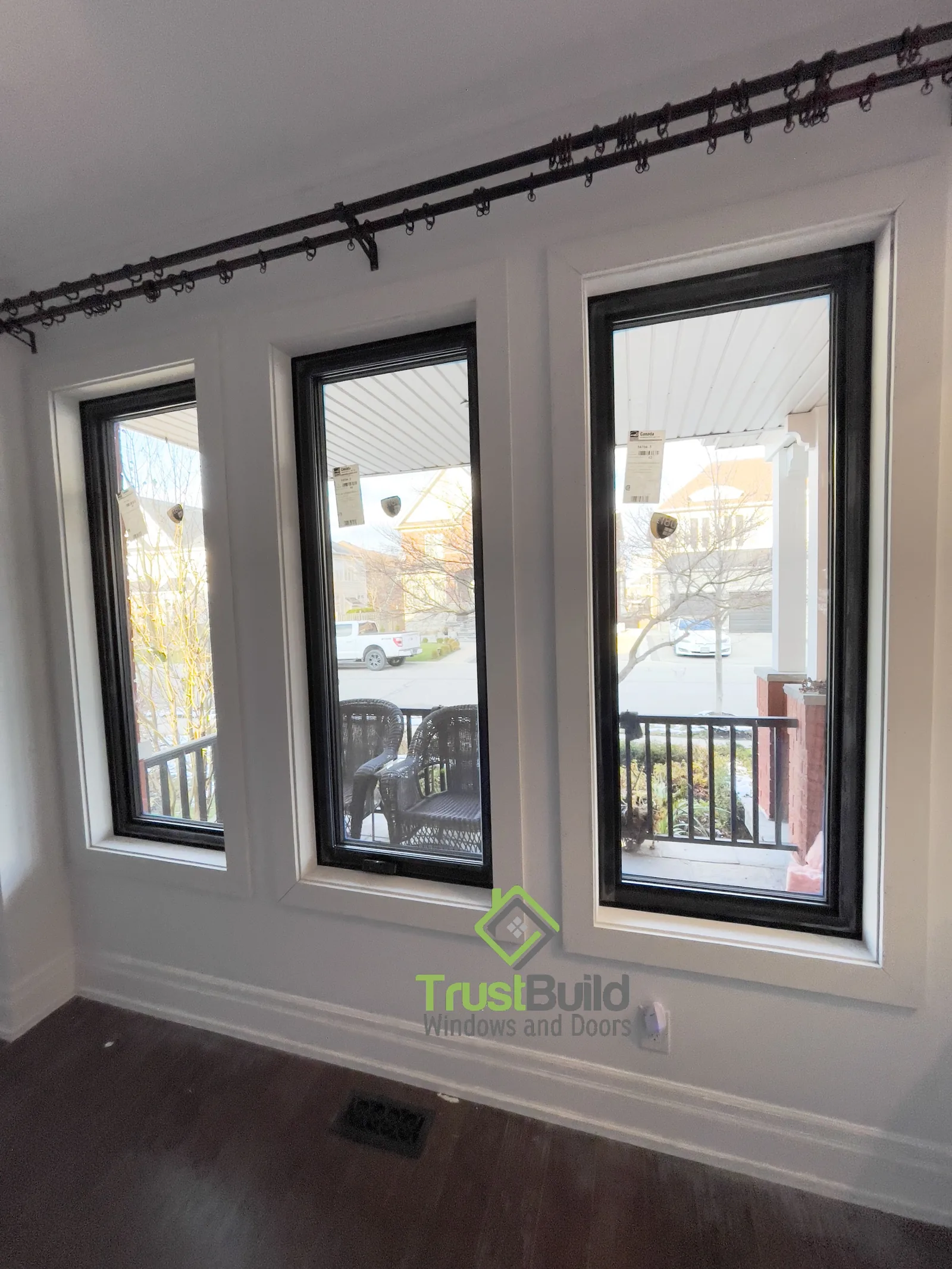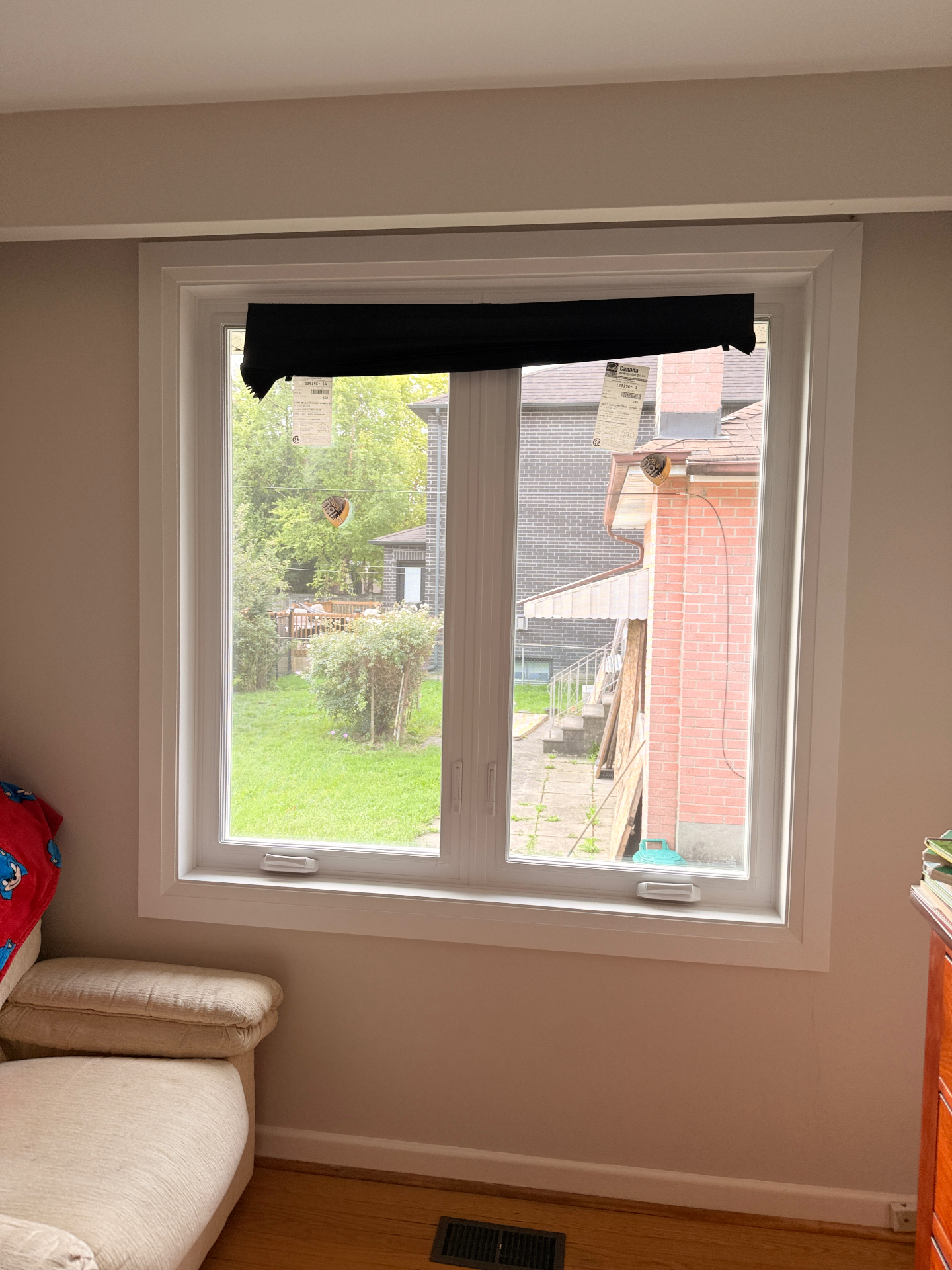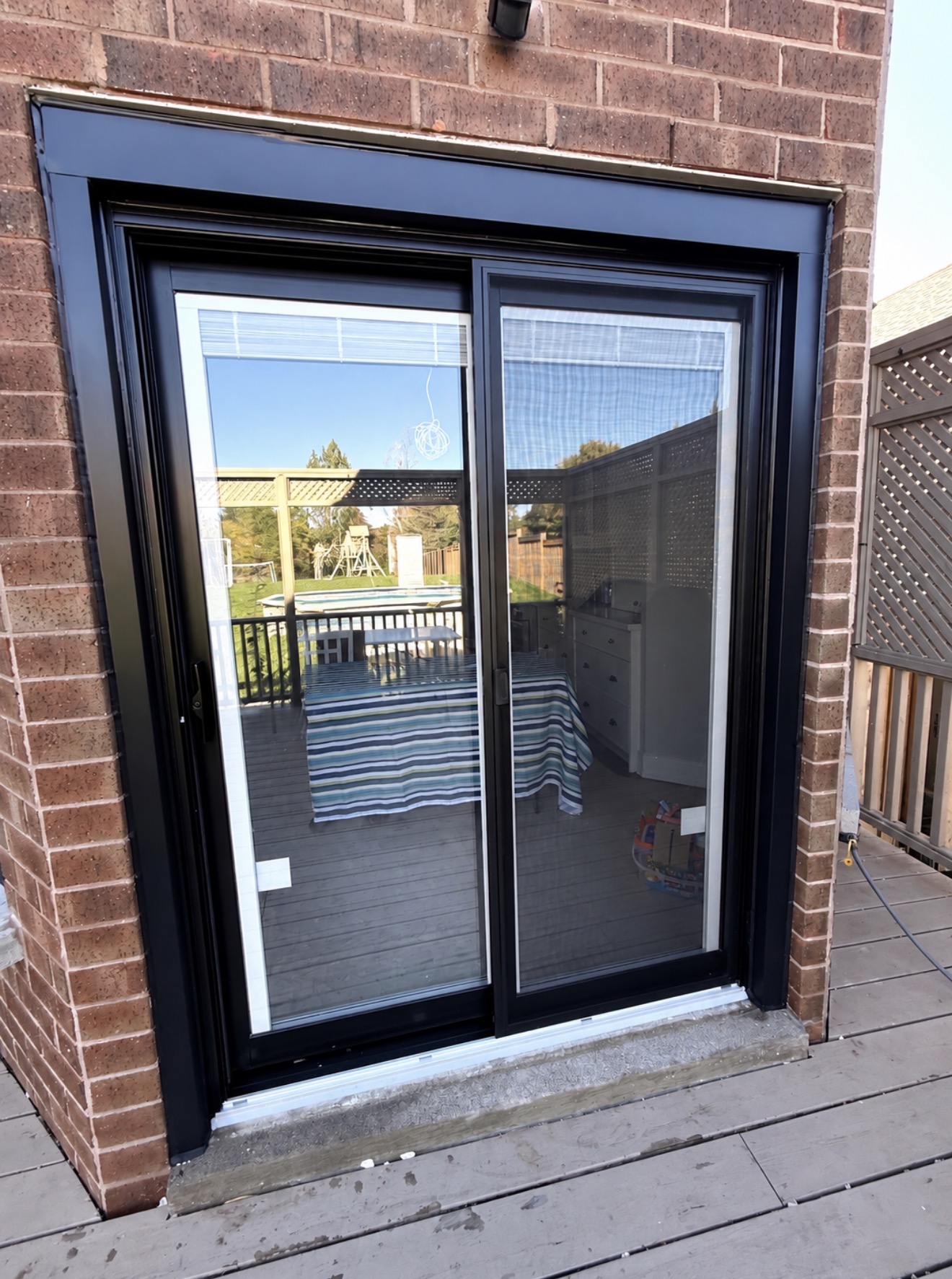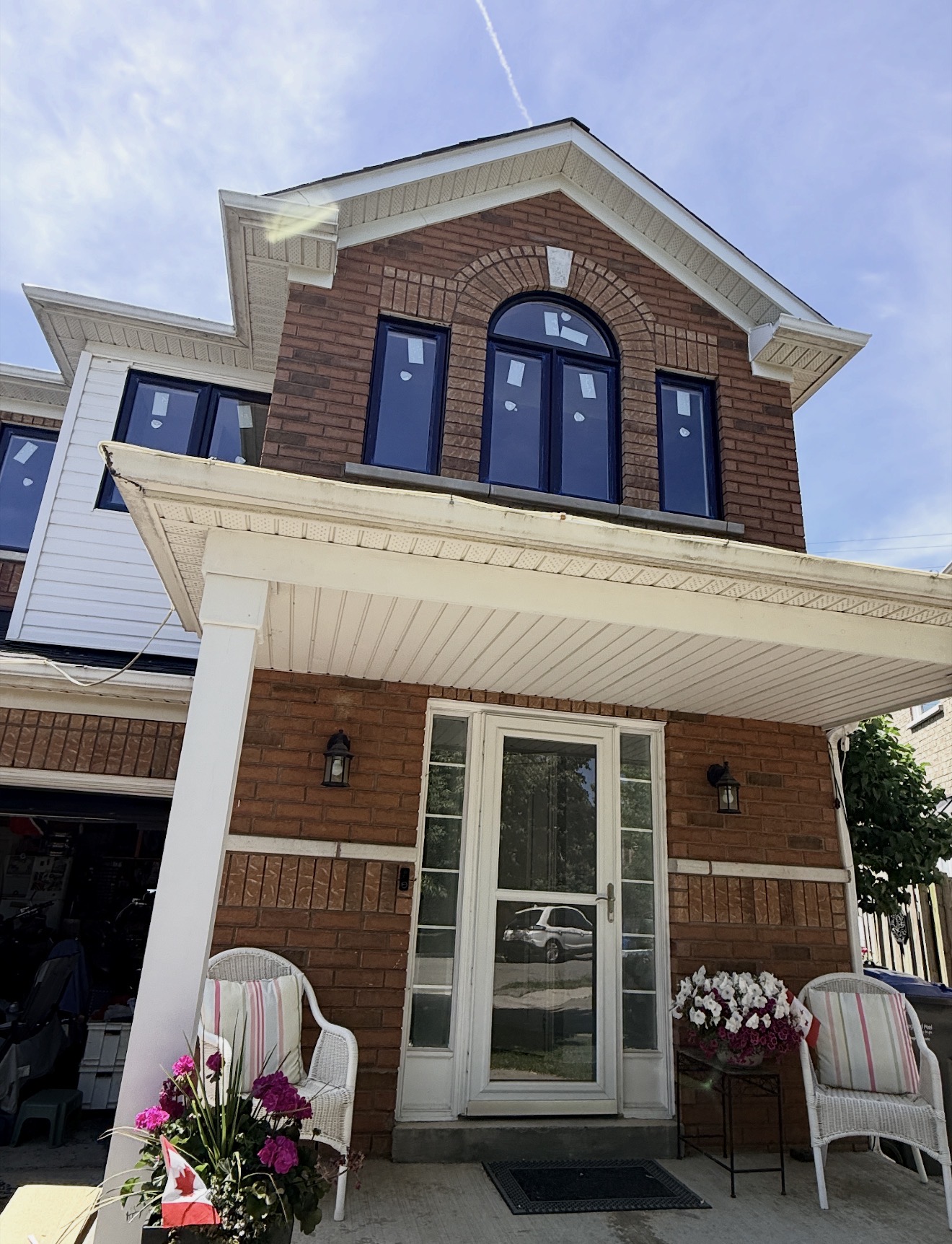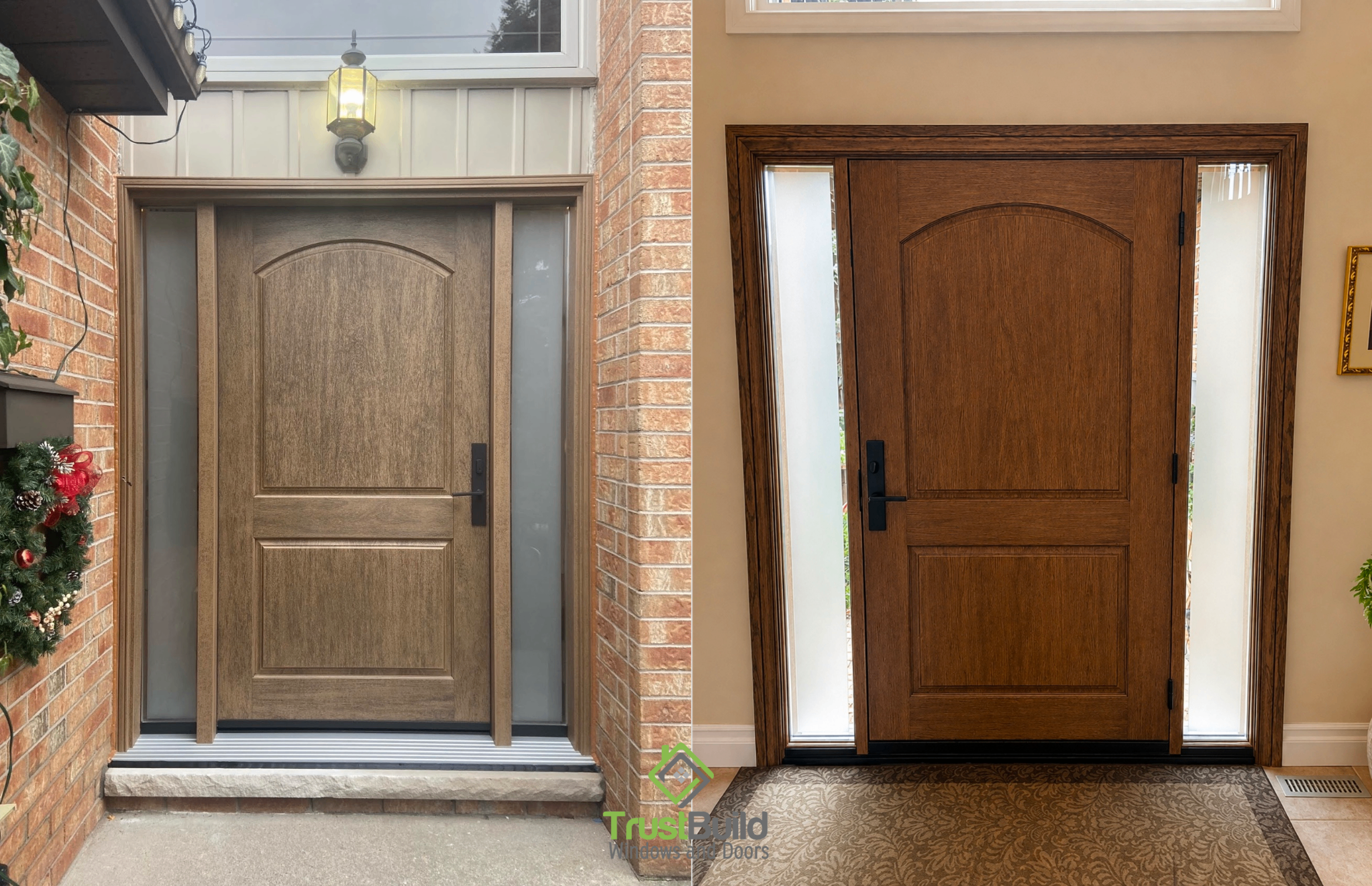
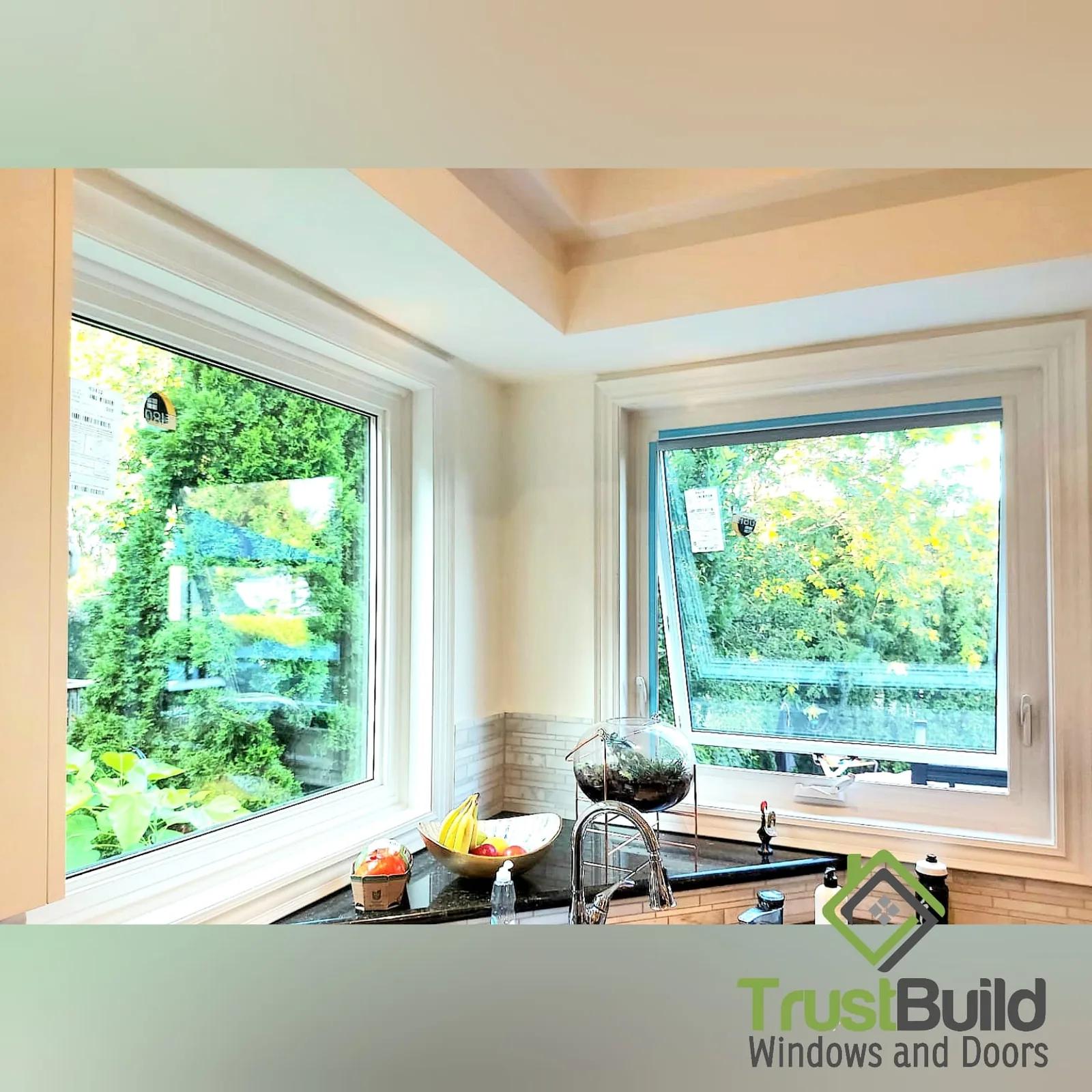
This completed Milton kitchen uses two different window types for two different jobs. The larger fixed picture window keeps the garden view open, while the white awning window beside it opens outward from the bottom to bring fresh air over the counter.
One corner, two window functions
A fixed pane is the right choice when the priority is uninterrupted glass and there is no need for that opening to move. An awning window solves the opposite requirement: its top-hinged sash opens outward, creating a useful ventilation point in a location where an inward-opening window would interfere with the counter and sink area.
The pairing avoids forcing one window style to do everything. The fixed unit carries the wider view; the operating unit handles airflow. Matching white frames and interior trim keep the two openings visually connected even though their functions differ.
Why the operating direction matters above a counter
Kitchen windows have to work around faucets, counters and anything kept along the sill. Because the sash moves outside, an awning design leaves the room side of the opening clear. Its projected glass also provides some shelter in light rain, although any window should be closed in heavy or wind-driven weather.
Planning a similar Milton window combination
The right split between fixed and operating glass depends on the opening, the desired view, and where ventilation is actually useful. Frame colour, glass selection and the installation method are specified for the individual home rather than inferred from a photo. See the full guide to window installation methods or request a measured proposal for your own kitchen.