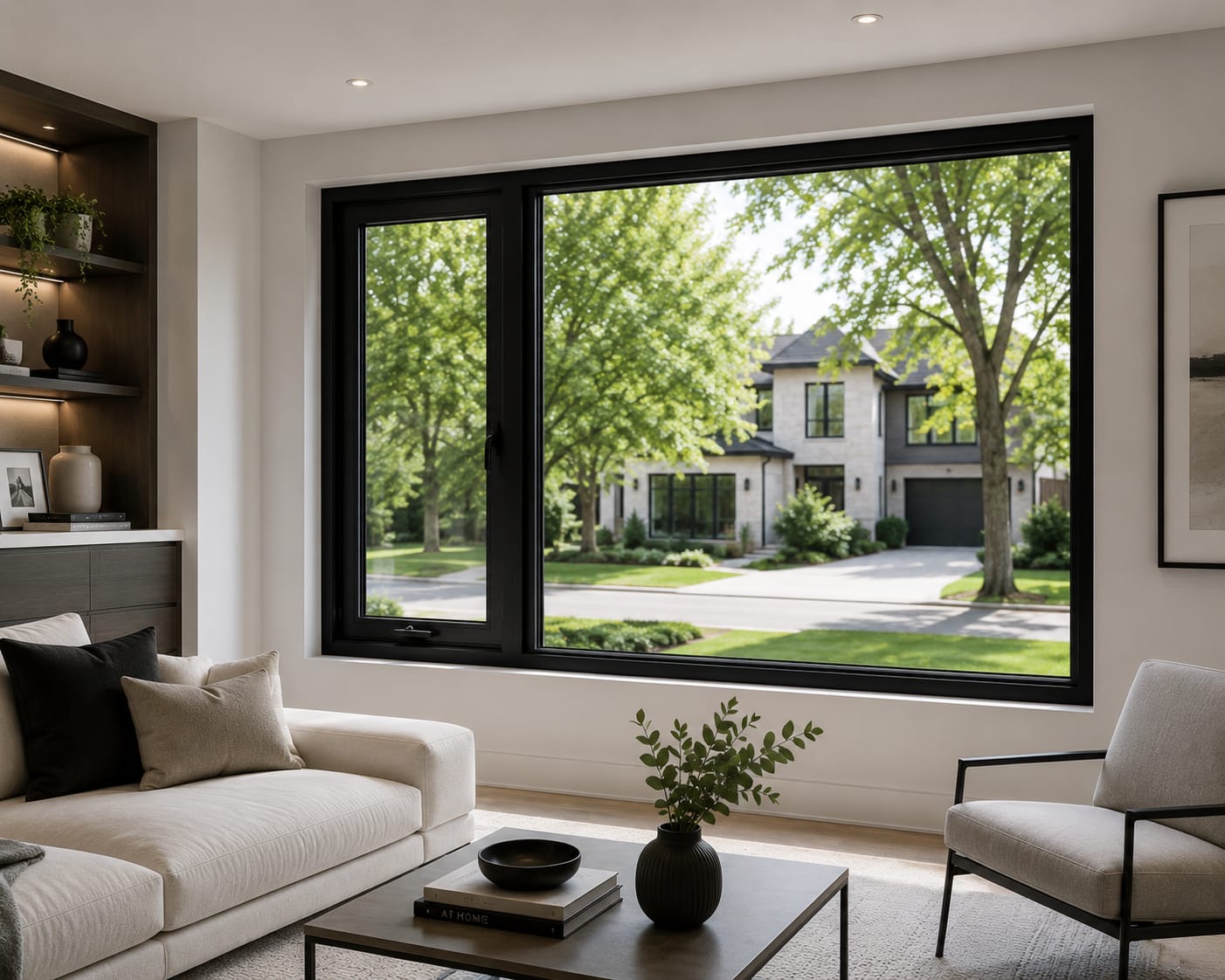
Installation quality is equally important as glass performance, Energy Rating (ER), U-Value and SHGC values. Trust Build is an installation-first company — here are the four methods we use and when each one is the right choice.
Installation quality is as important as glass performance, Energy Rating (ER), U-Value and SHGC. A premium window installed poorly will underperform a mid-tier window installed correctly. Trust Build is an installation-first company focused on proper building-envelope integration — here are the four methods we use and when each one is the right choice.
Brick-to-Brick Installation
Trust Build Premium Method
Trust Build's most common premium installation. The existing window is removed to the brick opening and the old frame is taken out. The opening and existing insulation are inspected, additional insulation is added where required, the new window is set into the original brick opening, the exterior perimeter is sealed and protected, and new aluminum capping is installed. Interior finishes are preserved where possible — this is not the same as a North American full-tear-out 'full-frame replacement'.
✓Larger glass area than retrofit installation
✓Better air sealing and perimeter insulation
✓Allows inspection of the opening condition
✓Maintains the original window size
✓Preserves interior finishes where possible
Best for: Homeowners who want maximum performance and proper envelope sealing without major interior reconstruction.
The most extensive installation method. The window and surrounding construction materials are removed and the opening is exposed to the structural framing. Damaged materials can be repaired or replaced, openings can be modified or resized, and new insulation and waterproofing are installed before the new window or door is set into the rebuilt opening.
✓Allows structural repairs
✓Allows resizing of openings
✓Allows window-to-door conversions
✓Provides complete access to the building envelope
✓Ideal for egress and major renovation projects
Best for: Enlarging windows, window-to-door conversions, structural repairs, egress window projects and major remodeling projects.
The existing frame remains in place and the new window is installed within it. Interior and exterior finishes stay largely untouched — a faster, lower-cost option when the existing frame is in excellent structural condition. There is a slight reduction in glass area, and full inspection of the rough opening isn't possible.
✓Faster installation
✓Lower installation cost
✓Minimal disruption
✓Preserves existing interior and exterior finishes
Best for: Homes where the existing frame is structurally sound and free of water damage.
A specialized method commonly used with vinyl windows. The exterior portion of the existing frame is removed while the interior frame components remain intact — existing interior casing and trim are preserved, and the new window is integrated into the existing interior frame structure. Provides more glass area than most retrofits and allows exterior weatherproofing upgrades.
✓Preserves interior finishes and existing trim
✓Minimizes drywall and repainting work
✓More glass area than most retrofits
✓Allows exterior waterproofing and capping upgrades
Best for: Homes with premium interior wood trim, recently renovated interiors, and vinyl window replacement projects where preserving interior finishes matters.
Not every home qualifies for retrofit or split-frame
Before recommending an installation method, Trust Build evaluates existing frame condition, moisture exposure, structural integrity, air leakage and the overall condition of the opening. The right method is determined after on-site inspection to ensure long-term performance and durability — not chosen on price alone.
Installation quality is equally important as glass performance, Energy Rating (ER), U-Value and SHGC values.
FAQ
Installation Methods — Frequently Asked Questions
It depends on the condition of your existing window frame, the surrounding wall, moisture exposure and your interior finishes. Trust Build evaluates each opening on-site and recommends brick-to-brick, stud-to-stud, retrofit or split-frame based on what will perform best long-term — not on what's cheapest.
Not always. Brick-to-brick gives the most thorough envelope upgrade, but if the existing frame is structurally sound and well sealed, a retrofit or split-frame install can perform extremely well at a lower cost and with less disruption. The wrong method on the wrong opening is what causes problems.
Split-frame is a Trust Build specialty method, primarily for vinyl windows. The exterior portion of the existing frame is removed while the interior frame section is preserved, so interior casing, stained wood trim and drywall stay intact. It's ideal for homes with premium interiors or recent renovations.
Stud-to-stud is the right call when there's structural damage, rotted framing, severe water damage, when an opening needs to be resized, when converting a window into a door, or for egress window projects. It allows complete reconstruction of the rough opening.
A high-performance window with great ER, U-Value and SHGC ratings will still leak air and water if the install isn't right. Poor flashing, missing insulation in the rough opening or inadequate sealing undo the engineering. Installation is what turns a tested product into real-world performance.
Yes. Every quote includes an in-home assessment of frame condition, moisture exposure, structural integrity, air leakage and overall opening condition before we recommend an installation method.