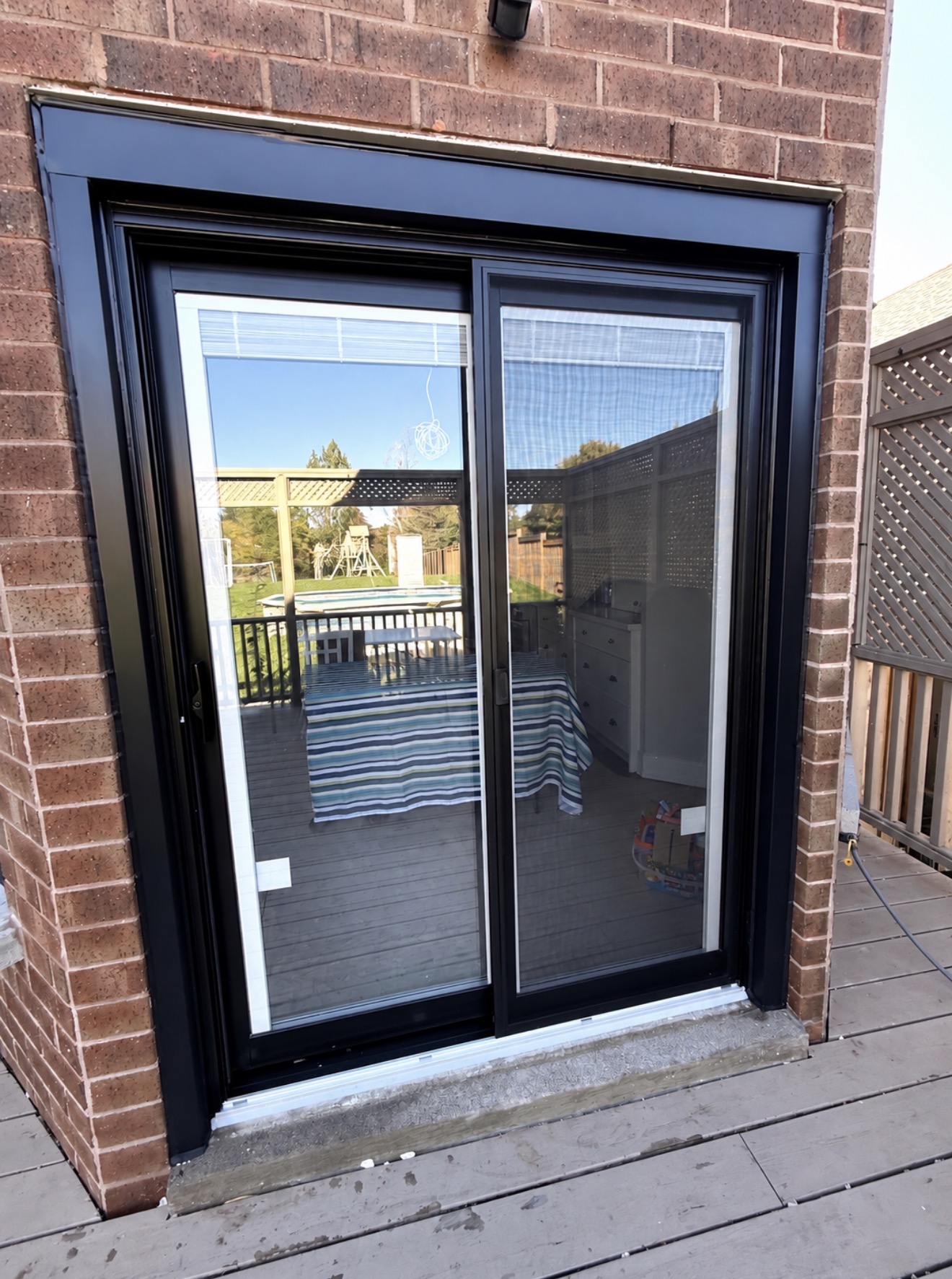
Getting to the backyard through this North York door used to take three separate steps: open the shutters mounted in front of the glass, force the sliding panel sideways since it no longer moved freely, then push the screen, which had started bowing out of its track. The glass itself was showing condensation between the panes, a clear sign the seal had failed. The replacement solves all of it at once, with blinds built directly between the glass panels instead of shutters, and a door that actually slides the way a sliding door should.
What condensation between the panes actually meant here
Fogging or condensation between the glass layers, rather than on the surface, means the seal inside the insulated glass unit has failed and moisture has gotten into the sealed air space. It isn't something that wipes away or responds to a dehumidifier. Combined with a track and roller system that had worn down enough to make the door genuinely difficult to operate, this wasn't a candidate for a repair, it needed a full replacement. For a fuller breakdown of what the different kinds of window condensation each signal, see our guide to condensation on new and old windows.
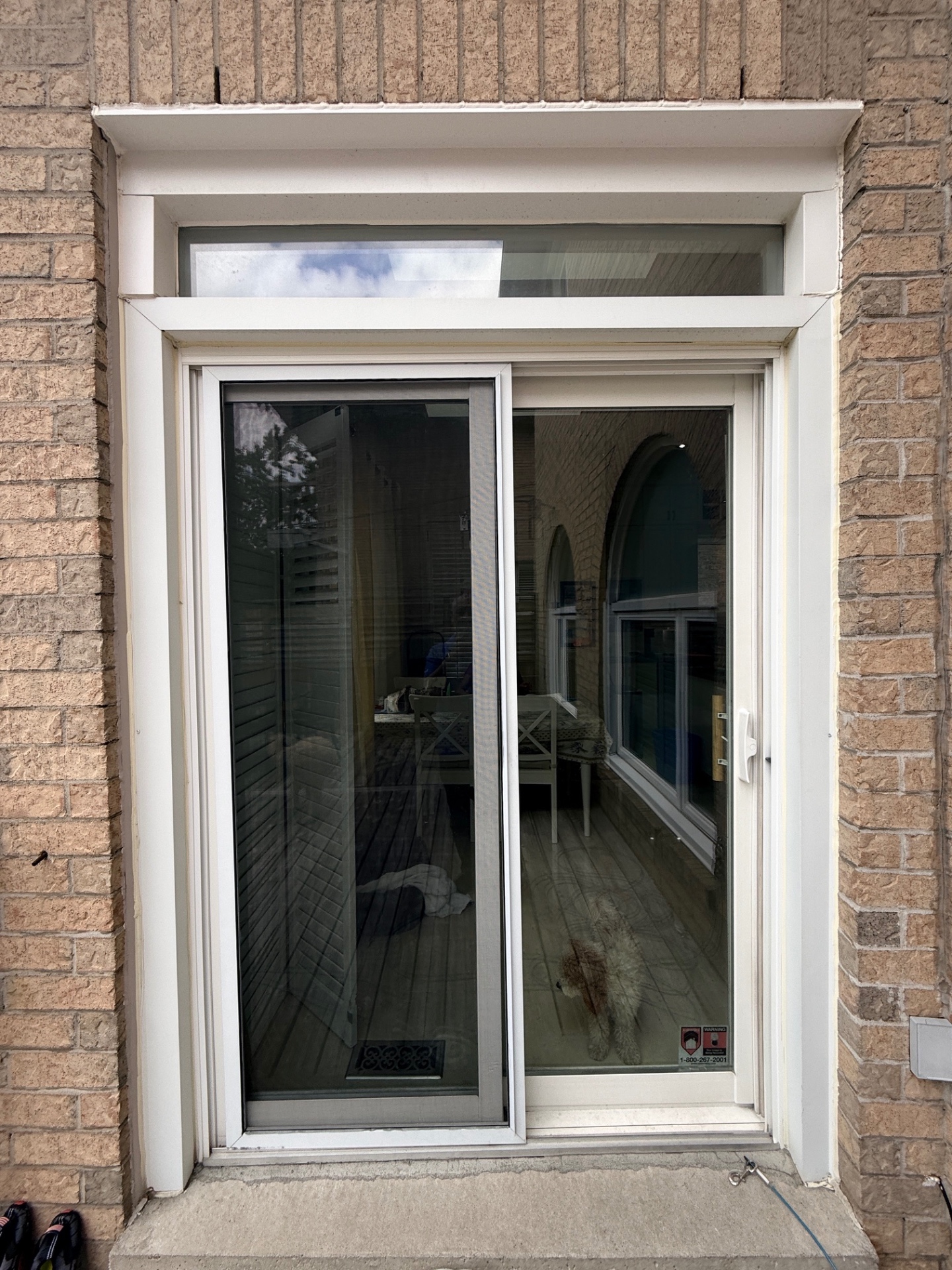
Blinds between the glass instead of shutters in front of it
The new door uses blinds built directly between the two panes of glass rather than any window treatment mounted on the surface. The homeowner no longer needs the shutters, curtains, or blinds that were previously required for privacy, since that control is now built into the glass unit itself. It also removes the friction those shutters were adding every single time the door needed to open, one less physical step between the house and the backyard.
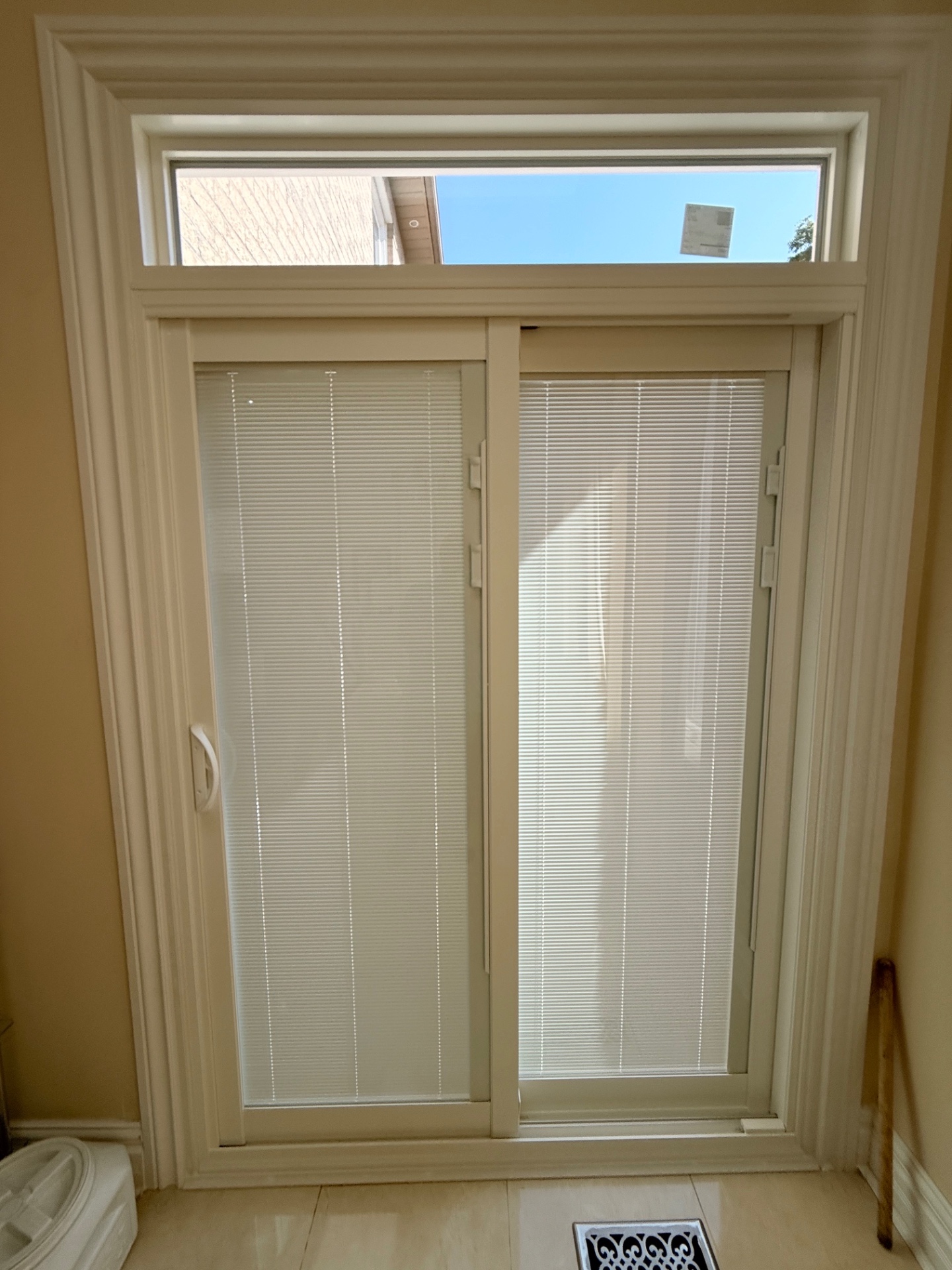
Why the new door actually slides easily
The reinforced frame supporting the screen on the new door is 3½ inches thick, providing a genuinely solid structure for the screen and panel to operate against rather than the thinner fin-style frame the original door relied on. That extra rigidity is a direct part of why the new panel glides smoothly, where the old one required real physical effort to force sideways. More on what goes into a door like this is on our sliding patio door page.
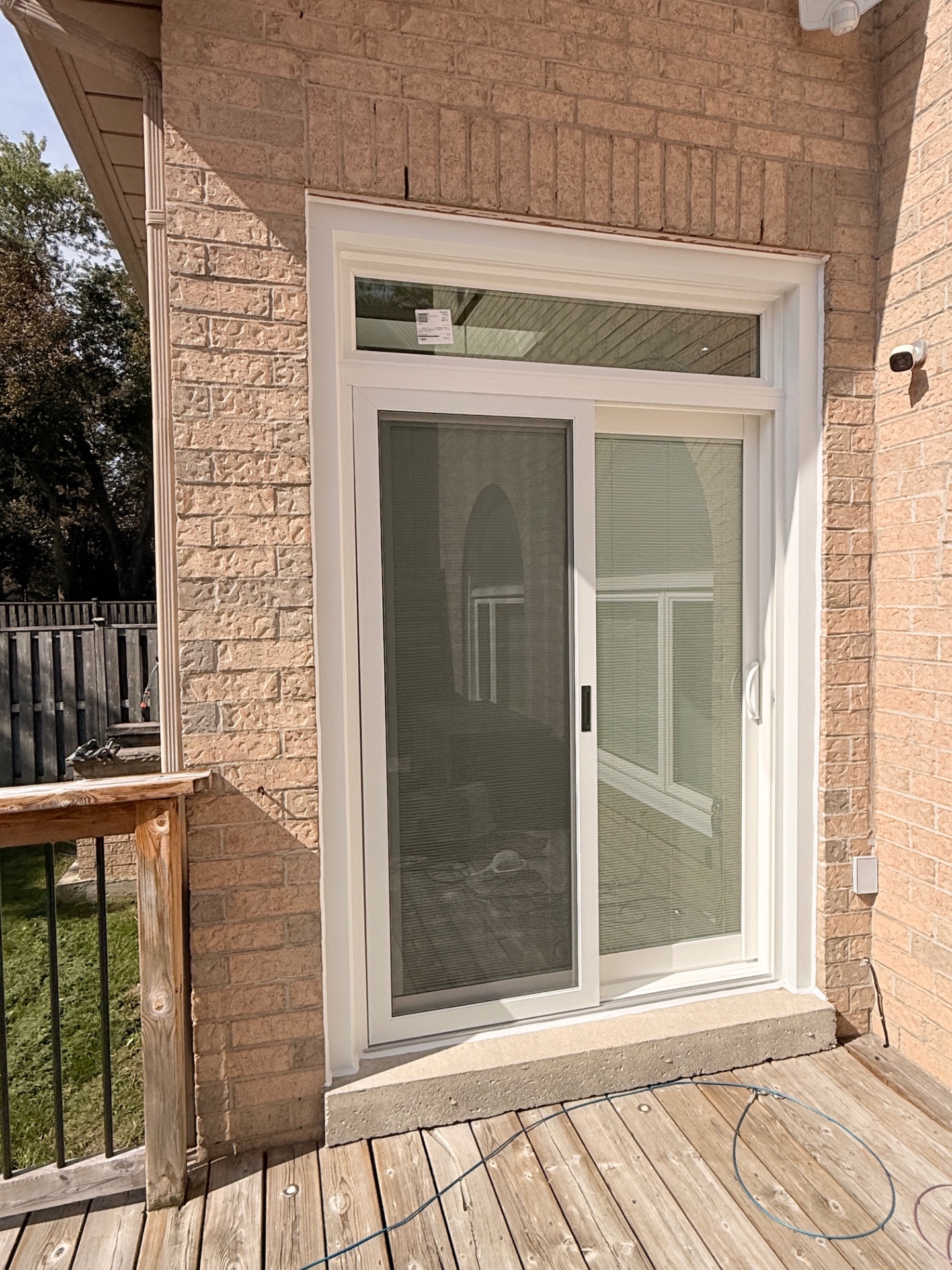
A maintenance tip worth knowing, regardless of your door's age: a patio door screen only needs to be in position during insect season. Once the weather turns cold and there are no more mosquitoes or flies to keep out, slide the screen over so it rests against the fixed panel and leave it there for the winter. Ice buildup on the track is what causes most screen and roller damage during colder months, since a screen still being moved back and forth across an icy track will eventually hit that ice and damage the wheels. Parking the screen against the fixed panel for the season avoids that entirely.