If you wipe your window sills and the mould keeps coming back, you're not dealing with a cleaning problem — you're dealing with a moisture problem. Mould around windows is common in homes across Southern Ontario, especially through the long, cold winters when warm indoor air meets cold glass. The good news: once you understand why it forms, it's both fixable and preventable. Here's what actually causes mould on windows, how to remove it safely, and how to stop it from returning for good.
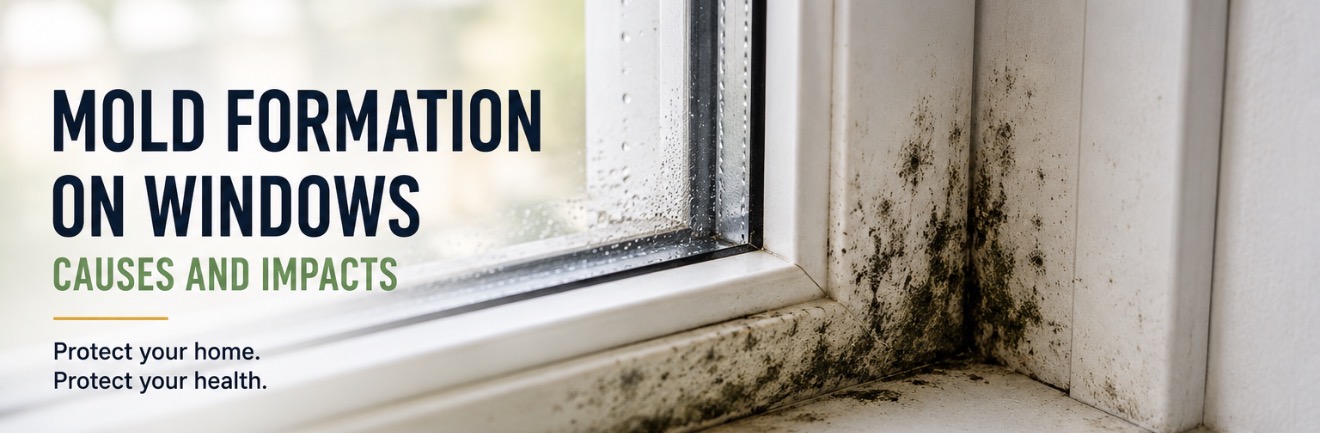
Why Mould Grows on Windows
Mould needs three things to grow: moisture, a food source, and a cool surface to settle on. Windows quietly provide all three. In winter, the glass and frame are the coldest surfaces in the room. When warm, humid indoor air touches that cold surface, the moisture condenses into water — the same way a cold drink sweats on a summer day. That film of water collects on sills and frames, and combined with household dust (the food source), it becomes an ideal spot for mould to take hold.
Southern Ontario's climate makes this worse than in milder regions. Long stretches of deep cold keep window surfaces cold for months, while sealed-up homes trap the humidity from cooking, showering, and simply breathing. Homes near the lakes and in snowbelt areas feel it most. The problem shows up first where the air is coldest and stillest: the bottom corners of the glass and the sill.
The Real Culprit Is Usually Condensation
Most window mould traces back to condensation, so controlling condensation is how you control the mould. A little fog on the glass on a very cold morning is normal. Persistent water pooling on the sill, day after day, is not — it points to indoor humidity that's too high, a window surface that's too cold, or both.
When Mould Is a Sign Your Window Has Failed
There's one form of condensation you can't wipe away: moisture trapped between the panes of a sealed glass unit. If you see fog or droplets inside the glass that no cleaning reaches, the window's seal has failed and the insulating gas has escaped. That unit can't be repaired — and a cold, failed window is far more prone to surface condensation and the mould that follows. Older single-pane windows and units built with conductive metal spacers run cold at the edges for the same reason, which is why mould so often clusters on aging windows specifically.
How to Safely Remove Mould Around Your Windows
For a small patch on the frame or sill, you can usually clean it yourself:
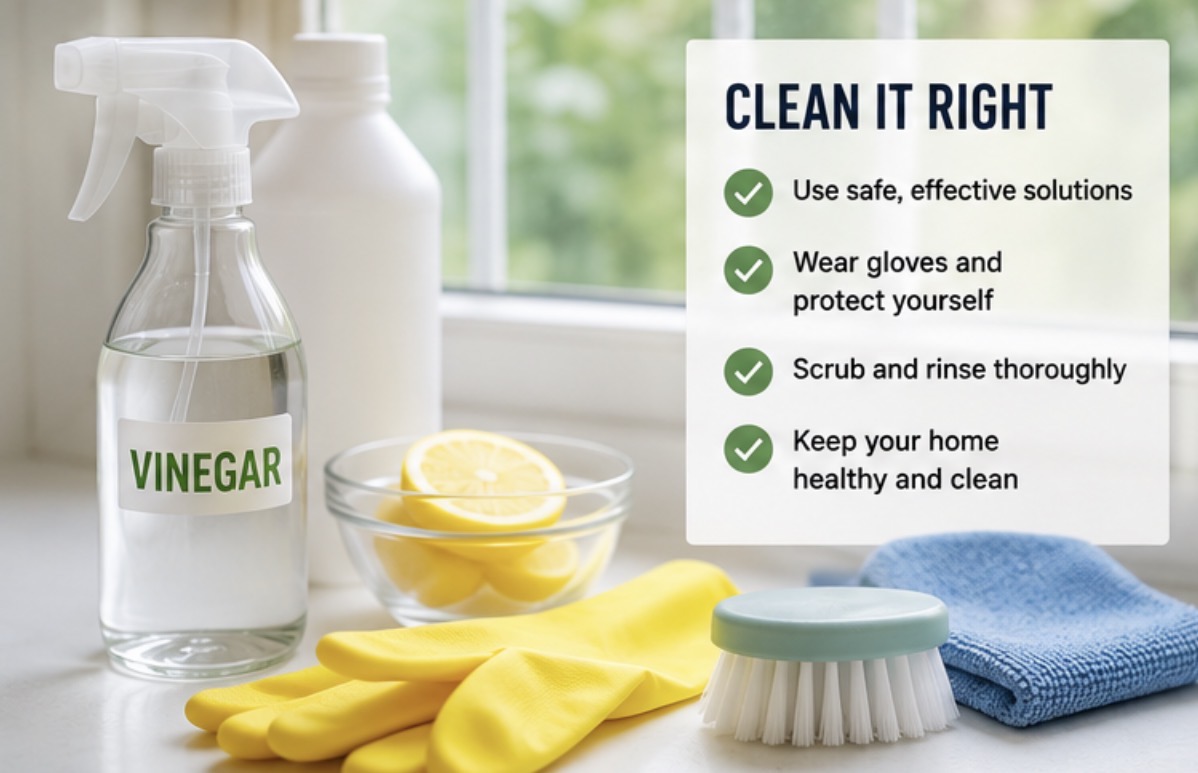
- Wear gloves and a mask so you're not breathing in spores.
- Lightly dampen the area first so spores don't become airborne.
- Wipe with a household mould cleaner, or a solution of equal parts white vinegar and water, and let it sit a few minutes before scrubbing.
- Dry the surface completely afterward — leftover moisture invites regrowth.
- Seal used cloths in a bag before throwing them out, and wash up when you're done.
Two important cautions: colour is not a reliable guide to how harmful mould is, so don't assume a light-coloured patch is safe. And if the affected area is large, keeps returning, or if anyone in the home has asthma, allergies, or a weakened immune system, bring in a professional remediation service rather than tackling it yourself.
How to Keep Mould From Coming Back
Removal only lasts if you address the moisture underneath it:
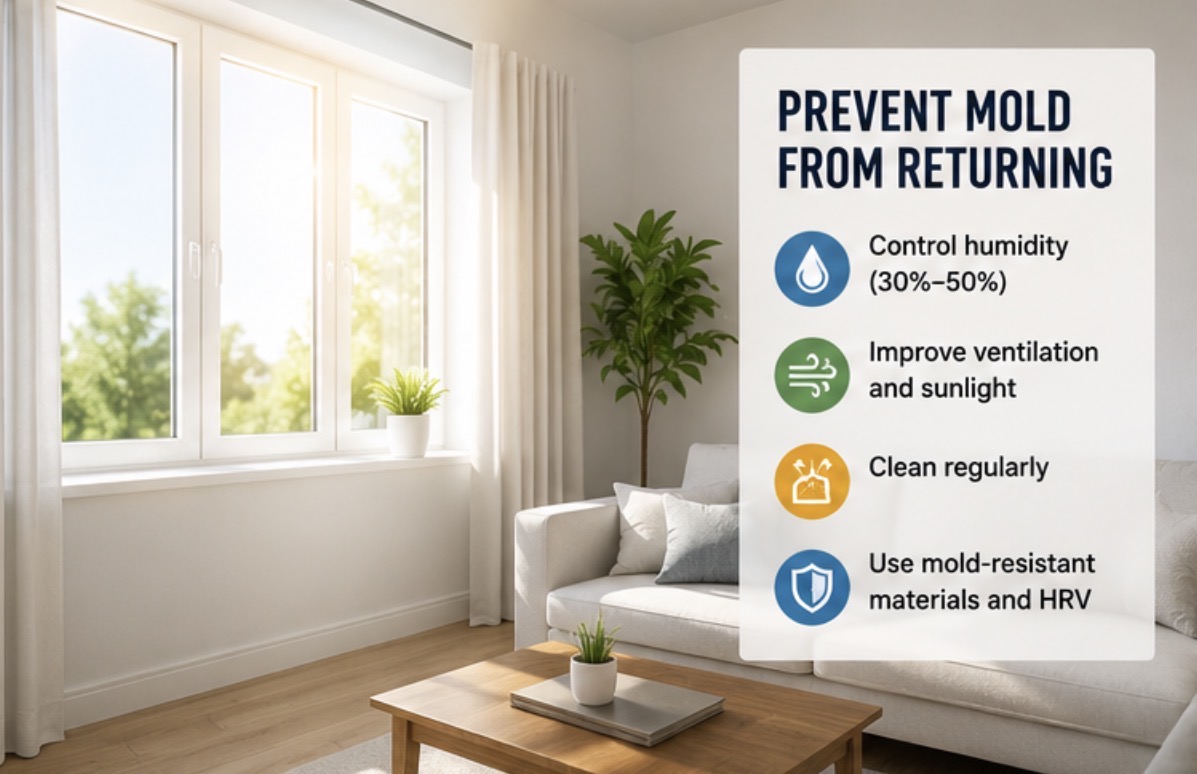
- Keep indoor relative humidity between 30% and 50%, and lower it in the coldest months. A hygrometer makes this easy to monitor.
- Improve airflow across your windows — pull curtains and blinds back during the day so warm air can reach the glass instead of trapping cold, damp air against it.
- Run bathroom and kitchen exhaust fans, and consider a heat recovery ventilator (HRV) to bring in fresh air without losing all your heat.
- Wipe away morning condensation before it has time to feed mould.
- Address the window itself — because if the glass keeps running cold, the condensation will keep returning no matter how diligent you are.
How New Windows Reduce Condensation and Mould
The permanent fix for chronic window condensation is a warmer interior glass surface, and that's exactly what modern energy-efficient windows deliver. Energy Star certified units with Low-E coatings, an insulating gas fill, and warm-edge glass technology keep the inside face of the glass significantly warmer than an old single-pane or seal-failed window. A warmer surface means far less condensation — and far less of the moisture that mould depends on.
Every window Trust Build installs is Energy Star certified for the Canadian climate zone and fitted by trained, certified crews, with 0% financing available so the whole home can be done in one project. If your windows are old, drafty, or fogging between the panes, upgrading to energy-efficient replacement windows often solves a stubborn mould problem at its source. More than 8,700 Ontario homeowners have already made the switch.
Solve Mould at the Source
If mould around your windows keeps coming back, the windows themselves may be the cause. To find out whether replacement is the right fix for your home, reach out at hello@trustbuildwindows.com.