By Trust Build Windows and Doors ·
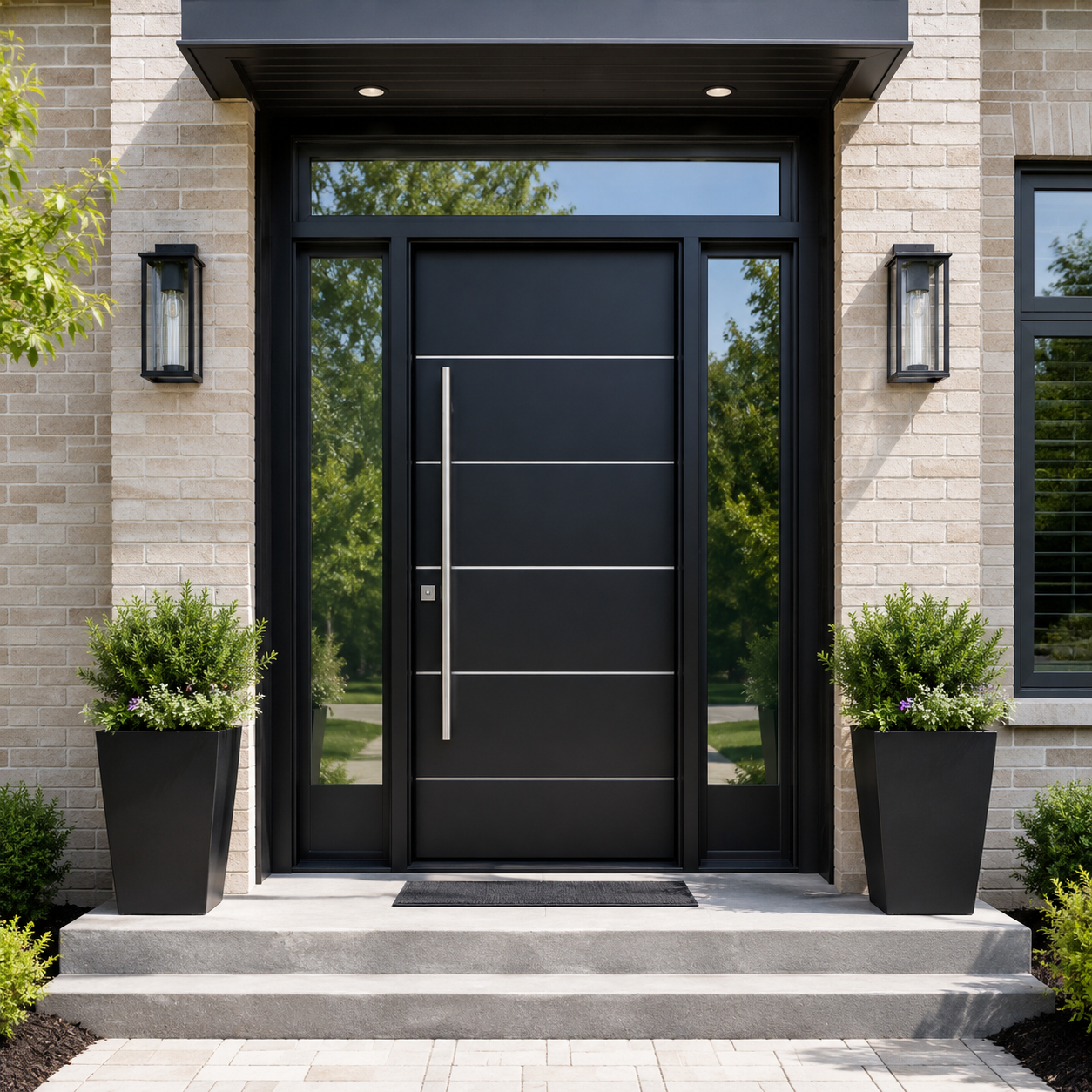
When homeowners choose a new entry door, most of the attention goes to the slab: its colour, glass, hardware and whether it is steel or fiberglass. But many concerns about moisture, maintenance and the appearance of the finished installation also come back to the door frame.
Frames come in several material combinations. Some use wood with a protective coating or cladding; others use a composite material throughout. Understanding what is underneath the finish helps you compare the options rather than judging the frame by its appearance alone.
Painted finger-jointed pine frames
A basic option is a finger-jointed pine frame. Finger-jointing joins shorter pieces of wood together to form the frame components. When the exposed wood has no additional protective covering, it needs an exterior coating suitable for door frames and trim.
That finish helps limit moisture absorption from rain and condensation. It does not make the wood waterproof or eliminate its natural movement as moisture conditions change. Proper surface preparation, protection of exposed edges and ongoing paint maintenance matter if you want the frame to stay in good condition.
Wood frames with aluminum capping
The next option is a wood frame protected by aluminum capping. The installer covers the exposed exterior wood with formed aluminum, reducing its direct exposure to weather and the amount of exterior painting it needs.
One concern is appearance: thin aluminum can dent when it is struck, so a capped frame may lose its crisp look over time. The capping also needs properly detailed joints and seals. It protects the wood beneath it, but it cannot compensate for existing damage or prevent every moisture problem on its own.
Factory vinyl-clad wood frames
A vinyl-clad frame uses a similar principle: a protective outer layer covers the wood. Here, the covering is vinyl rather than aluminum, and it is typically fitted as part of the factory assembly.
Vinyl does not dent in the same way as thin aluminum, although it can still be damaged. Its long-term appearance depends on the cladding design, how it is attached and the conditions it faces. Heat and direct sun can affect some vinyl coverings, potentially causing distortion or a less even finish. A factory-applied covering is not, by itself, a guarantee that the surface will never change.
Laminated wood frames
A laminated frame is a wood frame with a durable laminate bonded directly to its surface. A well-bonded laminate creates a firm, closely fitted finish rather than a loose covering with an intentional air gap behind it.
The vulnerable areas are often the edges and joints: where the horizontal and vertical frame sections meet, where the frame meets the threshold, and anywhere the protective surface is interrupted. These connections need appropriate sealing and installation detailing.
If water reaches unprotected wood at an edge, it can work beneath the laminate. Over time, that may cause swelling, bubbling or separation between the finish and the wood. The laminate's appearance and durability therefore depend on more than the visible face of the frame.
Composite frames
For homeowners who want to reduce moisture-related maintenance, composite frames are the option Trust Build recommends considering. A composite frame uses an engineered material rather than relying on an exposed pine core with a thin protective outer covering.
A suitable exterior-grade composite can offer strong resistance to moisture-related decay and dimensional changes. However, composite formulations vary: it is not accurate to say that every composite absorbs no moisture or never expands or contracts. The specific product, its installation requirements and the way it is sealed all matter.
Composite frame options can include woodgrain finishes that complement a fiberglass door and smooth finishes that suit a steel door. Those combinations can also be mixed to suit the home's design. Frame strength is important, but security also depends on the complete door system, its hardware and how it is secured to the opening.
Compare the complete frame, not just its finish
Before choosing, ask what the frame core is made of, how the exterior surface is protected, how the edges and threshold connections are sealed, and what maintenance the finish requires. Painted wood, aluminum capping, vinyl cladding, laminate and composite each address those questions differently.
A well-chosen frame should complement the door while fitting the opening's exposure and the amount of maintenance you are comfortable taking on. The protective surface matters, but the material underneath it and the installation details deserve just as much attention.