By Trust Build Windows and Doors ·
If you own one of the century homes on Navy Street, Allan Street, or anywhere inside the Old Oakville Heritage Conservation District, you already know the drill. The windows look wonderful from the sidewalk and feel like a wind tunnel from the inside. Most are still the original wood sashes, single glazed, maybe with a storm window added in the 1970s that nobody has opened since. Eventually, usually after a winter where the heating bill gets someone's attention, the question comes up: can these actually be replaced, or are you stuck?
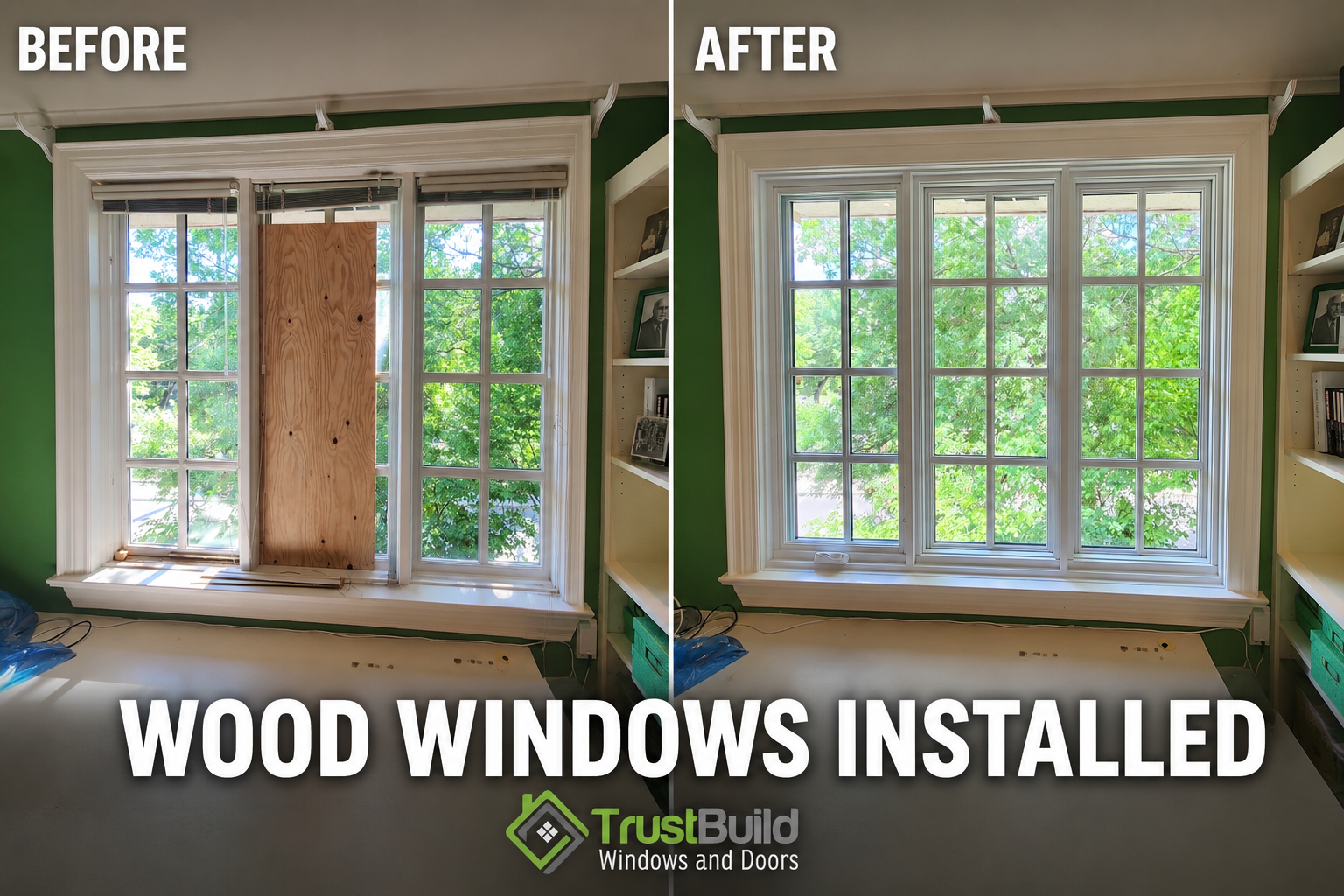
They can be replaced, but "replaced" means something different in Old Oakville than it does three streets over in a 1990s subdivision. The heritage designation isn't just a plaque — it affects what the streetscape is allowed to look like from the public right-of-way, and windows get the most scrutiny of any feature. That doesn't rule out vinyl everywhere on the property, but on a front elevation facing the street, most homeowners end up back at real wood or a wood-interior, aluminum-clad hybrid, because that's what actually matches the muntin pattern, the sash proportions, and the sightlines the house was built around.
Why the material choice isn't really optional here
A lot of general advice about replacement windows treats wood, vinyl, and fiberglass as a simple cost-versus-maintenance decision. In a heritage district, that calculation gets a fourth variable: does it look right next to the house beside it. A true divided-lite wood window, built with the same rail and stile widths as the original, reads differently up close than a vinyl window with a snap-in grille glued to the glass. Neighbours notice. Once you've paid to restore the brick and the trim, a window that looks slightly off undoes a lot of that work.
Solid wood still gets this right most reliably, which is part of why it carries a premium price, and the trade-off is maintenance — a south-facing wood sill takes real punishment over 20 Ontario winters of freeze-thaw, and it needs paint or stain upkeep vinyl doesn't. That's why the aluminum-clad option exists: an exterior aluminum shell takes the weather, the interior stays real wood, and the profile stays close enough to the original to pass the eye test without annual repainting.
The glass does more work than people expect
Here's what surprises most homeowners: in an older wood-frame window, the biggest energy improvement usually isn't the frame at all — it's the glass package. A triple-glazed unit with a coating like Cardinal's Low-E² 272/270 cuts heat loss dramatically compared to the single pane (or aging double pane) currently in that frame, while keeping enough visible light that the room doesn't go dim. Energy Star-rated wood and wood-hybrid windows built around that glass perform close to a premium vinyl window — you shouldn't have to trade comfort for keeping the house looking the way it's supposed to.
That matters more here than inland, because these homes sit close to the lake, where wind-driven moisture and temperature swings are harder on seals. A frame-and-glass combination rated for Ontario winters isn't a marketing line near the water — it's the difference between a window that lasts twenty years and one fogged up by year eight.
Installation, and whether to do it all at once
Because these are older homes, the window opening itself is rarely a standard size, and the wall behind the original trim can hide surprises — rot, settled framing, masonry that's shifted slightly over a century. Proper installation means building to the opening that's actually there, not a stock size, which is where certified installation experience matters more than it does in a newer build. Rushed work on an old frame tends to show up as air leaks or trim gaps within a year or two.
Cost is the other reason this often gets staged in phases rather than done all at once. A reasonable rule of thumb: if an elevation faces the street and falls inside the heritage district's public view, prioritize it first and get the material and pattern right there, since that's the part that's hardest to undo later. Rear and side windows outside the designated streetscape have more flexibility, and 0% interest financing through Financeit makes it realistic to spread a project like this over a season or two instead of forcing it into one renovation budget.