"Mil" is a thickness measurement — one mil equals one-thousandth of an inch — and it's the single number that tells you the most about how a security film will actually perform under a forced-entry attempt.
Why thickness is the number that matters
Standard window films sold for heat or glare control run 2 to 4 mil. They're built to manage sunlight, not resist impact, and they'll tear or peel long before anyone trying to break in gets frustrated. Security-grade film starts around 8 mil and commonly goes up to 14 mil or higher for openings considered higher-risk. At 14 mil, the film is roughly three to four times thicker than a basic tint product, and that added thickness is where its tear resistance and impact performance actually come from.
What's inside a 14-mil film
It isn't a single sheet of thick plastic. Security film is built from multiple layers of polyester laminated together with a strong adhesive system, then finished with a scratch-resistant coating on the exposed side. The multi-layer construction matters because a single thick layer would still tear in one direction once it started; laminating several thinner layers together at different orientations makes the film resist tearing from multiple directions at once.
What "forced-entry performance" actually means
No residential security film is rated to stop entry indefinitely. What 14-mil film is designed to do is dramatically increase the time and effort required — turning a single well-placed hit that opens a hole in seconds into a process that takes repeated strikes, working the film loose from the frame edges, and enough noise that most attempts get abandoned. That delay is the entire value proposition.
How it's actually installed
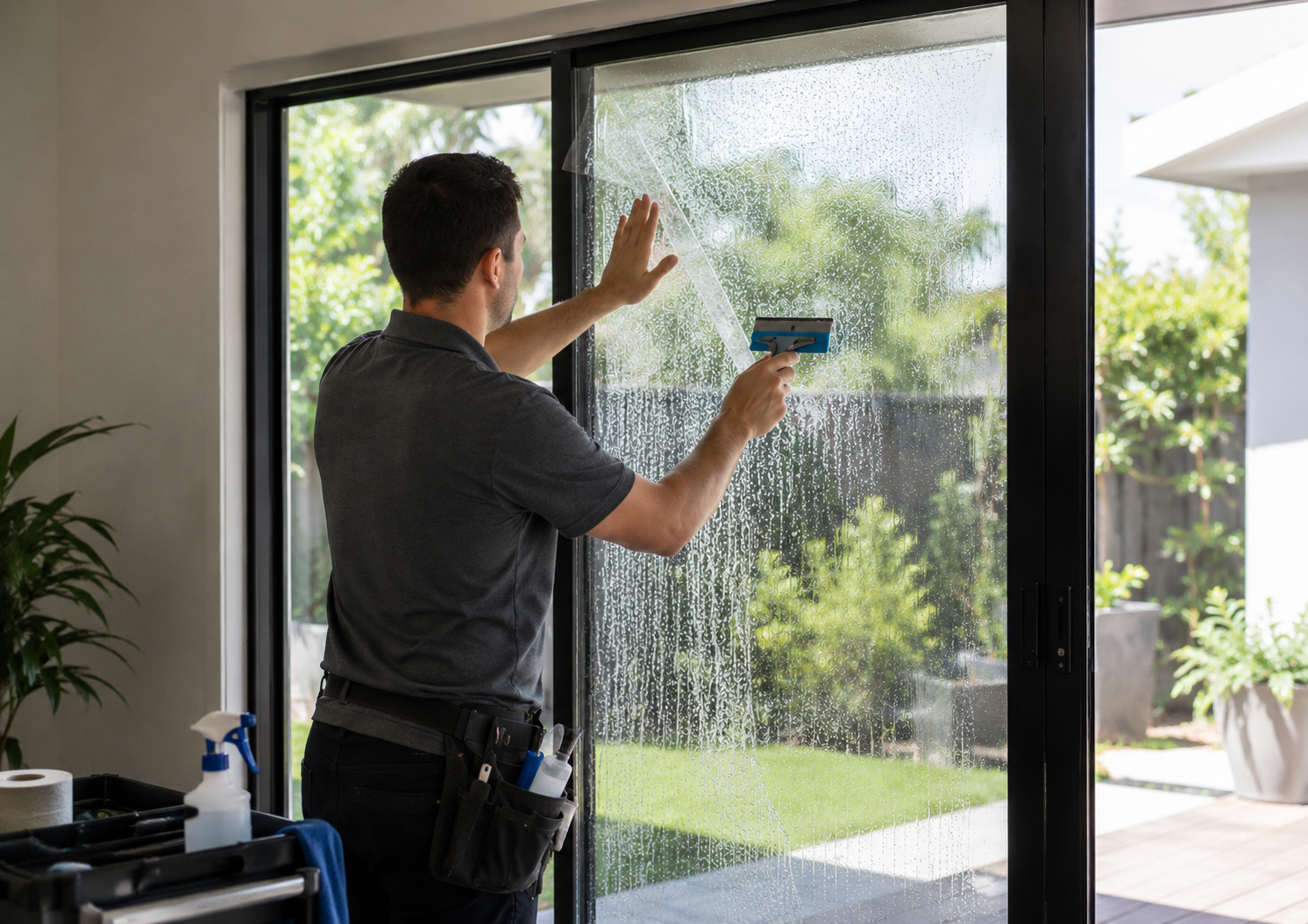
The film is applied to the interior surface of the existing glass and finished with an edge system — either tucked into the frame channel or capped with a mechanical attachment strip — because the edge is where film either holds under impact or peels away. A film applied without proper edge attachment loses most of its practical benefit, since the glass can still separate from the frame even if the film itself doesn't tear.