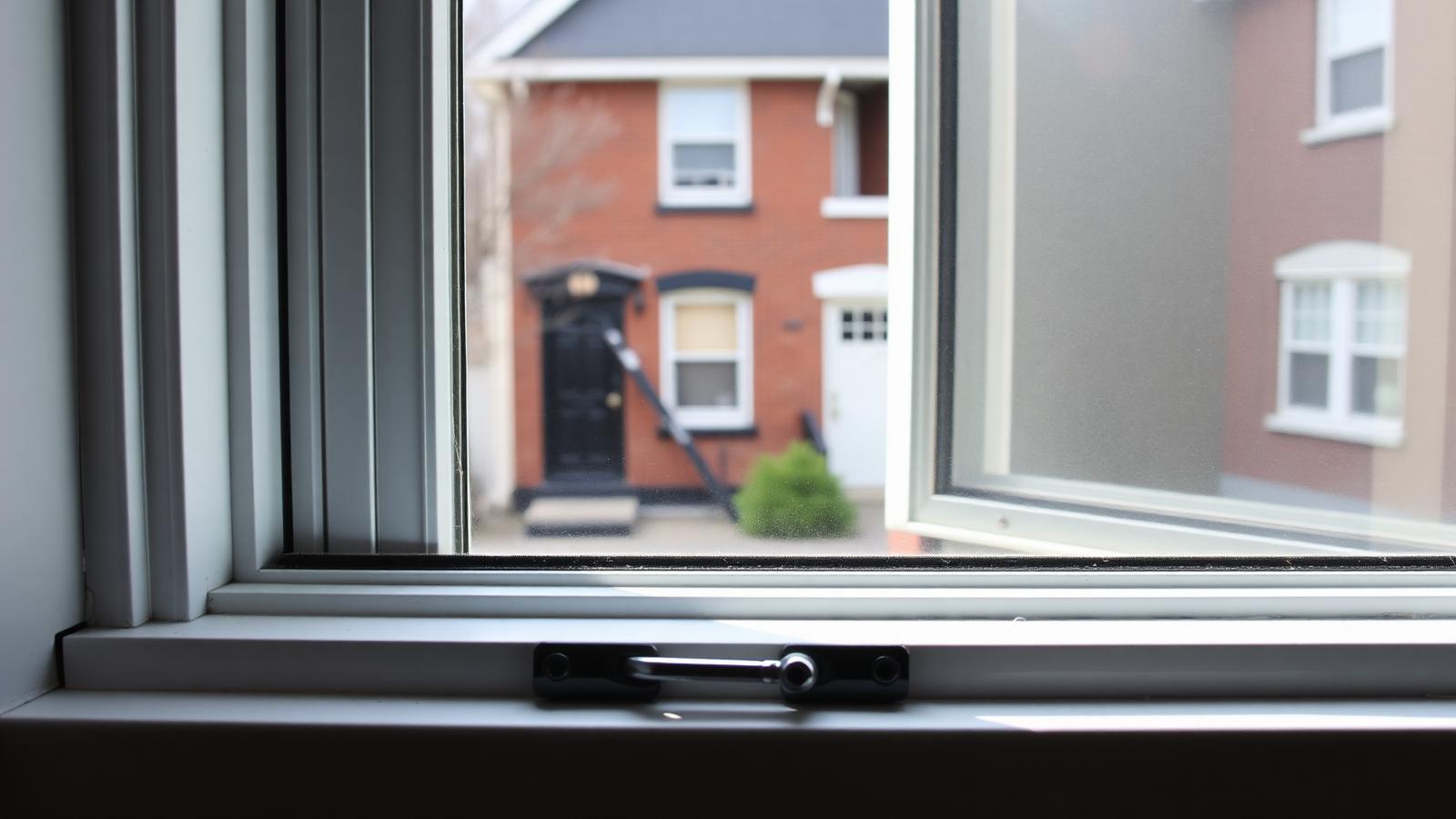
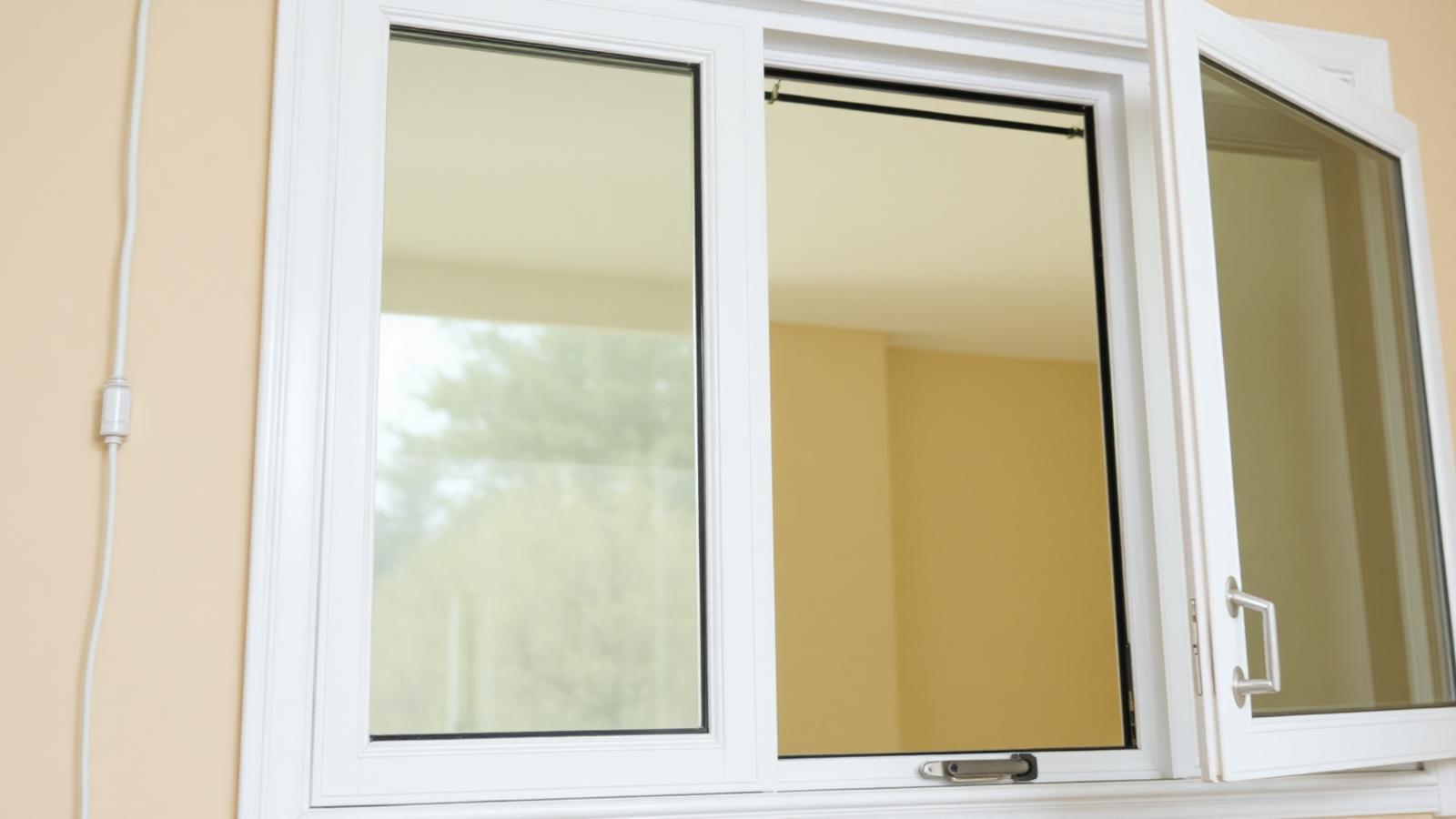
Is your casement window's crank turning fine but the sash won't pull tight against the frame anymore? Or did the little plastic arm connecting the crank to the sash just snap clean off? Neither one means the window is done — but both are showing up constantly right now in Mississauga's older subdivisions, and there's a specific reason why.
A huge share of Mississauga's housing stock — Erin Mills, Meadowvale, Streetsville, the streets north of Clarkson — went up during the 1980s and 90s building boom, and the vinyl casement windows installed in those homes are now 25 to 40 years old. That's not ancient by house standards, but it's well past the working life of the plastic and hardware inside a casement operator. Unlike Toronto's older neighbourhoods, where the common complaint involves original steel-frame sashes from the 1950s, Mississauga's problem is almost entirely builder-grade vinyl hitting the end of its hardware lifespan at roughly the same time across whole streets, because whole streets were built in the same one or two years.
The specific failure pattern in vinyl casements
Vinyl operators use a plastic or nylon gear-and-arm assembly rather than the all-metal mechanisms in steel-frame windows, and plastic behaves differently as it ages. It doesn't corrode — it gets brittle. After enough winters of contracting in the cold and expanding in summer heat, the scissor arm that pushes the sash open either cracks at the pivot point or the gear teeth shear off under normal torque. You'll usually get one of two symptoms: the crank spins with no resistance and the window doesn't move, or the sash swings open fine but won't pull snug enough to compress the weatherstripping on the last inch of travel.
That second symptom is the one people miss. A window that opens and closes looks functional, so homeowners assume a January draft is coming from somewhere else — a baseboard, an attic hatch, a door. Often it's the casement itself, not seating properly because the operator arm has lost the pull-force needed to fully latch the sash.
There's a second, unrelated failure mode worth mentioning separately: the insulated glass unit itself fogging up. Windows from the 90s building boom generally used earlier-generation sealed units, and those seals had a shorter realistic service life than what's manufactured today. A permanent haze between the panes that doesn't wipe off means the seal has failed and moisture got in — that's a glass problem, not a hardware problem, and it needs a different fix.
What's actually repairable versus what isn't
Operator replacement on a vinyl casement is usually a contained job. If the window brand still has parts in production, a technician can often source a matching or compatible operator and swap it in within an hour, sash off its hinges only briefly. It gets more complicated with builder-grade windows from smaller manufacturers that didn't survive the intervening decades — no brand name on the hardware, no parts catalogue to search. A universal aftermarket operator sometimes works there, but fit and crank direction aren't guaranteed, so it's worth having someone look at the actual window first.
Weatherstripping is close to universally repairable regardless of brand, and replacing it alone solves a surprising number of "draft" complaints when the operator and hinges are still sound.
Fogged glass units are typically the point where people stop repairing piecemeal. Once you're paying to source a sealed unit for a 30-year-old vinyl frame, the cost gap to a full replacement window narrows fast — and a new window brings a properly sealed, Energy Star-rated glass unit built for current Ontario winter performance rather than 1990s glass technology.
Where the decision usually lands
If it's one window with a snapped operator arm and everything else checks out, repair is the sensible move — no reason to replace a sound frame over one broken part. But three or four windows showing the same symptom is less coincidence and more a sign the whole batch installed that build year is reaching its expiry point together, which is common on Mississauga streets built in a single development phase.
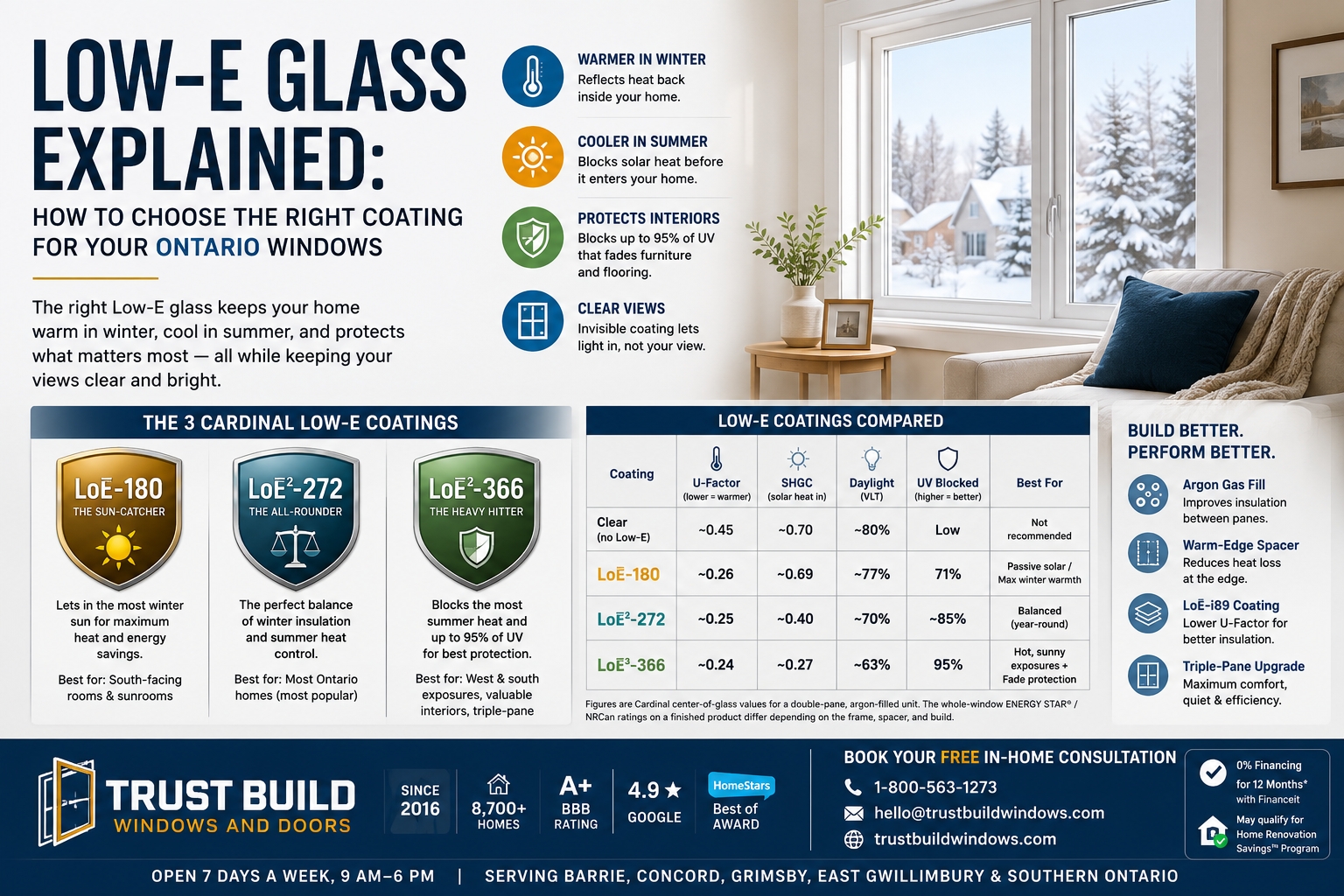
When homeowners do move to replacement, Cardinal's Lowe-180 coating comes up often for west-facing casements catching strong afternoon sun, since it manages solar heat gain differently than standard Low-E options. Trust Build installs Energy Star-certified windows built for Ontario's climate and offers 0% financing through Financeit for homeowners tackling more than one window at a time — relevant here, since it's rarely just one on these streets. We've worked on more than 8,700 homes across Ontario, and builder-grade vinyl replacement is a common call from Mississauga specifically.