Homeowners across Southern Ontario — from Vaughan and Mississauga to Hamilton, Kitchener-Waterloo, and Burlington — often start a window upgrade with the same question: is a bay window the right fit for my house? The answer usually comes down to understanding what a bay window actually is, and which panel combination matches your home's layout and climate needs.
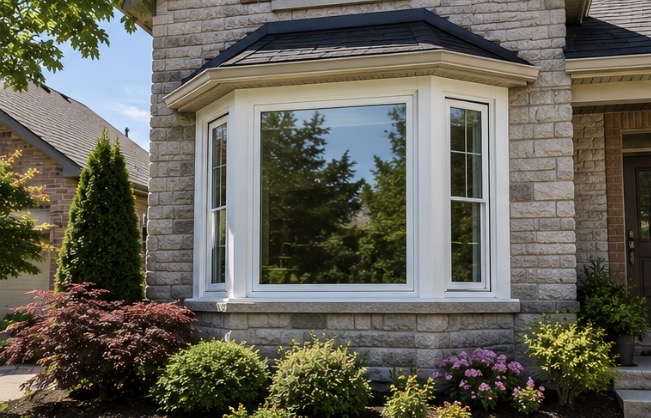
A bay window is not one continuous pane of glass. It's a structure made of three (sometimes more) individual window units joined at an angle, projecting outward from the exterior wall. That angled projection is what forms the interior alcove homeowners love — whether it becomes a window seat, a breakfast nook, or simply a deeper sill for light and plants.
How a Bay Window Is Built
In almost every bay window design, the center section is a large fixed pane. It doesn't open, which means it has no moving hardware and no seams that can let air infiltrate — making it the most thermally efficient part of the structure. The two side panels, angled inward toward the wall, are where homeowners actually have choices to make, and those choices change how the window functions day to day.
Two Panel Combinations Southern Ontario Homeowners Choose Most
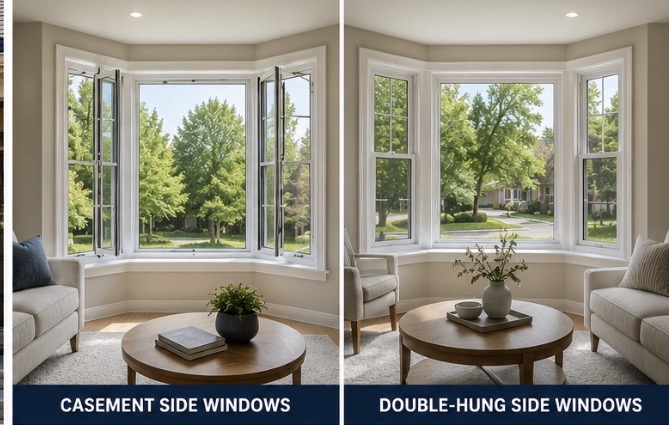
Fixed Center Panel Paired with Casement Windows
In this configuration, the side panels are casement windows that crank outward and seal tightly against the frame when shut. This setup is popular in kitchens and living rooms where ventilation matters, since casements open fully with no screen splitting the view. It also tends to perform well against air infiltration, which matters during a Southern Ontario winter when wind-driven cold air looks for any gap it can find.
Fixed Center Panel Paired with Hung Windows
The second common configuration uses single-hung or double-hung windows on either side, where the sash slides vertically rather than cranking outward. This pairing is often chosen for a more traditional exterior style, and it's a practical option when the bay window overlooks a walkway, patio, or low-clearance area where an outward-swinging casement isn't ideal. Double-hung versions also tilt inward for cleaning, which matters once the window is installed above ground level.
There isn't a universally "correct" combination — the right one depends on how much ventilation you want, your home's architectural style, and where the window sits relative to outdoor walkways or landscaping.
Why Glass Selection Is Just as Important as Panel Style
A projecting bay window has more exposed surface area than a flat window, which means more contact with wind and temperature swings throughout the year — a real factor across Southern Ontario's cold winters and humid summers.
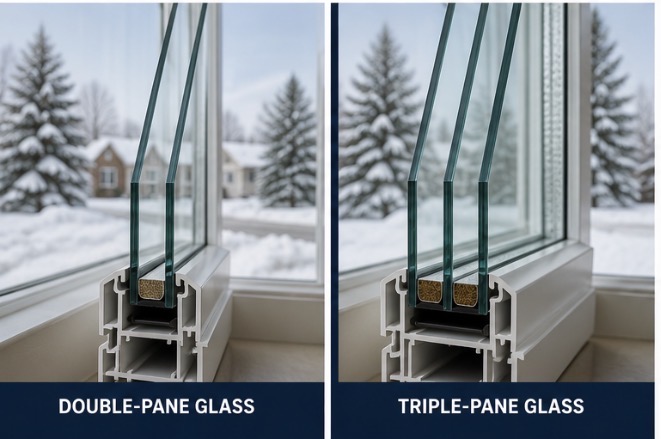
Double-pane glass is the standard baseline for insulation, but triple-pane glass adds a third layer with an additional insulated air or gas-filled gap between panes. That extra layer reduces heat loss in winter and helps minimize the cold-air feeling near the glass, which tends to be more noticeable on a bay window's angled sides than on a single flat window.
Benefits of a Well-Chosen Bay Window
- Adds usable interior space — a window seat, plant shelf, or breakfast nook
- Brings in light from three angles instead of one
- Improves curb appeal and is often a value-add at resale
- Allows ventilation on the side panels while the fixed center maximizes the view
- Triple-pane glass packages reduce heat loss and cold-glass feel on the angled sides
Choosing the Right Bay Window for Your Home
The right bay window setup comes down to three factors working together: the panel combination (casement or hung), the glass package (double-pane or triple-pane), and how the structure fits your home's existing architecture. Getting professional input on all three before installation helps avoid costly adjustments later.
Frequently Asked Questions
Is the center panel of a bay window always fixed?
In almost every bay window design, yes. The large center pane is fixed — it has no moving hardware or sash seams, which makes it the most thermally efficient and visually open part of the structure.
Casement or hung side panels — which is better?
Neither is universally better. Casements ventilate more fully and seal tighter against air infiltration. Hung windows suit traditional exteriors and are the safer choice when the window faces a walkway or patio where an outward-swinging sash would be in the way.
Do I need triple-pane glass on a bay window in Ontario?
It's worth strong consideration. A bay window projects outward and has more exposed surface area than a flat window, so the cold-glass feel near the angled sides is more noticeable. Triple-pane adds a third layer with an extra insulated gap, reducing heat loss through the winter.
Can a bay window be installed where there wasn't one before?
Often, yes — but it requires modifying the rough opening and adding proper support (cable suspension from above and/or knee-brace support from below). This is determined on-site.
Do double-hung side panels tilt in for cleaning?
Yes. Most double-hung sashes tilt inward, which matters once the window is installed above ground level and exterior cleaning isn't practical.
Trust Build Expert Advice
The mistake we see most often on bay window projects is choosing the panel combination based on the exterior look alone, without considering how the window will be used inside and what sits in front of it outside. A casement that swings into a patio walkway is going to frustrate the homeowner every spring.
Our crews also recommend pricing both double-pane and triple-pane on bay quotes. The price difference is usually smaller than homeowners expect, and the comfort difference on the angled side panels through a Southern Ontario winter is significant.
Conclusion
A bay window is more than a single feature — it's a small structural assembly that needs the right panel mix, the right glass, and the right installation method for your home. Getting those three decisions right up front is what separates a bay window that performs for decades from one that becomes a comfort and maintenance problem.
Talk to a Trust Build Installer
If you're considering a bay window replacement or new installation anywhere across Southern Ontario, we'd be happy to walk through panel combinations, glass packages, and installation options in person — no pressure, no obligation.
Reach Trust Build Windows and Doors at hello@trustbuildwindows.com, call 1-800-563-1273, or request a quote online.