By Trust Build Windows and Doors ·
A homeowner on Wavecrest Drive called us this fall about a bow window pulling away from the header above it — just a centimetre or so, but enough that a hairline crack had opened in the drywall overtop and the middle unit wouldn't latch flush anymore. That's not an unusual call to get from Bright's Grove. A lot of the bungalows and raised ranches along this stretch of Lake Huron went in during the 1970s and 80s with a bow window centred on the living room wall facing the water, and forty-plus years of wind load off the lake eventually tells on the wood framing most of them were built with.
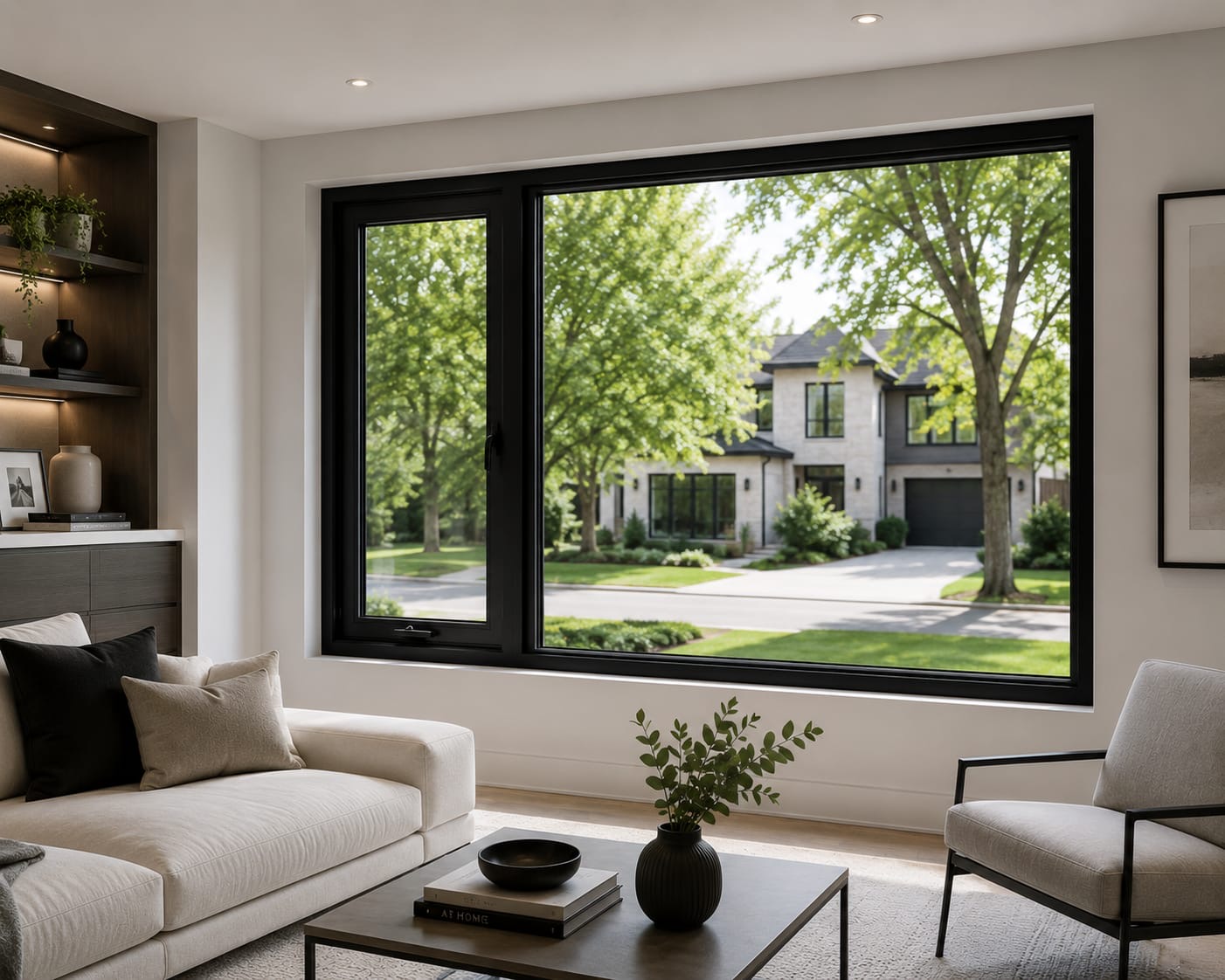
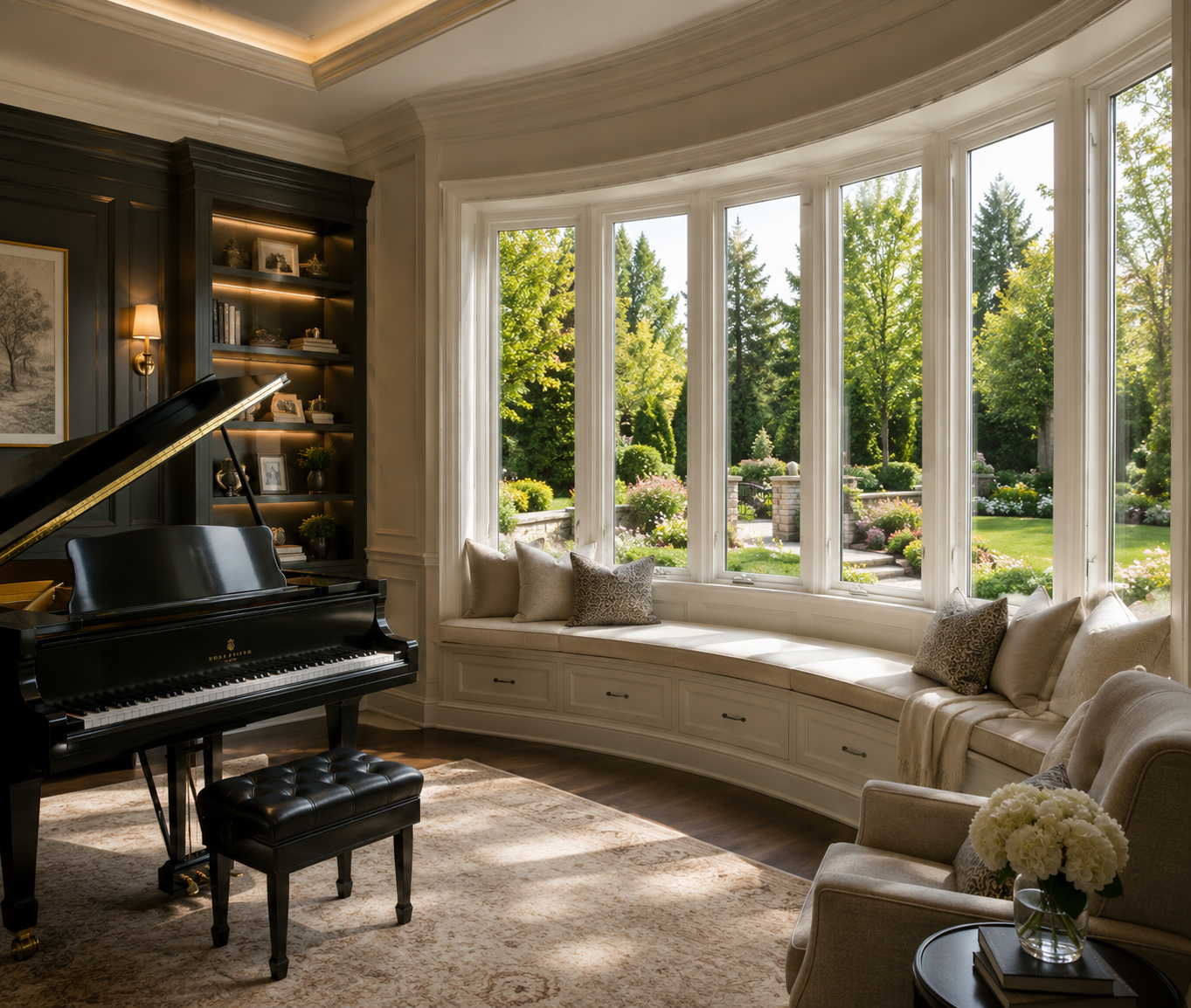
When it's time to look at replacement windows for a lakefront wall, the pull toward a bow window out here isn't hard to understand. These homes are oriented for the view, and a flat picture window only gives you the water straight ahead. A bow — typically four or five units curving gently outward — opens the sightline so you're taking in the shoreline to both sides, not just what's directly in front of the glass. It also pushes the window seat a foot or two further into the room, which matters in houses where the living room wasn't built especially large to begin with.
What doesn't always get explained is why bow windows fail the way they do near the lake. A bow is really four or five separate units joined at angled seams, each carrying its own weight on a shared header. On an inland wall, that header has an easy job. On a lakefront wall catching sustained wind and the wind-driven rain Bright's Grove gets more of than homes set back from the shore, the seams between units are the first place water finds its way in. Once moisture gets behind the trim and into that header, it stops being a glass problem and becomes a structural one — which is exactly what the homeowner on Wavecrest was starting to see.
This is where the retrofit-versus-full-frame decision matters, and it isn't the same call for every house on the street. If the header and surrounding studs are sound, a retrofit — new vinyl units installed into the existing frame — is faster, less disruptive to the brick or siding, and usually the right move. If there's already rot or seam separation like on Wavecrest, that's a stud-to-stud job: pulling the old unit out to the framing, replacing anything compromised, and rebuilding the opening before the new bow goes in. Skipping that step to save a day of labour is how a homeowner ends up with a new window and the same hidden problem two winters later.
Glass choice deserves more attention here than on an inland job. A bow window carries a lot of glass relative to its wall space, which is exactly what makes the view and exactly what makes heat loss worse if the glazing is wrong. For a west or northwest-facing bow catching lake wind most of the year, a double or triple-glazed unit with a Low-E coating tuned for solar control tends to make more sense than pure heat retention — Cardinal's Lowe²-272/270 glass is a common fit for that exposure, cutting summer glare and UV without giving up winter performance. Triple-glazed earns its cost specifically on a lake-facing wall; the extra air space does more work there than on a sheltered side of the house.
Energy Star certified options are available for every Bright's Grove job, which matters more here than the rating alone suggests — a window rated for general Ontario conditions isn't facing the same stress as one tested for sustained wind and temperature swings off open water. Trust Build has put vinyl and glass combinations into more than 8,700 homes across Southern Ontario, lakefront and inland both, with the same certified crew handling a Bright's Grove rebuild as anywhere else in Lambton County. For anyone timing the budget, 0% financing through Financeit tends to matter more on a bow replacement than a standard window, given the extra glass and labour a proper rebuild involves.
If you're staring at a bow window that's started to separate at the seams, the honest first step is figuring out whether you're dealing with a glass problem or a framing problem — because the fix, and the cost, are not the same thing.