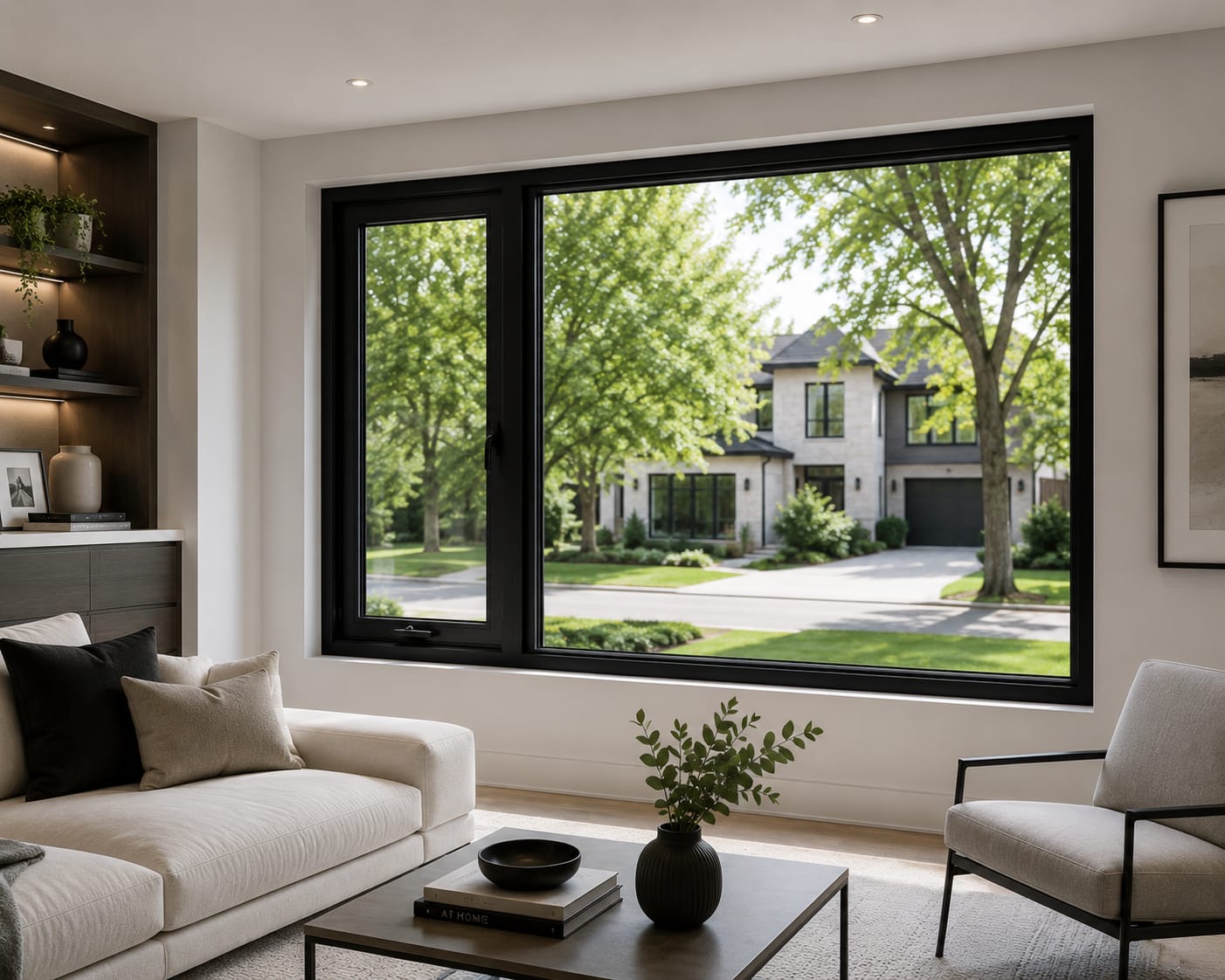
A lot of Innisfil homes sit close enough to Lake Simcoe that wind off the water is just part of daily life — which is great in July and considerably less great in January, when that same wind is finding every gap around an aging window and turning a living room into the coldest spot in the house. It's a question worth asking directly: for a property exposed to that kind of wind load, does upgrading to Energy Star-certified windows actually pay off, or is it more marketing than substance?
The honest answer is that it depends on what you're starting with — but for most homes with original builder-grade windows or anything installed before double-glazing became standard, the numbers and the comfort difference are both real.
What Energy Star certification actually measures
Energy Star isn't a brand — it's a performance standard that a window either meets or doesn't, based on independently tested energy performance for Ontario's specific climate zone. A certified window has to hit thresholds for heat loss (U-factor) and solar heat gain, tested as a complete assembled unit rather than just rated on the glass alone. That distinction matters, because a window can have excellent glass and still perform poorly overall if the frame or spacer system is letting heat escape around the edges.
For a property exposed to consistent wind — which describes a lot of Innisfil's shoreline and near-shoreline homes — the frame and seal performance is arguably more important than it would be for a similar home set back from the water, since wind pressure actively works against a weak seal in a way still air doesn't.
Double vs. triple glazing near the water
This is the question Trust Build hears most from Innisfil homeowners specifically. A double-glazed window with a quality low-e coating and argon fill already performs well above older single or basic double-pane units, and it's the right call for most homes in the region. Triple glazing adds a third pane and a second sealed gas-filled cavity, which reduces heat loss further and — relevant to a windier, lake-adjacent property — tends to feel noticeably warmer to stand near on a cold, gusty day, since the interior pane of glass stays closer to room temperature.
Triple glazing costs more upfront, and for a lot of homes the jump in comfort doesn't justify the jump in price. Where it tends to make more sense is on the specific walls or rooms that face the lake directly and take the brunt of the wind — rather than necessarily upgrading every window on the property to triple glazing by default.
The comfort case versus the bill case
Energy bill savings from window replacement are real but modest and slow to show up on a monthly statement, since heating costs are affected by a lot of variables beyond windows alone. The comfort difference is usually the more immediate, noticeable payoff: no more cold draft near the couch, no more condensation pooling on the sill on a cold morning, and rooms that hold a more even temperature instead of swinging with the wind outside. For homeowners deciding whether the upgrade is worth it, it's worth weighing both the long-term bill impact and the day-to-day comfort change, since the second one tends to matter more in daily life than people expect going in.
Frame material matters here too
Vinyl window frames don't conduct heat the way metal does and won't warp under repeated wind pressure and temperature swings the way an older wood frame can. For a wind-exposed property, a stable, well-sealed vinyl frame paired with a properly rated glass package tends to outperform an otherwise similar window with a weaker frame, even if the glass itself is comparable.
What's included
Trust Build offers Energy Star-certified windows for Ontario's climate and installed by certified installers who account for wind exposure and sealing specifically — not just the glass package. Homeowners weighing the cost of a full window replacement against a phased approach can also take advantage of 0% interest financing to spread the investment out.
Trust Build has installed windows across Innisfil and the surrounding Simcoe County shoreline, including properties dealing with exactly this kind of consistent wind exposure, and can help identify which rooms or walls would benefit most from an upgrade first.
What to check before assuming a window needs replacing
Not every drafty-feeling window near the lake actually needs full replacement. Sometimes the issue is a failed seal on an otherwise sound double-glazed unit — visible as persistent fogging or condensation trapped between the panes, which means the gas fill has escaped and the insulating gap is no longer doing its job, even though the frame and hardware are fine. In that specific case, a glass-only replacement can restore performance without replacing the whole window. Where the frame itself has warped, the weatherstripping has hardened and cracked, or the window is single-glazed to begin with, full replacement is the more sensible route.
Seasonal cottages and homes that were converted from seasonal to year-round use around Lake Simcoe are a special case worth mentioning, since many were originally built with lighter-duty windows appropriate for occasional use rather than a home lived in through a full Ontario winter. If that describes your property, it's worth having every window assessed rather than assuming the ones that "seem fine" in summer will perform the same way once the wind picks up in December.