Last updated: July 31, 2026
The insulation product you choose affects your grant eligibility, your long-term performance, and your total project cost — and the right answer for a Woodbridge attic is different from the right answer for a Concord rim joist or a Maple basement wall.
Not all insulation products are created equal for Vaughan’s specific conditions, and not all products qualify equally under Ontario’s grant programs. The choice between blown-in cellulose, blown-in fibreglass, spray foam, and rigid foam is not just a technical decision — it directly affects your grant eligibility, your total project cost, and your long-term thermal performance in York Region’s climate.
Option 1: Blown-in cellulose — the grant-optimal choice for most Vaughan attics
- R-value per inch: R-3.5 to R-3.8
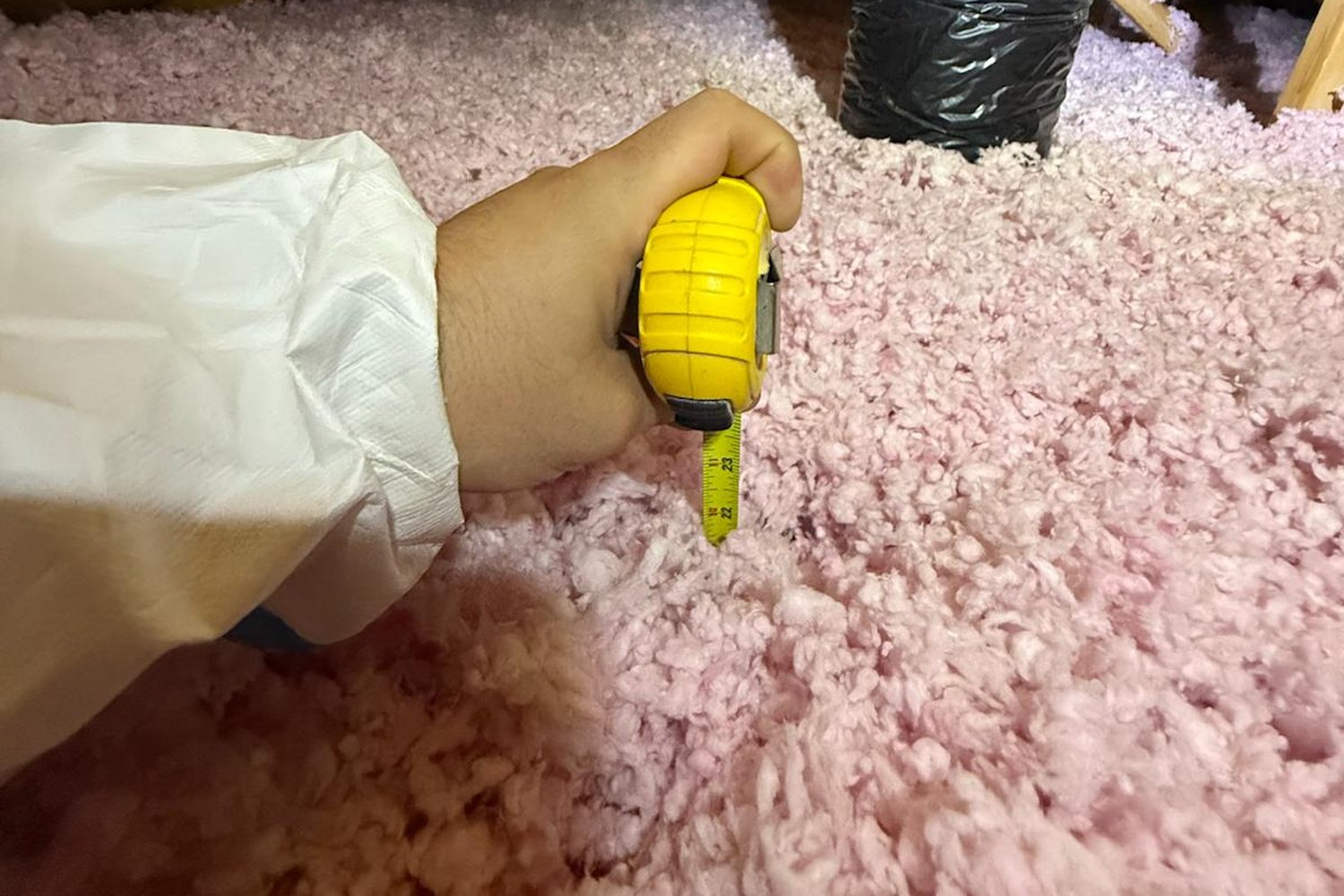
- Depth needed for R-60: approximately 16–17 inches
- Grant eligibility: fully eligible under Canada Greener Homes and HER+
Key advantage for Vaughan: dense-pack installation resists settling significantly better than fibreglass, maintaining R-value over decades rather than degrading. For homes in Woodbridge and Concord where the attic won’t be accessed again for 20+ years, this performance retention matters financially.
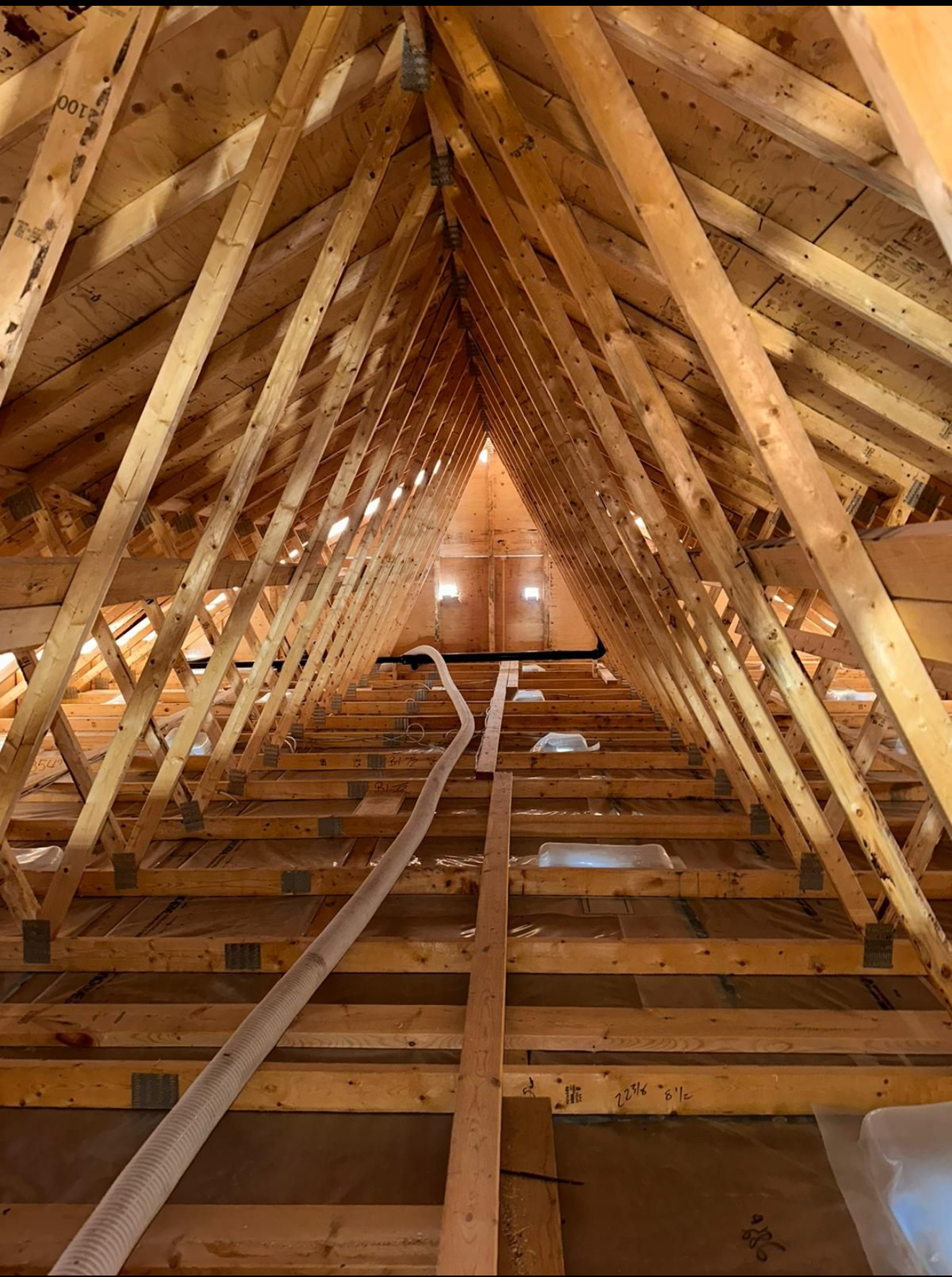
Cost range: $1.80–$2.60 per square foot installed in York Region. Best for open attic floors in pre-2000 homes, maximum grant recovery, and long-term performance retention. This is the specification we install for most attic insulation projects.
Option 2: Blown-in fibreglass — faster installation, lower long-term performance
- R-value per inch: R-2.5 to R-2.9 (settles over time)
- Depth needed for R-60: approximately 21–24 inches
- Grant eligibility: eligible, but requires greater installed depth to hit the R-60 target
Key consideration for Vaughan: blown-in fibreglass settles 10–20% over the first few years after installation, reducing effective R-value below the target it was installed to. Contractors must account for this by installing to a greater initial depth. Homeowners should confirm the contractor is installing to the post-settling target depth, not the fresh-install depth.
Cost range: $1.60–$2.40 per square foot installed.
Option 3: Spray foam — the right choice for rim joists, wrong for open attics
- R-value per inch (closed-cell): R-6 to R-7
- Grant eligibility: eligible for rim joist and specific attic applications; check program list for product approval
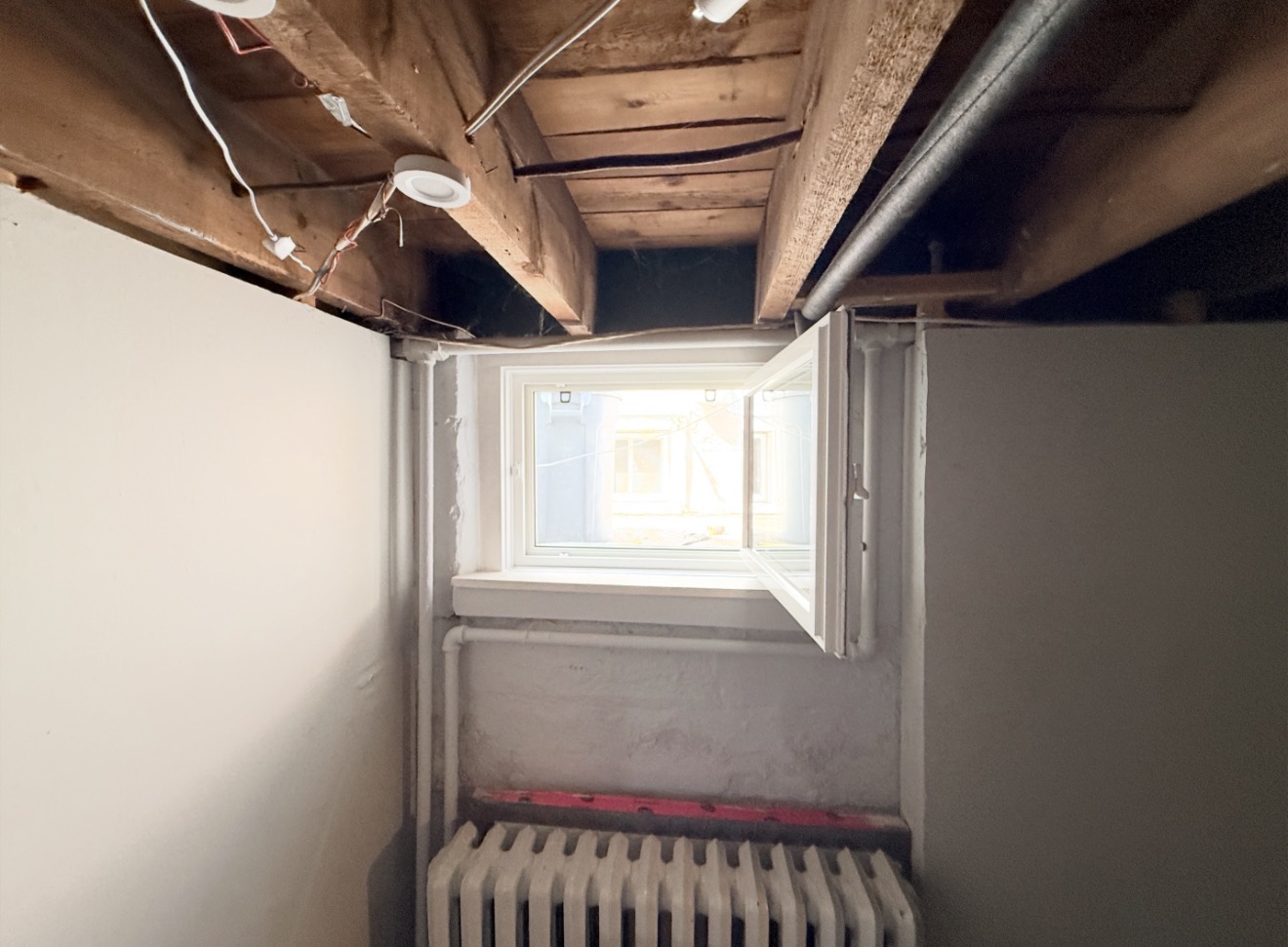
Key advantage for Vaughan: spray foam is the highest-performance option for rim joists specifically — it creates both an air barrier and a thermal barrier simultaneously in one product, which blown-in materials cannot do in a joist cavity. For the rim joist application in a Concord or Maple home with uninsulated perimeter framing, spray foam is the recommended product regardless of cost premium.
Key limitation: at $3.50–$6.00 per square foot, spray foam is cost-prohibitive for open attic floors where blown-in cellulose achieves equivalent R-value at a fraction of the cost. Best for rim joists, attic hatch perimeters, and specific penetration sealing.
Option 4: Rigid foam board — niche application, grant-eligible in specific zones
- R-value per inch: R-3.8 to R-6.5 depending on product type
- Grant eligibility: eligible for basement walls, rim joists, and specific above-grade applications
Key application for Vaughan: rigid foam cut-and-cobble is used as an alternative to spray foam in rim joist applications and is significantly less expensive. A Vaughan contractor experienced in grant-eligible retrofit will often use 2-inch rigid foam cut to fit each joist bay as a cost-effective and grant-eligible alternative to spray foam.
The decision framework for a Vaughan homeowner
| Zone | Recommended product | Why | Grant eligible |
|---|---|---|---|
| Open attic floor (primary) | Blown-in cellulose | Best performance retention; optimal grant recovery | Yes |
| Rim joists | Spray foam or rigid foam | Dual air/thermal barrier in joist cavity | Yes |
| Attic hatch perimeter | Spray foam + rigid foam cover | High-leakage point requiring air seal + thermal cover | Yes (air sealing scope) |
| Basement walls | Rigid foam or spray foam | Moisture management considerations | Yes |
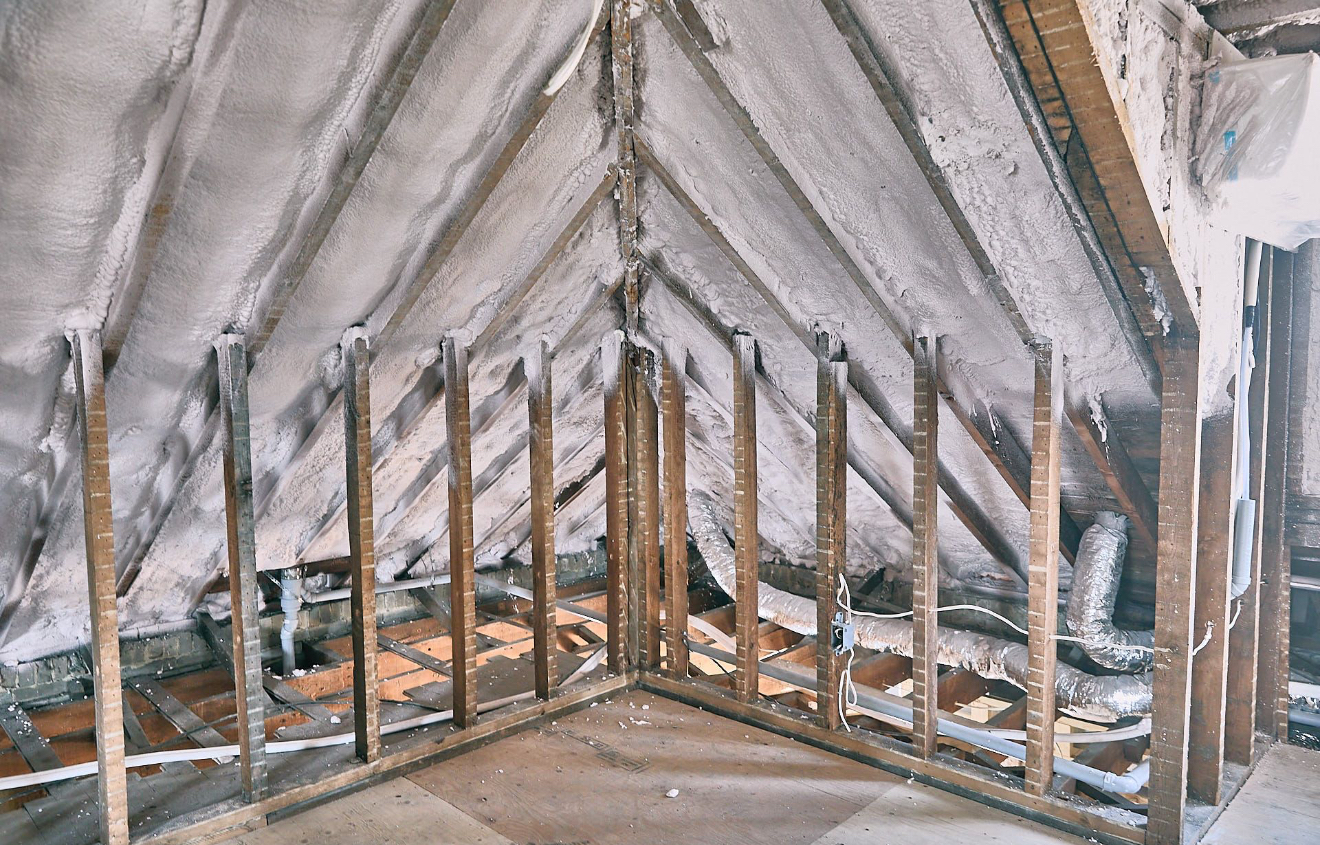
| Cathedral ceilings | Spray foam (closed-cell) | Only product achieving required R-value in limited rafter depth | Yes (with spec confirmation) |
For most pre-1995 Vaughan homes, the optimal grant-eligible specification is blown-in cellulose to R-60 in the attic combined with spray foam or rigid foam cut-and-cobble in the rim joists. This combination maximizes grant recovery, addresses the two highest-impact heat loss zones, and performs reliably in York Region’s climate over a 25+ year horizon. Our breakdown of the three zones where Vaughan homes lose heat explains why those two zones come first.
Which programs pay for which product is set out in our Ontario window, door, and insulation grants guide, and the complete guide to Ontario insulation grants covers the audit and application sequence. If you have just bought your home, start with the new homeowner’s year-one plan. And if you are deciding between insulation and glass first, compare insulation upgrades versus window replacement.
Need a product-level specification for your Vaughan home?
Trust Build installs blown-in cellulose to R-60 with air sealing, plus spray foam and rigid foam rim joist work, across Vaughan and York Region — with the itemized, product-level invoicing grant programs require.
Get a free quote: request an attic insulation quote online. Or reach us at hello@trustbuildwindows.com · 1-800-563-1273.