A homeowner on one of the tree-lined streets near the Elgin County Railway Museum told me something last winter that sums up why this topic keeps coming up in St. Thomas: her steel entry door had rusted through at the bottom corner after twelve years, right where snow piled up against the threshold every February. She wanted a replacement that would actually survive the next decade without becoming an eyesore on a hundred-year-old brick facade. That's the exact situation fiberglass doors were built to solve, and it's worth walking through why, because a lot of the assumptions people carry about fiberglass are a decade out of date.
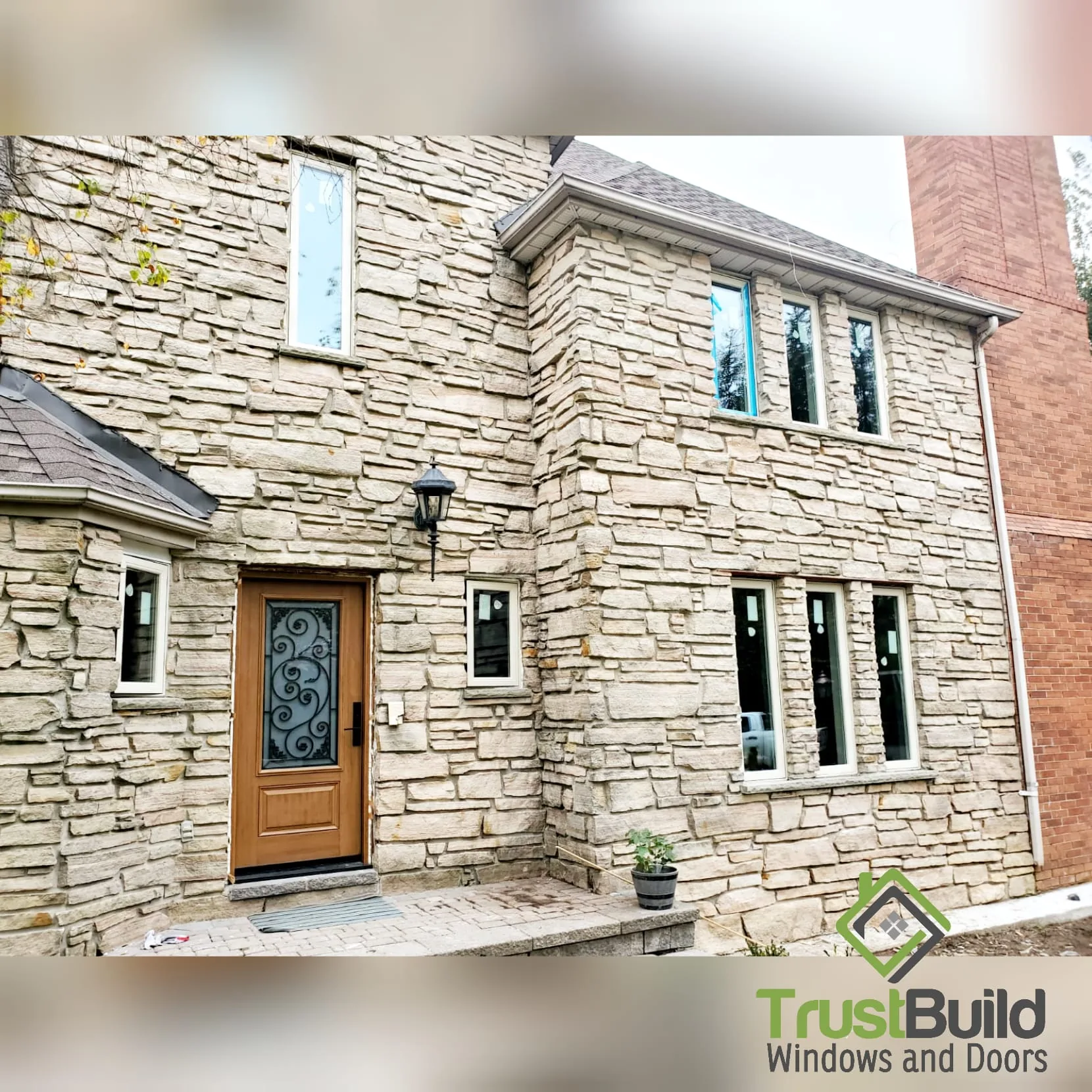
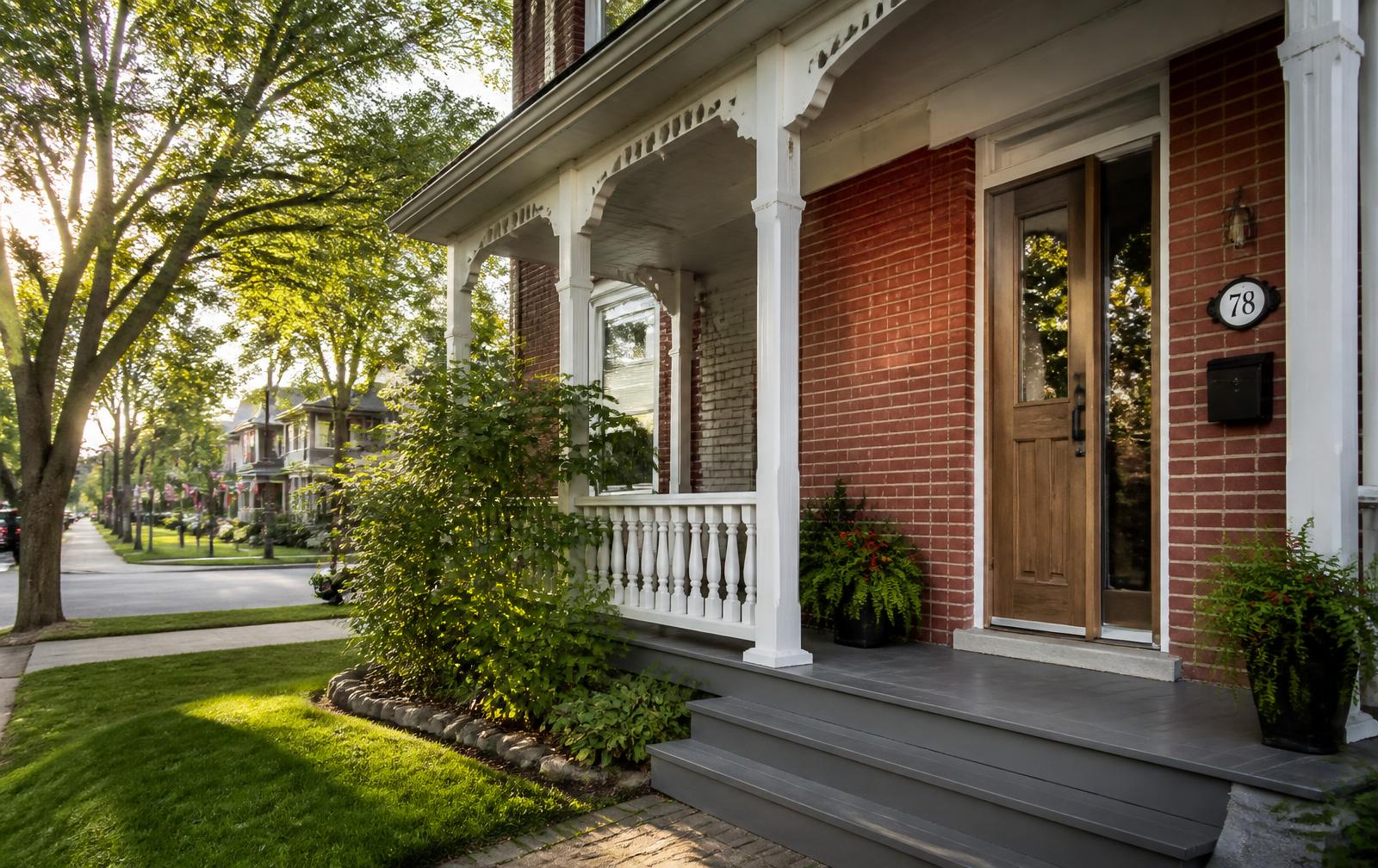
St. Thomas has a housing stock that doesn't get talked about enough in this conversation. Between the century homes downtown near Talbot Street, the post-war bungalows scattered through the north end, and newer builds out toward Southdale, you've got three very different door situations — and fiberglass handles all three better than most people expect. On the older homes especially, the appeal isn't just durability. It's that fiberglass can be molded and stained to mimic the look of a stately wood door, complete with visible grain, without the seasonal swelling and sticking that plagues actual wood in a climate that swings from humid summers off Lake Erie to dry, cold winters.
Why the "it looks cheap" reputation is outdated
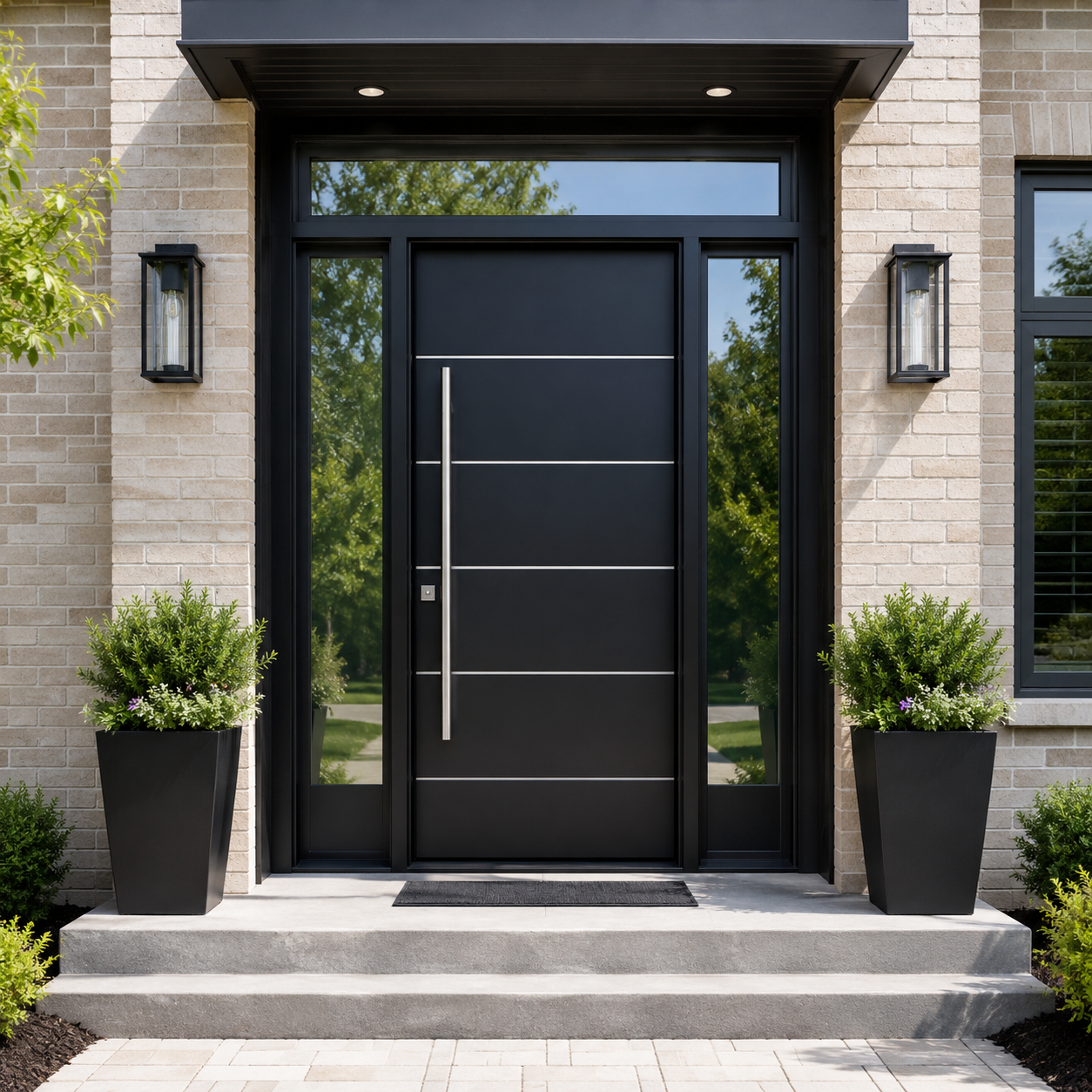
I still hear this one a lot: fiberglass doors look plasticky. That was a fair criticism of some early-generation products, but it hasn't been true for years. Composite skins are pressed from real wood molds now, so the grain pattern reads as authentic even up close, and the stain-grade versions take actual wood stain the same way oak or mahogany would. Painted fiberglass, for the newer builds where a smooth modern look fits better, holds colour without the chalking and fading that painted steel is prone to after a few Ontario summers.
What fiberglass actually wins on is the insulated core. Most units use a rigid polyurethane foam core, which gives the door a much higher R-value than a solid wood slab and resists the dents and dings a steel door picks up from a dropped bike or an overzealous snow shovel. Steel is still a fine choice — plenty of St. Thomas homes do well with it, and there's a real cost-vs-durability conversation depending on your budget — but fiberglass is the one that shrugs off humidity swings without warping, which matters more here than people think given how close we sit to the lake.
Glass inserts change the whole equation
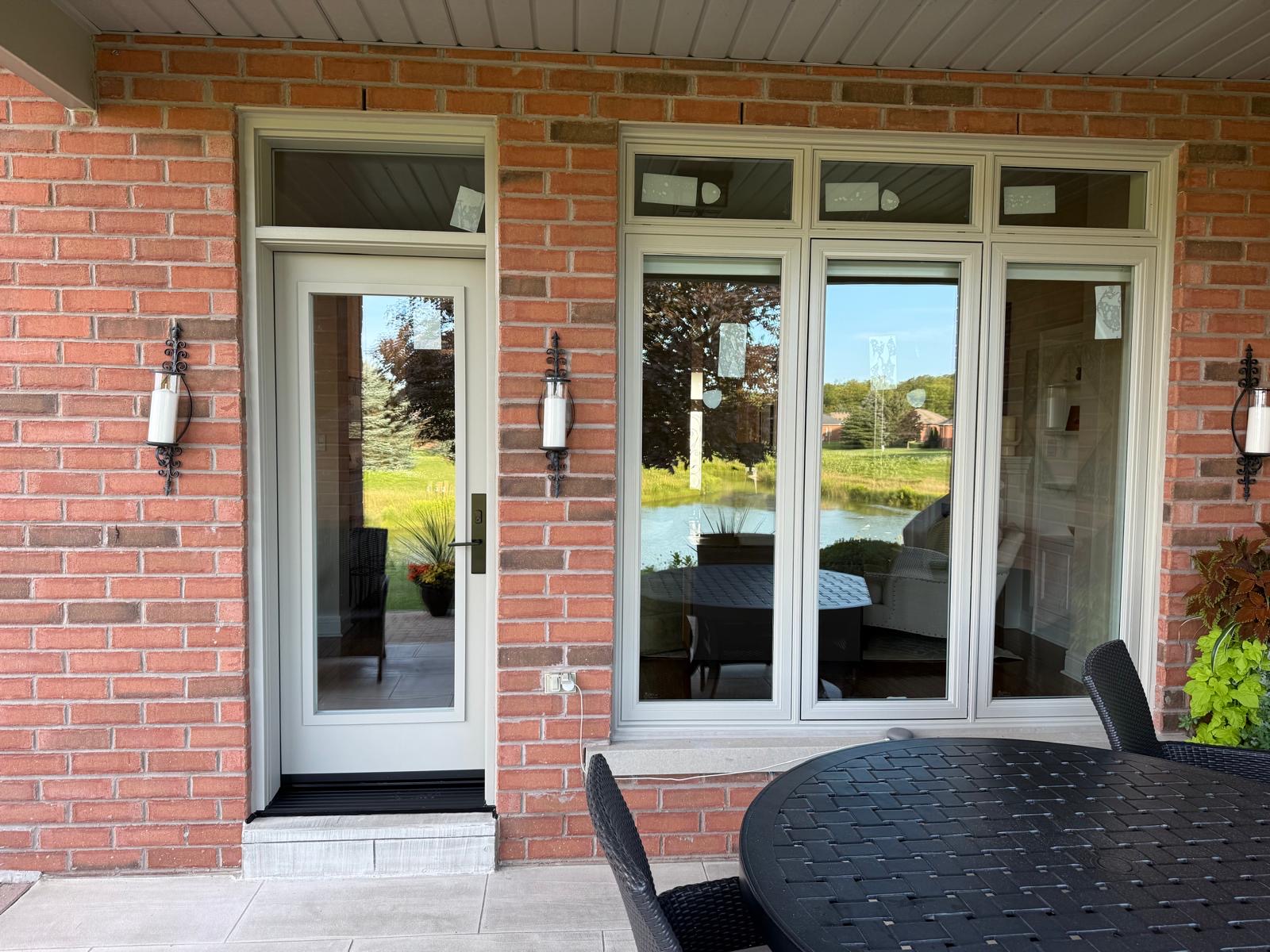
If your entry door has sidelights or a decorative glass insert — and a lot of the character homes downtown do, or want to — the glass spec matters almost as much as the door slab itself. A low-emissivity coated unit like Cardinal's Lowe²-272 cuts heat loss through that glass significantly compared to clear glass, which is the difference between a beautiful front entry and a beautiful front entry that also drafts cold air onto your foyer floor every January. For anyone leaning toward a fuller-glass design, tempered safety glass is worth asking about specifically for larger panels, since it's rated to resist impact in a way standard glass isn't — a reasonable thing to want next to a walkway where kids and delivery carts pass by daily.
What actually drives the decision
Cost matters, obviously, and fiberglass typically sits above steel and below high-end solid wood. But the number that should matter more is total cost over fifteen or twenty years. A steel door that needs replacing at year twelve because of corrosion, versus a fiberglass door still doing its job at year twenty-five, changes the math even if the upfront price looks less appealing today. That's part of why an Energy Star-certified fiberglass entry door, paired with proper installation, tends to be the choice that people don't revisit — which is really the goal with an entry door. You want to pick it once.
Installation quality deserves a mention too, because it's underrated. A poorly installed door — one where the frame isn't square or the weatherstripping wasn't compressed properly — will underperform regardless of how good the slab is. That's true whether you're in a newer Southdale build with a standard rough opening or working around the quirks of a century-home frame that's settled unevenly over a hundred years, which is common enough in this town that it's worth asking any installer directly how they handle it.
For homeowners weighing the decision, my honest take: if your current door is steel and under ten years old with no visible corrosion, there's no rush. If it's older, rusting at the bottom, or you're renovating a character home where the door is a genuine focal point, fiberglass is the one that's going to look right and perform well for a long time. Trust Build has worked with over 8,700 homeowners across Ontario on projects like this, with 0% financing available through Financeit for anyone who'd rather spread the cost out than pay it in one shot.