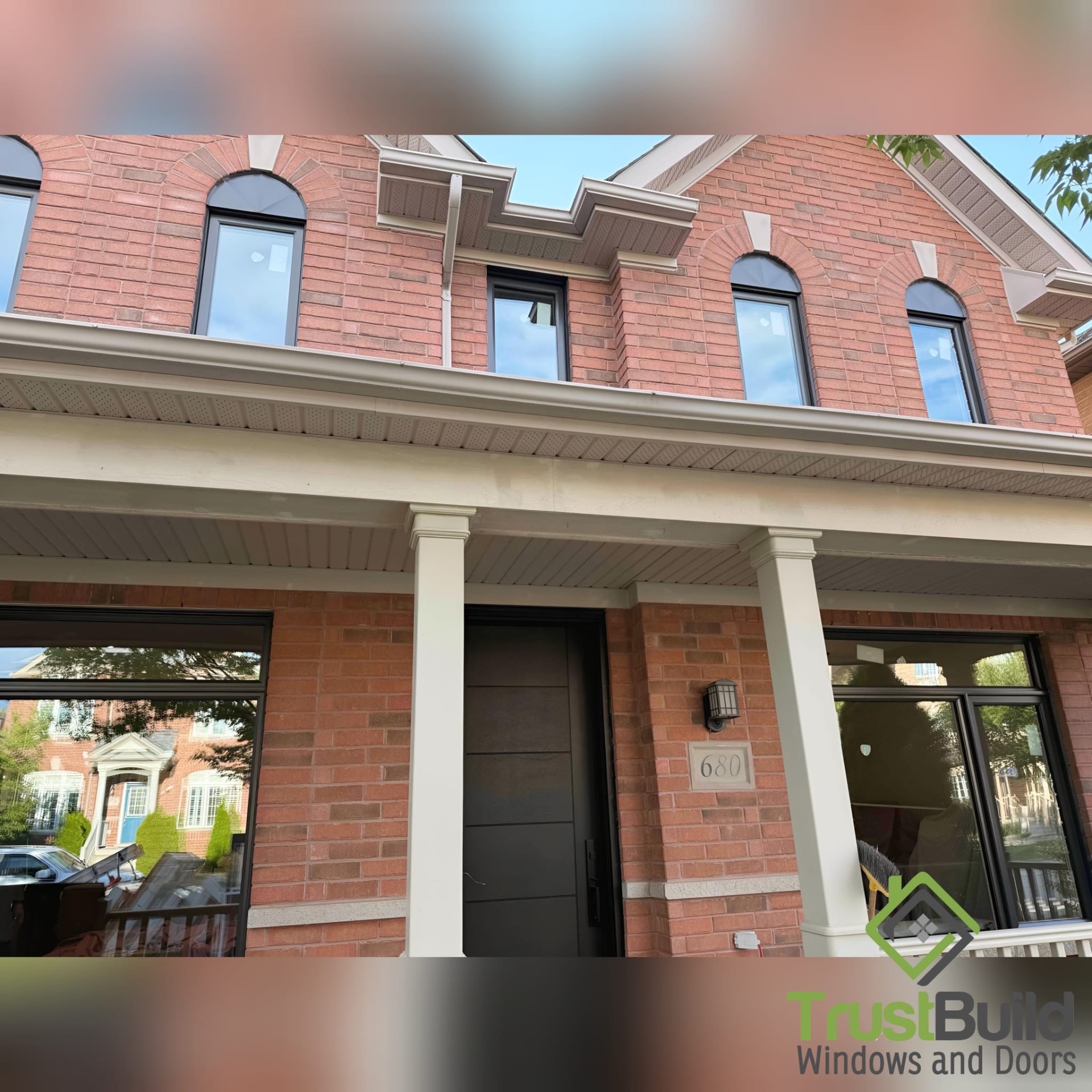
By Trust Build Windows and Doors ·

The paint on a hundred-year-old sash can look fine from the sidewalk and still hide wood that gives way when you press a thumb into it. That gap — between what an original window shows you and what's actually happening underneath — is why so many Toronto homeowners end up replacing a window a full season after they first noticed something was off.
Riverdale, Leslieville, and the Beaches are full of these windows. Houses built through the 1900s and into the 1920s, most still carrying at least one original wood sash somewhere — a side window, a dormer, something the previous owner never got around to touching. For a lot of that housing stock, the question isn't whether an old wood window will eventually need replacement windows. It's whether you catch it while it's still a straightforward job, or after it's become something bigger.
The signs that don't show up on a walk-through
A window can look presentable from six feet away and still be failing where it matters. The tells are usually small: glazing putty that's cracked and started dropping out in flakes, a sash that won't stay up without a prop stick, a draft you can feel with your hand but can't see with your eyes. Check the bottom rail and the inside corners of the sill first — those are the two spots that hold water longest after a rain, and the first places wood actually gives.
Paint hides a lot of this. A window can carry three or four coats built up over decades and still look tidy right up until the wood underneath stops being wood and starts being something closer to wet cardboard.
Why repainting buys you a season, not a fix
Once moisture works its way under a paint film, it has nowhere to go. Sealing damp wood back in with a fresh coat doesn't stop the rot — in a lot of cases it accelerates it, because now the moisture is trapped against the fibre instead of able to dry out between rains. That's a hard thing to tell a homeowner who just spent a weekend scraping and repainting a sash, but it's the honest version.
That doesn't mean every tired-looking wood window needs a full replacement. A sash with isolated soft spots can sometimes be consolidated with epoxy and brought back structurally sound, which costs a lot less than pulling the whole unit. The judgment call is whether the deterioration is contained in the sash itself or has worked its way into the frame and the rough opening behind it. Guessing wrong in either direction is expensive — replacing something repairable, or trying to repair something that's actually failed at the frame.
What's actually involved once it has gone too far
One recent Toronto project made that call for the homeowner: the original wood windows set into a stucco wall had deteriorated past the point where refinishing or sash repair was realistic. The fix was a full-frame brick-to-brick installation — not a glass swap, not an insert dropped into the old frame, but everything out down to the rough opening. That means the old brick mould, the window and frame, the jamb extensions, and the interior casing all come off the house.
In a home old enough to have settled for a century, that opening is rarely still square. Before anything new goes in, the crew checks it for plumb, level, and square, and shims accordingly — skip that step and the new unit will never seal properly no matter how good the window itself is. A Blueskin waterproofing membrane goes over the prepared opening before the new window does, which matters more in a city with Toronto's freeze-thaw swings than most homeowners realize: caulk alone, applied once and left, is exactly the kind of fix that fails quietly over a few winters.
The replacement unit on this job came fully assembled, brick mould and jamb extensions already attached, with a simulated divided lite (SDL) pattern matching the home's original muntin layout — the grille bars sealed to both glass surfaces so the window reads the same from the street as the one that came out. New interior casing went on last. The house didn't end up looking different. It ended up looking like itself, minus the problem.
The glass matters as much as the frame
It's easy to focus entirely on the wood and forget that the new window's performance lives mostly in the glass package. Ontario's building code caps window and door U-values at 2.0 W/m²K across most of the province, tightening further in the coldest zones — a useful baseline to ask about if a quote doesn't mention it. Energy Star-certified glass on a new wood or clad-wood unit typically clears that bar with room to spare, which is the difference between a window that looks right and one that also stops doing the thing the old one failed at.
If you've got an original wood window in the back of your mind — the one you've been meaning to look at — skip the visual check and go straight to the bottom rail and the sill corners with a thumbnail. If the wood resists, you likely have time and options, including repair work on the original units that don't need full replacement. If it gives like cork, get it assessed before the next freeze-thaw cycle works on it further — and while you're at it, ask what's currently available through Ontario's window and door rebate programs, since eligibility and amounts shift year to year.