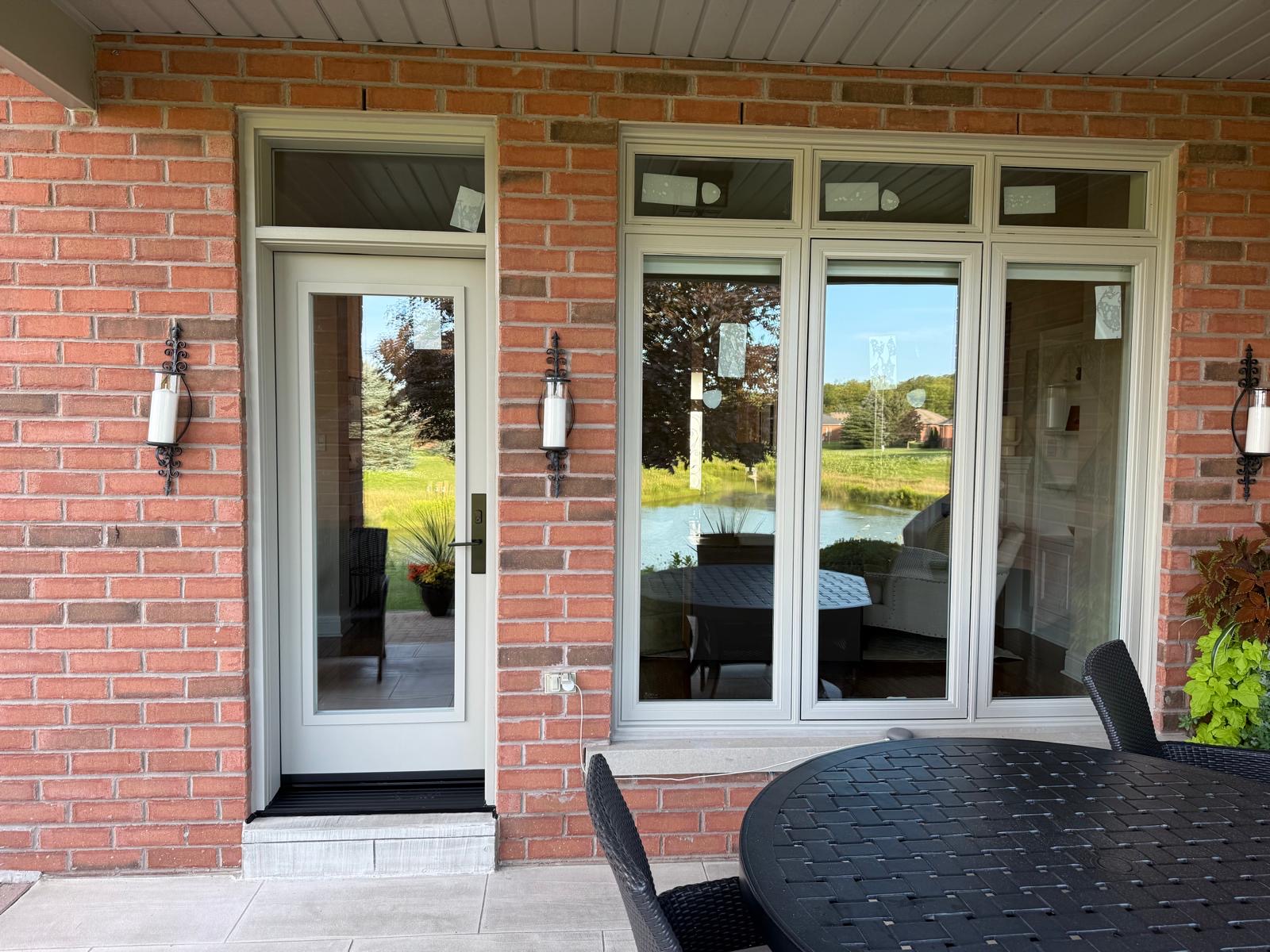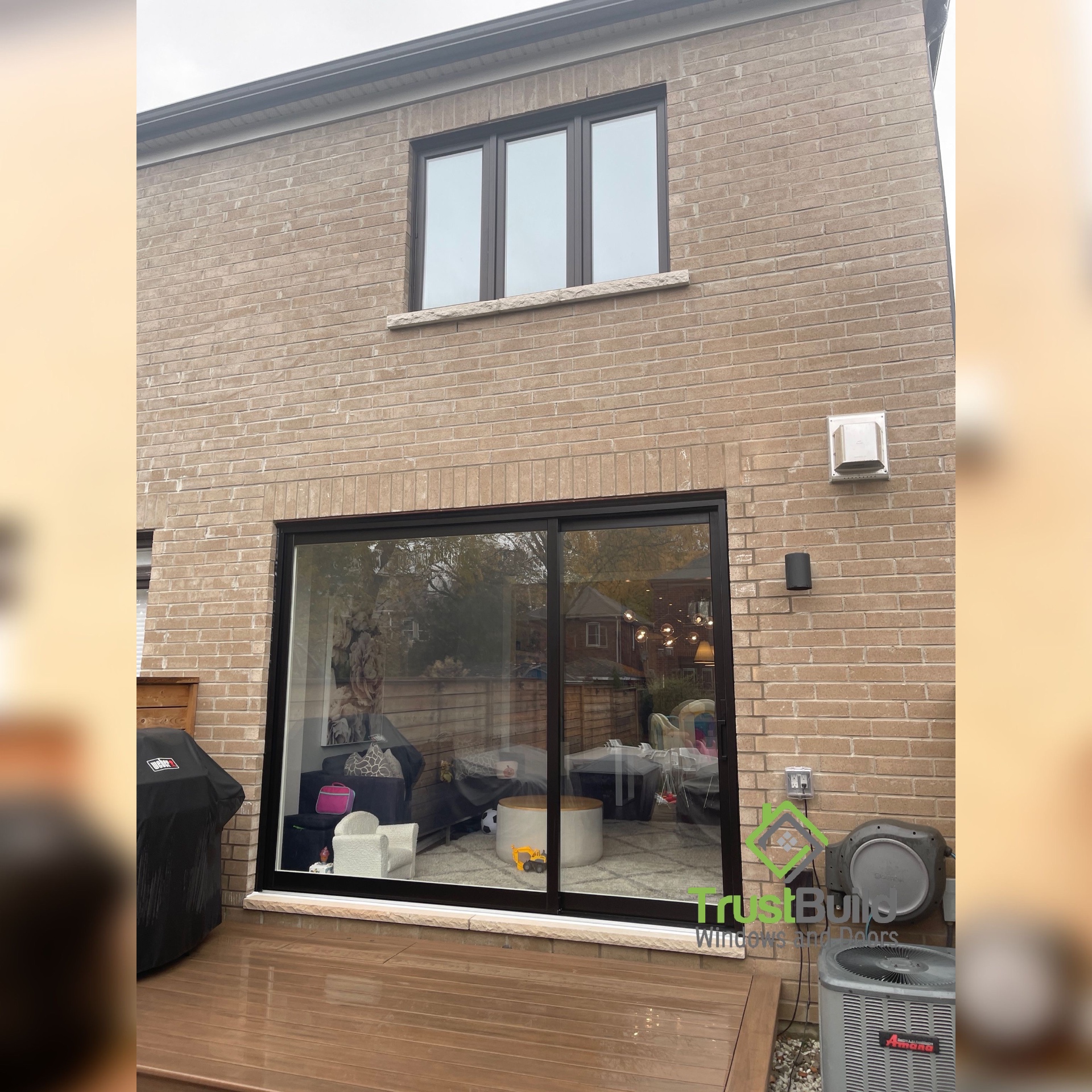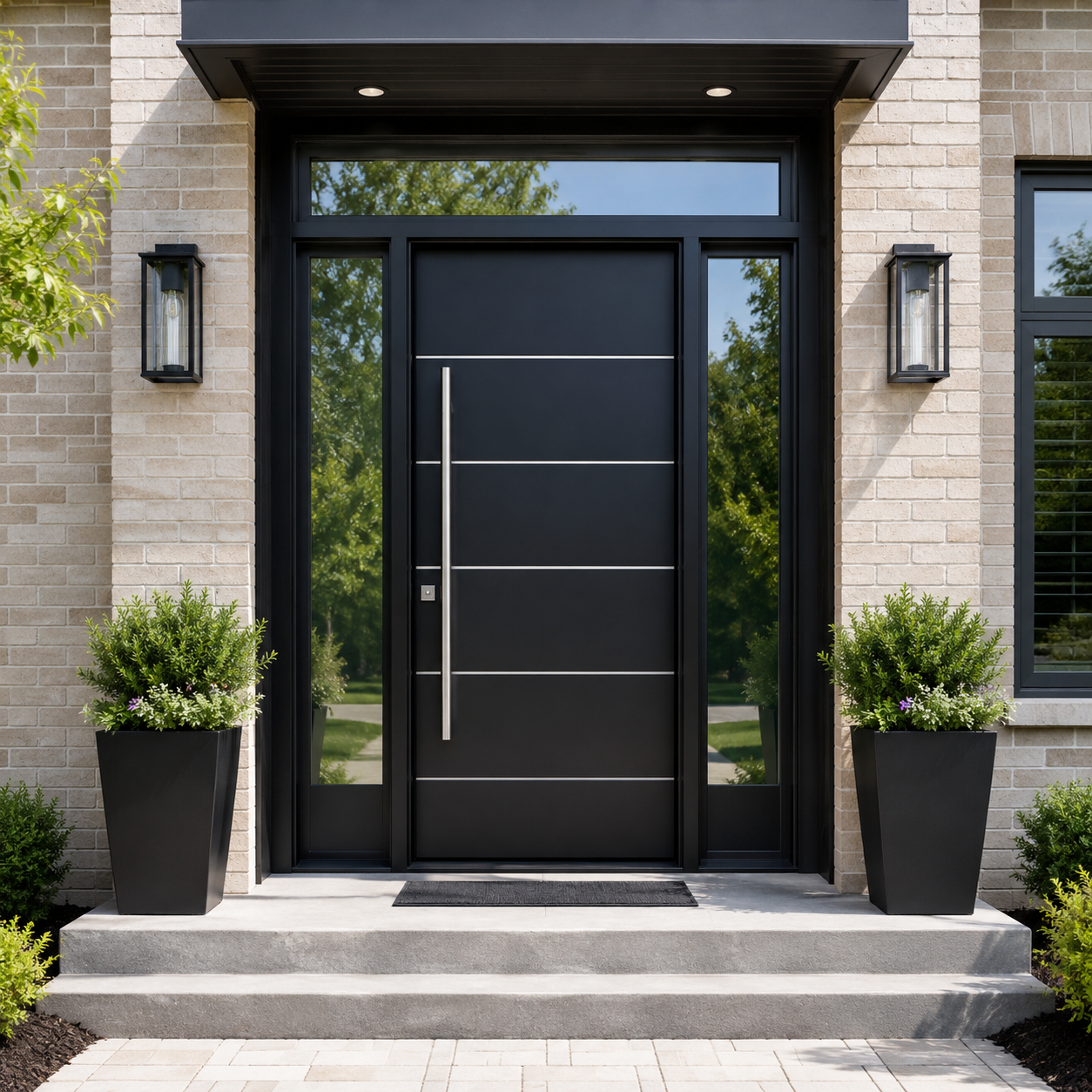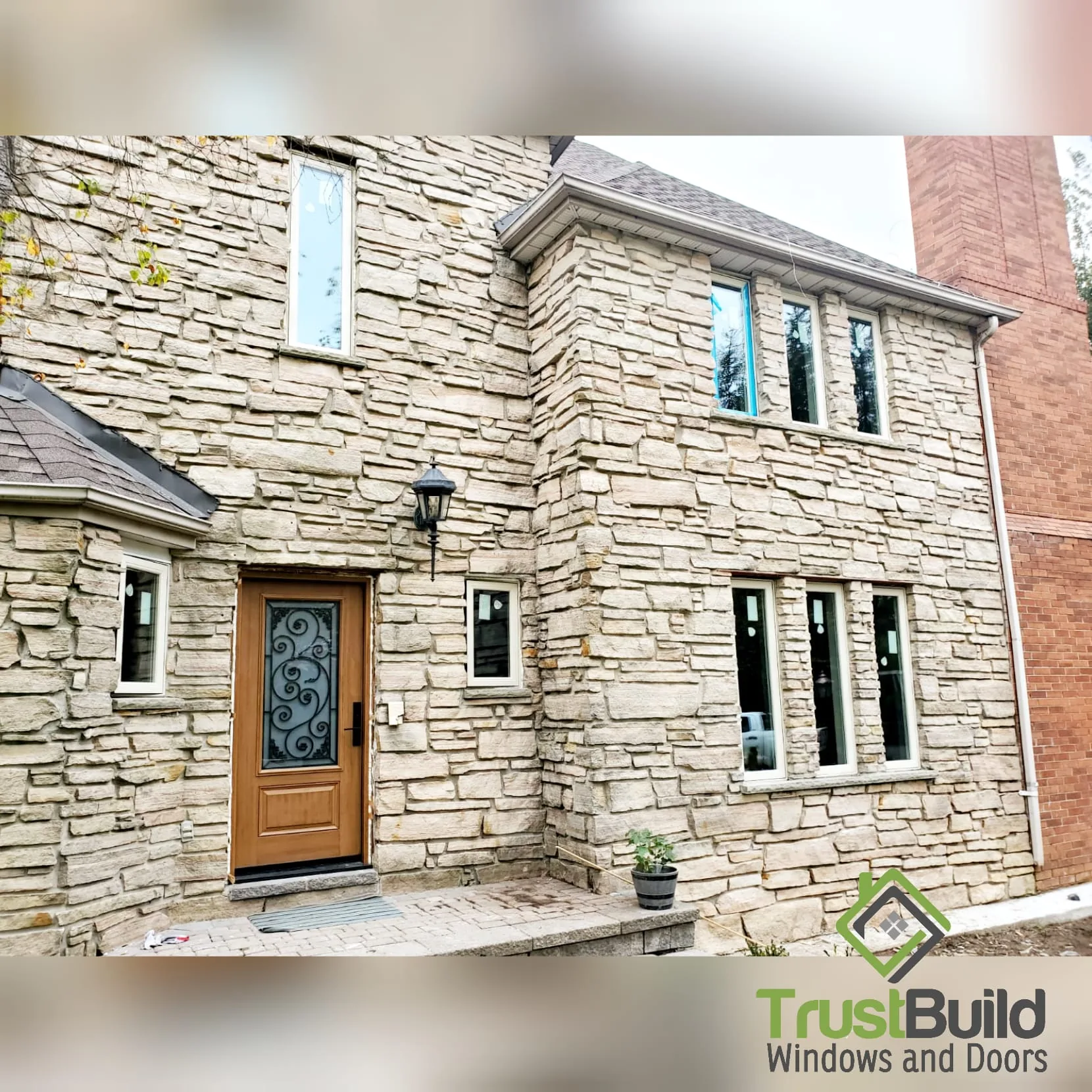
A homeowner outside King City reached out this spring with a specific problem. Their architect had drawn a rear addition off the kitchen — a great room with a ten-foot glass wall looking over a ravine lot, the kind of build going up more often on the larger country properties around King Township. The drawings called for aluminum window frames. The contractor's quote for that one wall came back higher than expected, and the homeowner wanted to know whether aluminum was actually necessary, or whether an installer could substitute vinyl and save several thousand dollars.
It's a fair question. The honest answer is: it depends on what the window has to do.
Why aluminum shows up on projects like this at all
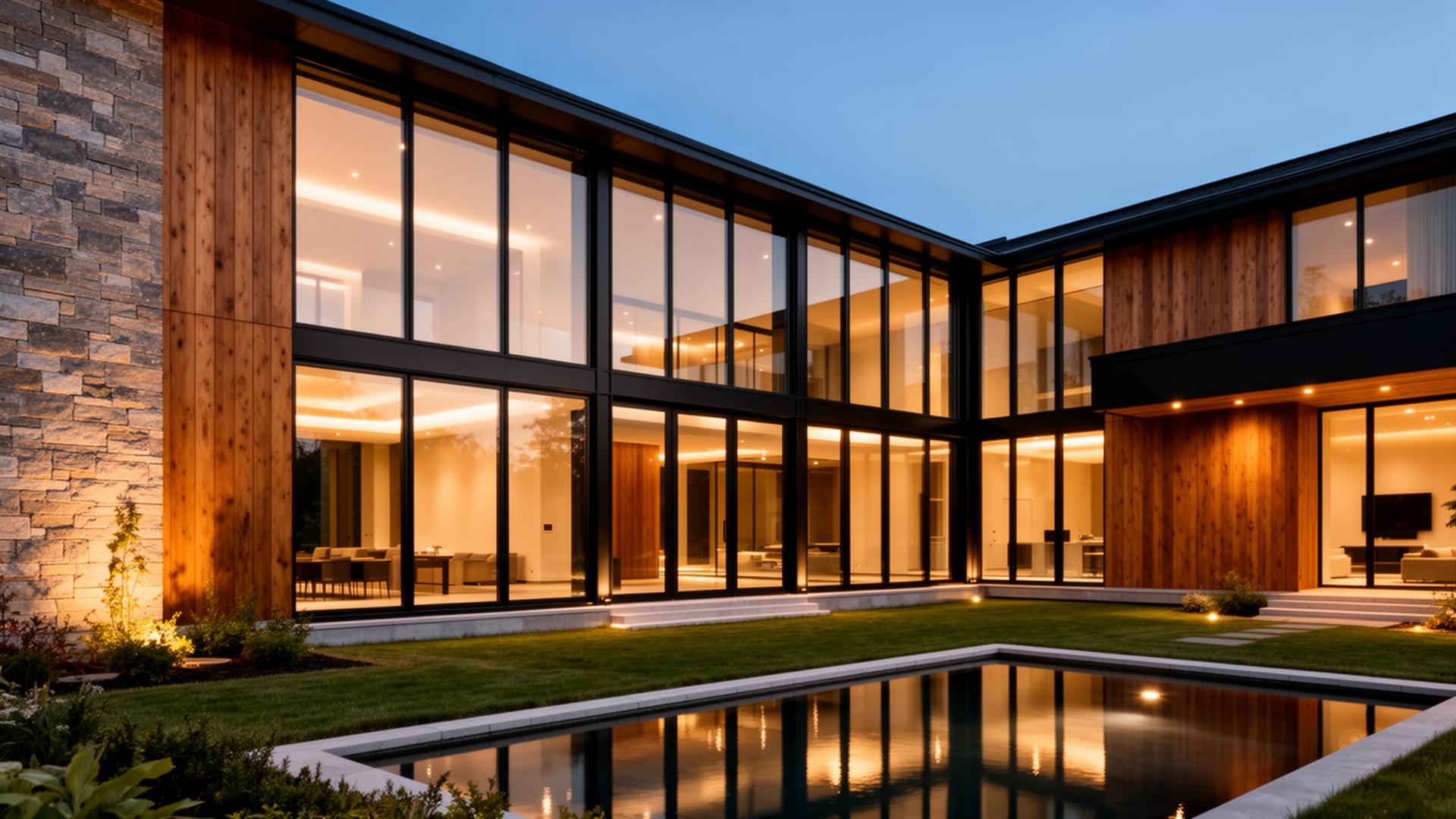
Aluminum window frames are narrower and structurally stronger per square inch than vinyl, which is exactly why architects reach for them on large-format glazing — a single expansive pane, a run of windows meeting at a corner with no visible post, a transom stacked above a sliding door. Vinyl frames have to be built thicker to support the same span of glass, which starts to eat into the view you're paying for. On a standard bedroom or living room window, that difference barely registers. On a floor-to-ceiling wall of glass in a modern addition, it's the whole point.
That's really the pattern I see across King City and the surrounding estate lots in King Township: aluminum gets specified where the architecture is doing something unusual — a glass link between a house and a detached garage or guest suite, a contemporary addition tacked onto a stone farmhouse, a wall of black-framed windows facing a pond or a treeline. It is not, in my experience, the right call for a straightforward whole-home window replacement, and I'd tell a homeowner that directly rather than let them assume "high-end" automatically means "better."
The part that actually matters in this climate: the thermal break
Aluminum conducts heat and cold far more efficiently than vinyl — which is a problem in a Southern Ontario January if the frame isn't built correctly. A cheap, non-thermally-broken aluminum frame will frost on the inside and feel like a slab of ice to stand near. A properly engineered aluminum window uses a polyamide thermal break running through the frame, physically separating the interior aluminum from the exterior aluminum so cold doesn't transfer straight through. This isn't optional for a King City installation — it's the difference between a window that performs and one that becomes the coldest spot in the room every winter.
Paired with the right glass package, a thermally broken aluminum frame can still land in Energy Star territory for our climate zone. On a west- or south-facing great room wall like the one this homeowner was building, solar heat gain becomes the bigger issue than heat loss — too much unfiltered sun turns a beautiful room into a greenhouse by 4pm in July. Cardinal's LoĒ²-272 coating is a common answer for exactly that orientation, cutting solar heat gain while still keeping the glass clear rather than tinted. For walls with less direct exposure, LoĒ-180 lets in more usable daylight without sacrificing much on the heating side. Either way, the glass spec should be chosen room by room and elevation by elevation, not defaulted to whatever the frame manufacturer ships standard.
What it actually costs, and where I'd spend the money
High-end aluminum windows typically run well above comparable vinyl — the material, the thermal-break hardware, and the more specialized installation add up. For a homeowner working through a renovation budget, my advice is usually to concentrate the aluminum on the architectural feature — the great room wall, the entry vestibule, the one dramatic sightline — and use energy-efficient vinyl windows for the rest of the home, including bedrooms and secondary living spaces where the frame isn't part of the visual statement. You get the look where it counts and keep the budget sane everywhere else. Trust Build installs both product lines, with 0% financing through Financeit for homeowners spreading a larger renovation over monthly payments. Certified installation matters more with aluminum than vinyl, since the thermal-break detailing and flashing around a large-format opening leave little room for error.
Maintenance reality
Powder-coated aluminum holds its finish well and won't warp, but scratches show down to bare metal more visibly than on vinyl, and touch-up paint matching an architectural black or bronze finish isn't a weekend job. A properly applied powder coat still holds its colour for 20-plus years with reasonably gentle care — skip the abrasive pads near frame edges.