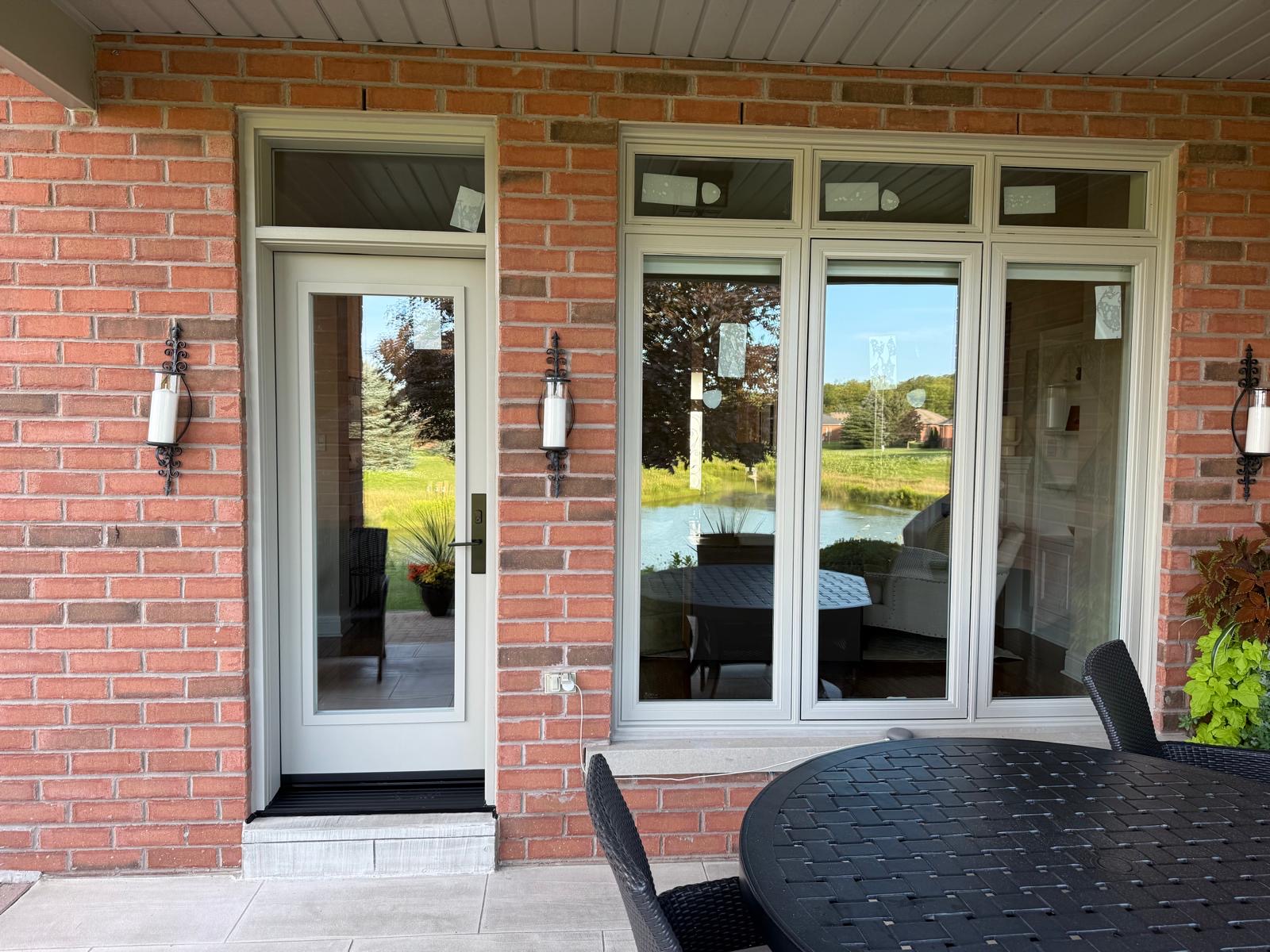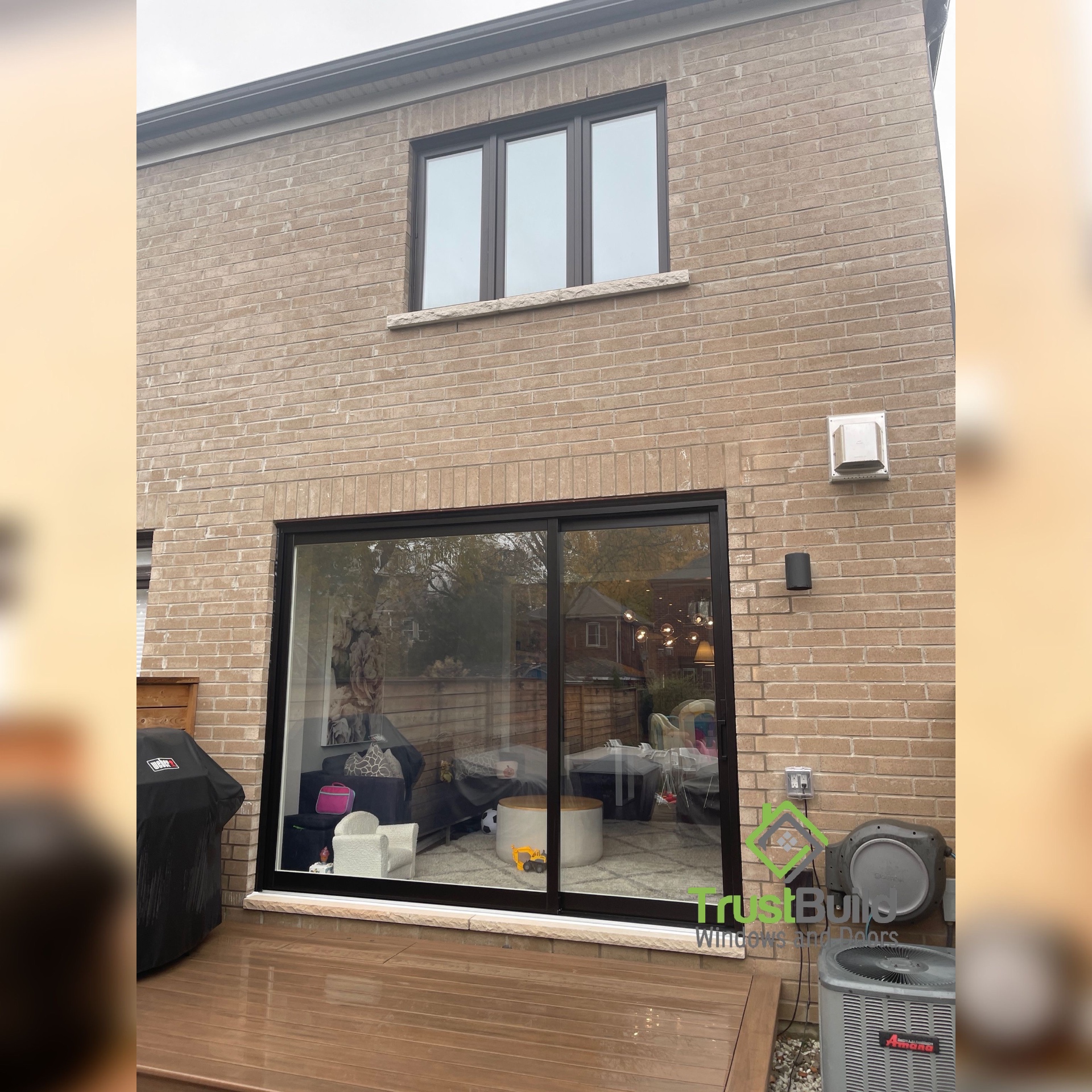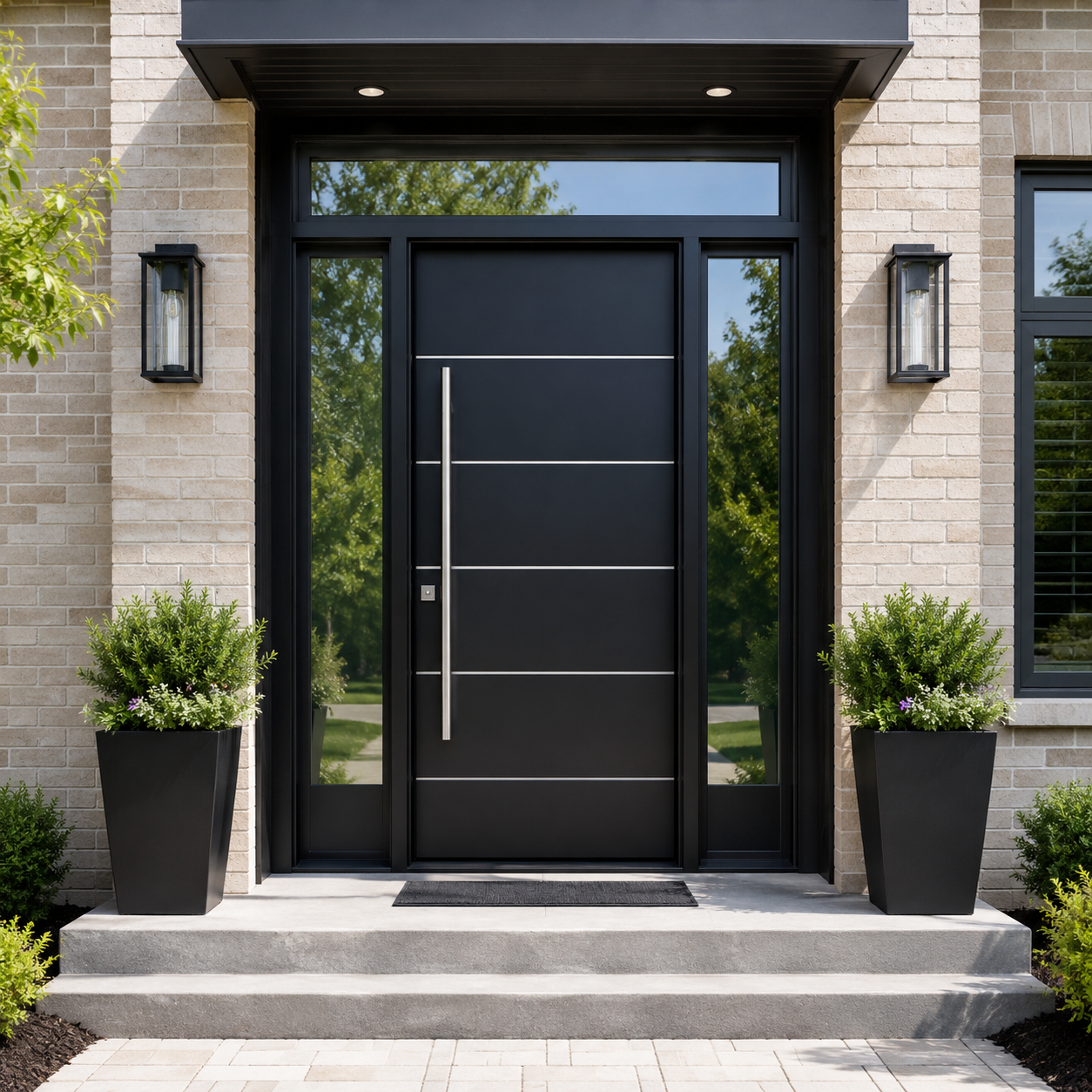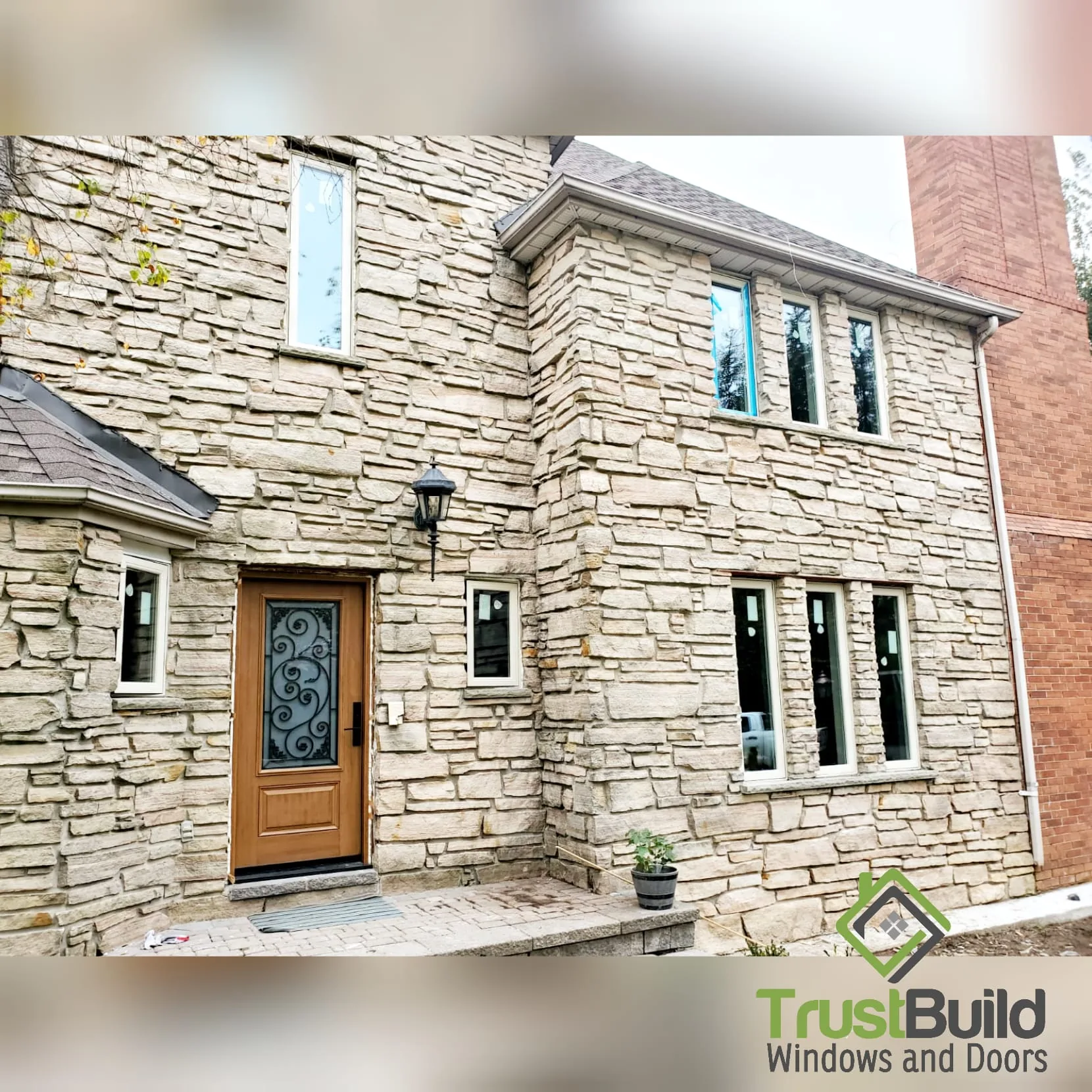
A homeowner in Clarkson called us in February asking why the bottom corners of her eight-year-old steel entry door had started bubbling and rusting through the paint. She'd bought the door from a big-box reno, liked the woodgrain texture, and never thought twice about it until the finish started failing right where the door meets the sill. That door wasn't a bad door. It was the wrong door for a house four blocks from the lake, sitting in the path of wind-driven rain off Lake Ontario every fall and winter.
That's really the starting point for anyone in Mississauga shopping for a steel entry door: the city isn't one climate zone. A door that performs fine in Meadowvale or Churchill Meadows, set back from the water and shielded by other houses, can behave completely differently on a Clarkson or Port Credit lot exposed to lake wind and salt spray off winter roads. Steel doors are still one of the best value picks for an Ontario front entry — they're rigid, they resist warping the way older wood doors never could, and a well-built one with a foam core does a genuinely good job holding heat in through a February cold snap. But "steel door" isn't a single product, and the differences matter more here than the marketing usually lets on.
The core is doing more work than the skin
Most of what separates a door that lasts twenty years from one that fails at year eight isn't the steel skin at all — it's what's inside it. Entry-level steel doors are sometimes filled with expanded polystyrene, which is fine as a low-cost insulator but doesn't bond to the steel skins the way injected polyurethane foam does. A polyurethane-foam-core door is structurally stiffer, insulates noticeably better (this is the spec that actually earns Energy Star certification on a steel unit), and resists the oil-canning — that faint rippling you sometimes see on cheap steel doors in direct sun — that polystyrene-core doors are prone to. If you're comparing quotes and one door is meaningfully cheaper, the core is usually where that savings came from.
Texture is a style choice with a maintenance cost
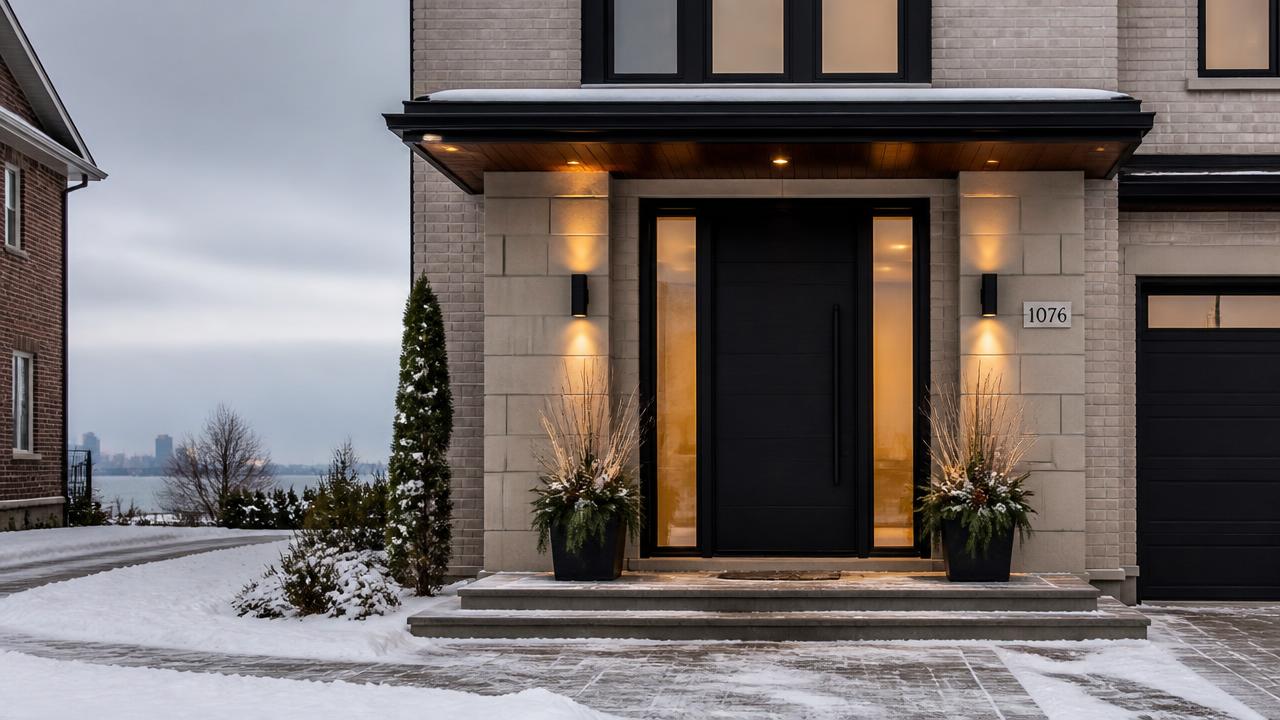
Woodgrain-embossed steel looks good on a lot of Mississauga homes, especially the brick two-storeys through Erin Mills and Lisgar built in the late '80s and '90s where a flat slab door looks a little plain against all that brick detail. But texture creates seams and low points where moisture sits, and on a door that's catching direct weather — south or west-facing, minimal porch overhang, anything within a few blocks of the water — that's exactly where finish failure starts, same as what happened on that Clarkson door. If your entry has real overhang protection, texture is a reasonable choice. If it doesn't, a smooth or lightly textured steel skin with a factory-baked finish is going to outlast an embossed one, even though it may photograph a little less dramatically.
Older Mississauga openings aren't always standard sized
A lot of the housing stock through Mississauga Valleys, Cooksville, and parts of Clarkson was built in the '60s and '70s, and door rough openings from that era don't always match today's standard 36-inch slab sizing — sometimes they're narrower, sometimes the sidelite configuration was custom to begin with. That's less of a factor if you're doing a full rip-out where the frame gets rebuilt to spec, but it's worth measuring before you fall in love with a specific sidelite layout online, because a door that needs to be special-ordered to fit an odd opening changes both your price and your timeline.
Condo and townhome rules change what you can pick
If you're in one of the townhome or condo communities near City Centre or Square One, your board or property management may have a standing exterior colour and style requirement for entry doors — this trips people up more often than you'd expect, because it's easy to assume a front door is purely your own decision the way it would be on a freehold lot. It's worth checking your declaration or calling the property manager before you order anything, since a door built to the wrong spec for a bylaw is an expensive mistake to unwind.
Security is part of the steel argument, not an afterthought
Steel's other real advantage over other door materials is resistance to forced entry — a solid steel slab with a proper multi-point lock is a harder target than most alternatives, and that's worth factoring in if your street backs onto a park, ravine, or laneway with less foot traffic, which describes a fair number of Mississauga's older subdivisions.
None of this is an argument against steel — for most Mississauga homes it's still the right call, though finish and core quality vary between manufacturers more with steel than with almost any other door material. Trust Build has installed Energy Star-rated steel entry doors for homeowners across Mississauga and the rest of the GTA, with 0% financing through Financeit for anyone who'd rather spread the cost than pay it all upfront. The door itself is a commodity-looking product on a spec sheet. Which one actually survives a Mississauga winter depends on details most people never get told to ask about. Request a free quote and we'll point you toward the right option.