
Buying Guide
Double Pane vs Triple Pane Glass
Is the upgrade actually worth it for Ontario homes? We pull real numbers from real projects so you can decide before signing a quote.
Side-by-Side
Double pane vs triple pane — the real numbers
Below are typical figures for a 36" x 60" Energy Star casement window with Low-E coating and argon fill, installed in the GTA.
Best for Mild climates + tight budgets
Double Pane
Two panes of glass with a single argon-filled cavity.
Learn moreBest for Ontario winters + comfort
Triple Pane
Three panes with two argon-filled cavities and a Low-E coating on the inner pane.
Learn more| Feature | Double Pane | Triple Pane |
|---|---|---|
| Typical glass U-value Lower is better | 1.3 – 1.6 W/m²K | 0.8 – 1.1 W/m²K |
| Heat loss reduction (vs single pane) | ~50% | ~70% |
| Indoor surface temp (when -20°C outside) | ~9°C | ~14°C |
| Visible light transmittance | ~70% | ~65% |
| Sound reduction (STC rating) | 26 – 28 | 30 – 33 |
| Weight per square metre | ~20 kg | ~30 kg |
| Energy Star Most Efficient eligible | ||
| Typical installed price premium | Baseline | +12% to +18% |
| Comfort near window in winter | Cool | Warm |
| Condensation in cold weather | Possible | Rare |
| Recommended for Ontario |
Our Verdict
For Ontario homes the answer is almost always triple-pane. The cost premium is small relative to the total project, the comfort gain is immediate, condensation drops dramatically, and Energy Star Most Efficient certification can unlock rebates that offset much of the upgrade. The one exception: budget projects in secondary windows (basement, garage, low-use rooms) where double-pane with a quality Low-E coating still performs well.
Inside the Glass
Double pane vs triple pane — actual cross-section comparison
These cutaways show the real difference: a double-pane unit has two glass panes and one argon-filled cavity; a triple-pane unit adds a third pane and a second cavity sealed inside the frame.
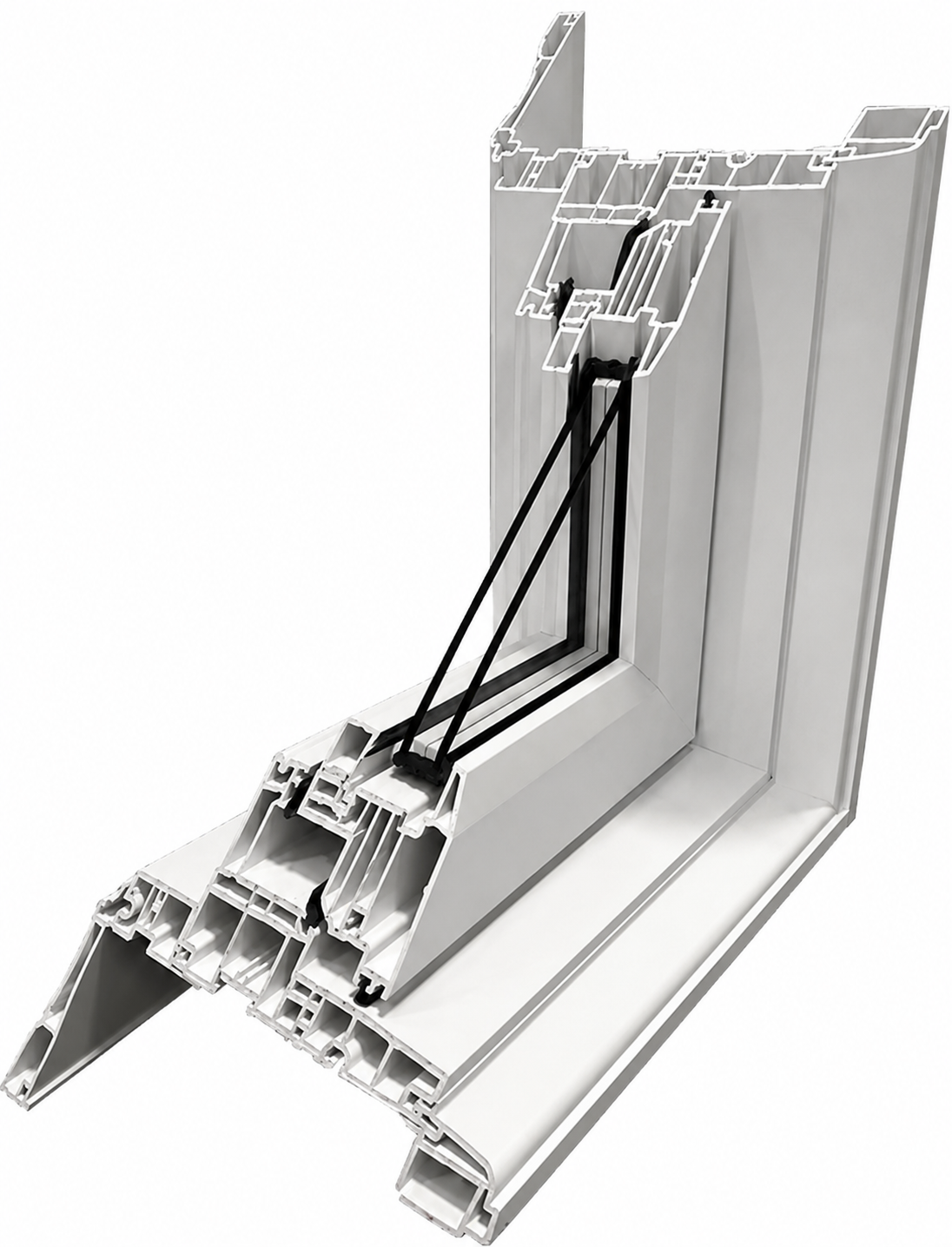
Double-Pane Cross-Section
2 glass panes · 1 argon cavity · Low-E coating
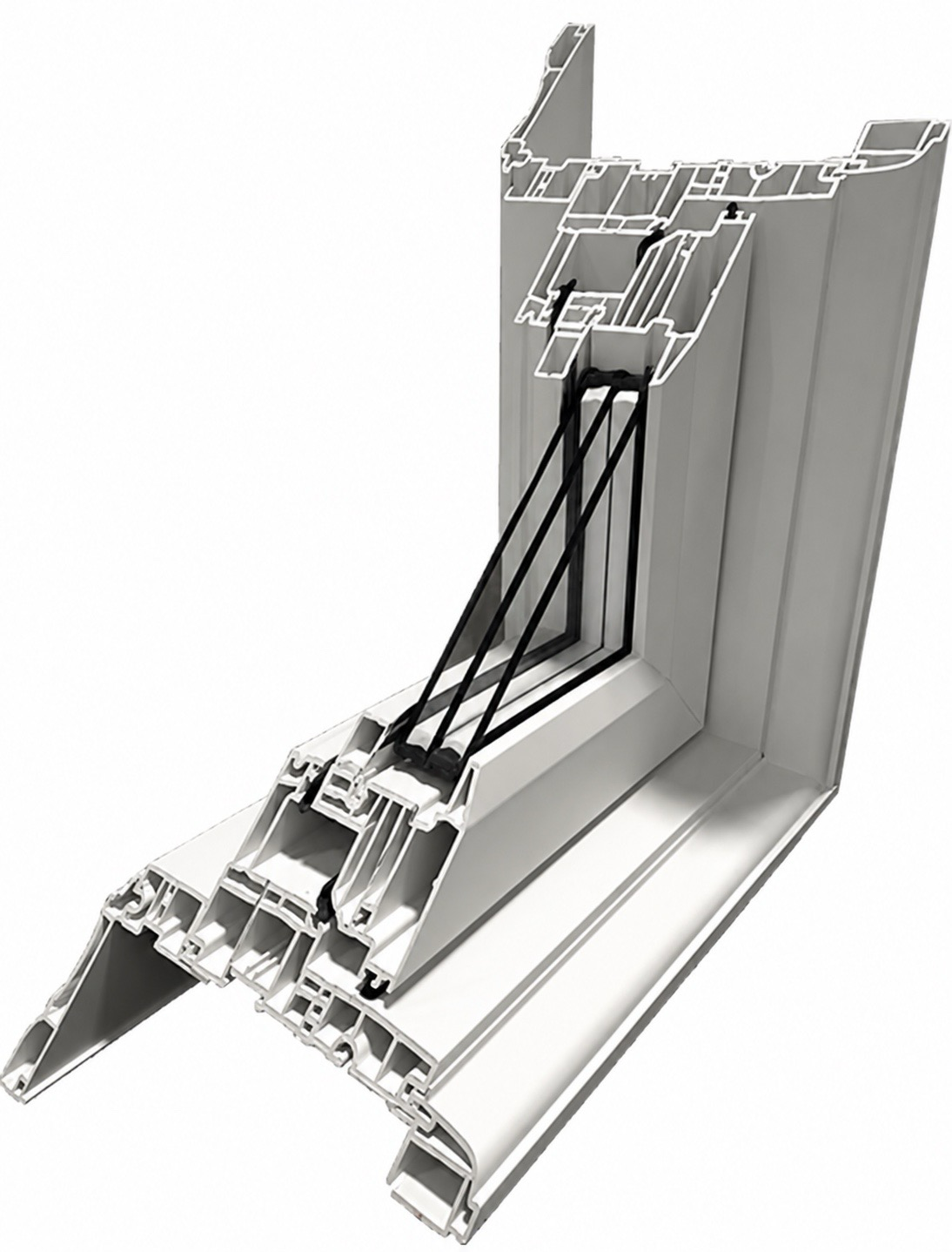
Triple-Pane Cross-Section
3 glass panes · 2 argon cavities · Low-E coating
Double Pane Glass — Deep Dive
What a modern double-pane insulated glass unit actually is
A double-pane IG (insulated glass) unit is two panes of glass sealed together around a single gas-filled cavity. The cavity is typically 12–16 mm wide, filled with argon (heavier and slower-conducting than air), and bounded by a Super Spacer warm-edge foam spacer that prevents perimeter condensation. Cardinal IG manufactures the assembly to factory tolerances of fractions of a millimetre — the same precision applied to the inner-pane Low-E coating that gives the unit most of its winter thermal performance.
On affordability, double-pane is the right answer for budget projects and secondary openings. On condensation, double-pane can develop interior fogging in cold snaps because the inner-pane surface temperature drops faster than triple-pane. On noise reduction, double-pane runs roughly 26–28 STC — adequate for quiet streets, not enough for busy roads or proximity to transit. A practical example: a 36×60 casement on a Toronto budget renovation with no street noise and east-facing exposure is a credible double-pane install. The same window on the south side of a Vaughan home facing a school yard is not.
Triple Pane Glass — Deep Dive
Why the third pane changes more than you think
A triple-pane IG unit is three panes of glass sealed around two argon-filled cavities. The middle pane is the part that does most of the work — it slows convective heat transfer across the assembly by splitting one wide cavity into two narrower ones, each operating in a more efficient thermal regime. Combined with a Low-E coating on at least one interior surface, the result is roughly 30% better thermal performance than a double-pane unit of the same outer dimensions.
For comfort, the inner-pane surface temperature in winter runs about 5 °C warmer than double-pane in -20 °C weather. Standing or sitting next to a triple-pane window in January feels like a different window. For sound reduction, the additional pane and cavity adds 4–6 STC over double-pane — meaningful for any home within earshot of a busy road. For winter performance, condensation drops to the point that it's essentially eliminated on a properly installed Trust Build triple-pane unit. A practical example: every Ontario family room facing a back deck where children gather in January is a triple-pane room.
FAQ
Frequently Asked Questions
Explore More
Keep exploring what Trust Build can do for your home
Flexible Financing Options Available
0% promotional plans and low monthly payments through licensed Ontario lenders. Pre-qualify in minutes.
See financing plansLifetime Product Warranty
Frames, sashes, hardware and our workmanship — covered for as long as you own the home.
Why homeowners trust us4.9 ★ from 327+ Reviews
Verified reviews from Ontario homeowners across Google, HomeStars and Facebook.
Read customer reviewsFree Quote
See triple-pane numbers for your home
Your free on-site project assessment includes both double-pane and triple-pane pricing so you can decide with real numbers.
- Detailed project assessment
- Written itemized quotation
- Product and installation recommendations
- Financing options available