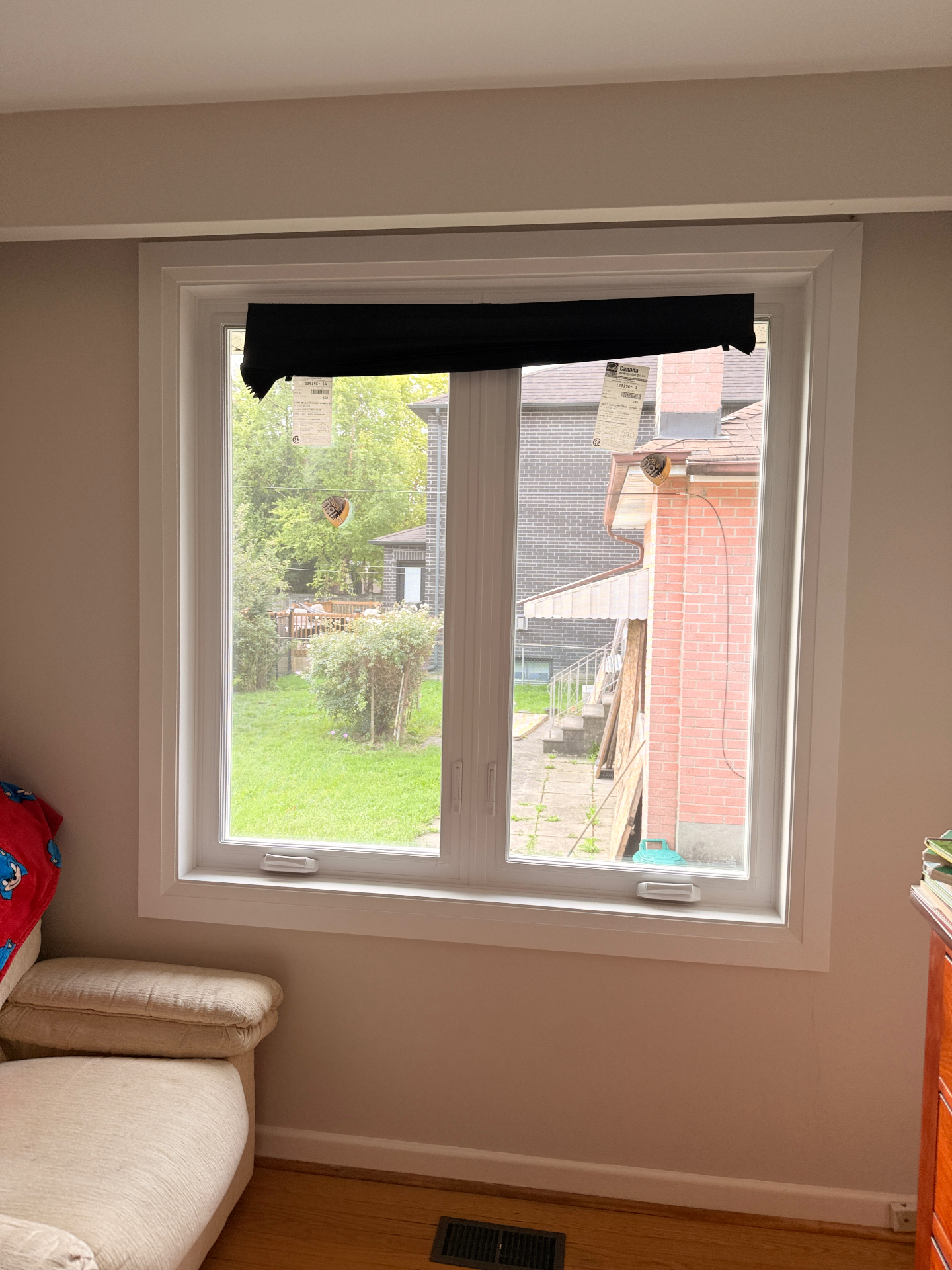
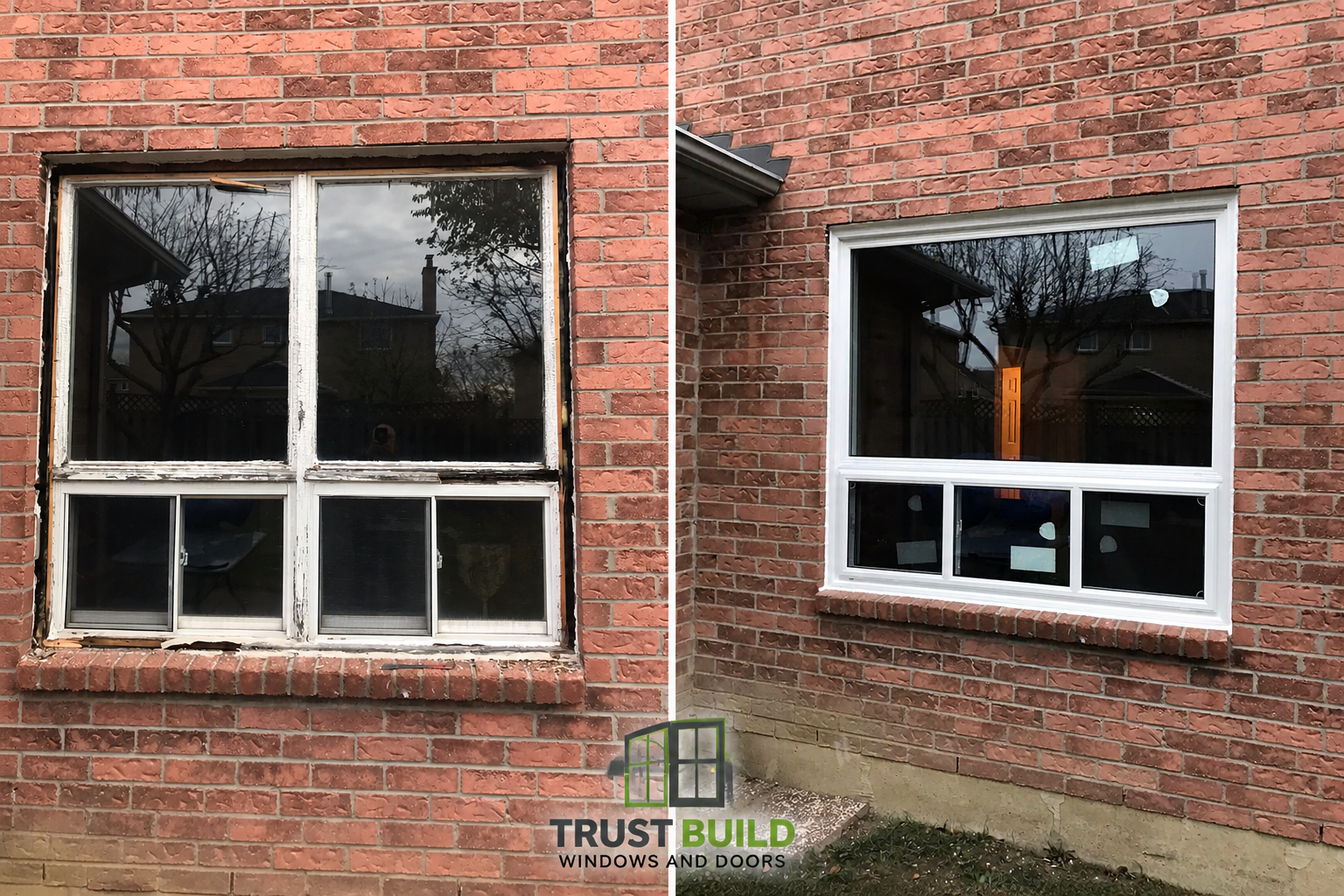
An installer pressed his thumb into a windowsill on a side street near downtown Newmarket last month and it gave like wet cardboard. The homeowner had called about condensation. What the crew actually found, once the old picture window came out, was a sill that had been absorbing water for years behind paint that still looked fine from six feet away.
That gap — between what a window looks like it’s doing and what’s actually happening inside the frame — is where most replacement decisions in this city go wrong. Homeowners either panic over normal moisture or ignore a window that’s genuinely done, steering them toward replacement windows for the wrong reasons, or away from them for the wrong ones.
Not all fog means failure
Condensation on a window shows up in three places, and only one of them is bad news. Dew on the outside of the glass on a cold, still morning is usually a compliment to the window, not a complaint. A well-sealed, Energy Star-certified unit keeps heat inside, so the outer pane stays cold enough to collect the same dew that forms on a parked car or the lawn. Older, leakier windows never did this because heat was escaping straight through the glass and keeping that outer surface warm.
Moisture on the inside face is a humidity problem, not a window problem — it means indoor air is too damp or not circulating past the glass. Cracking a blind open during the day, running bathroom fans a little longer, or dialing back a furnace humidifier in January usually clears it. It’s an easy fix, and one a lot of Newmarket homeowners chase for months without realizing the window itself is fine.
Fog trapped between the panes is the one that means something actually failed. The sealed unit has lost its argon fill, moisture got in, and no amount of cleaning reaches it. That’s the only version of “foggy windows” that ends in a glass replacement, not a humidity adjustment.
The Newmarket homeowner mentioned above had all three confused. What that home actually had, once the crew got the old sash off, was wood rot — soft, discoloured wood at the sill corners and glazing that had started separating from the sash. That’s a different problem than condensation entirely, and it doesn’t announce itself with fog. It announces itself with paint that’s cracked at the joints and a sill that flexes underfoot when you press on it.
What replacing it actually involved
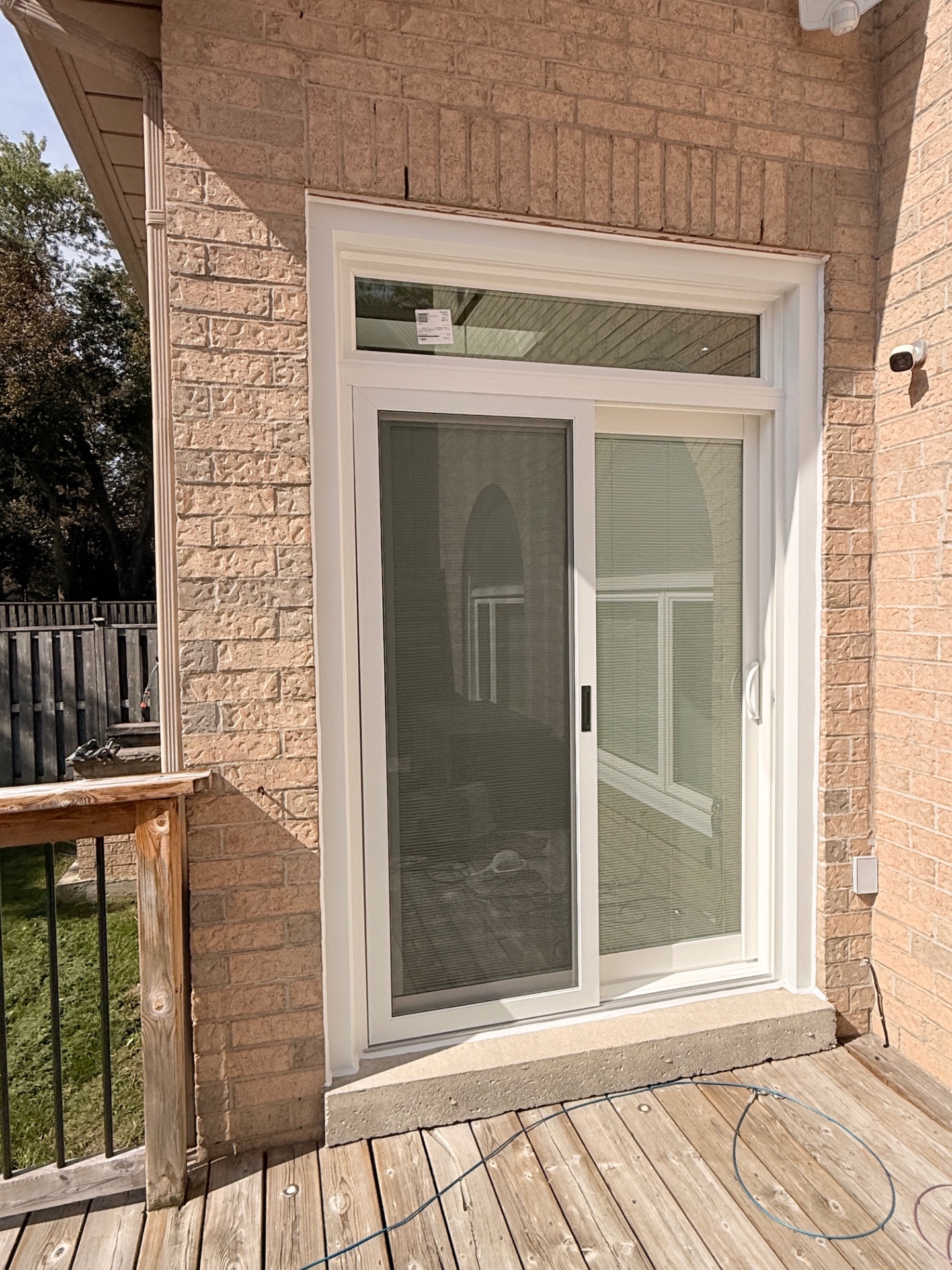
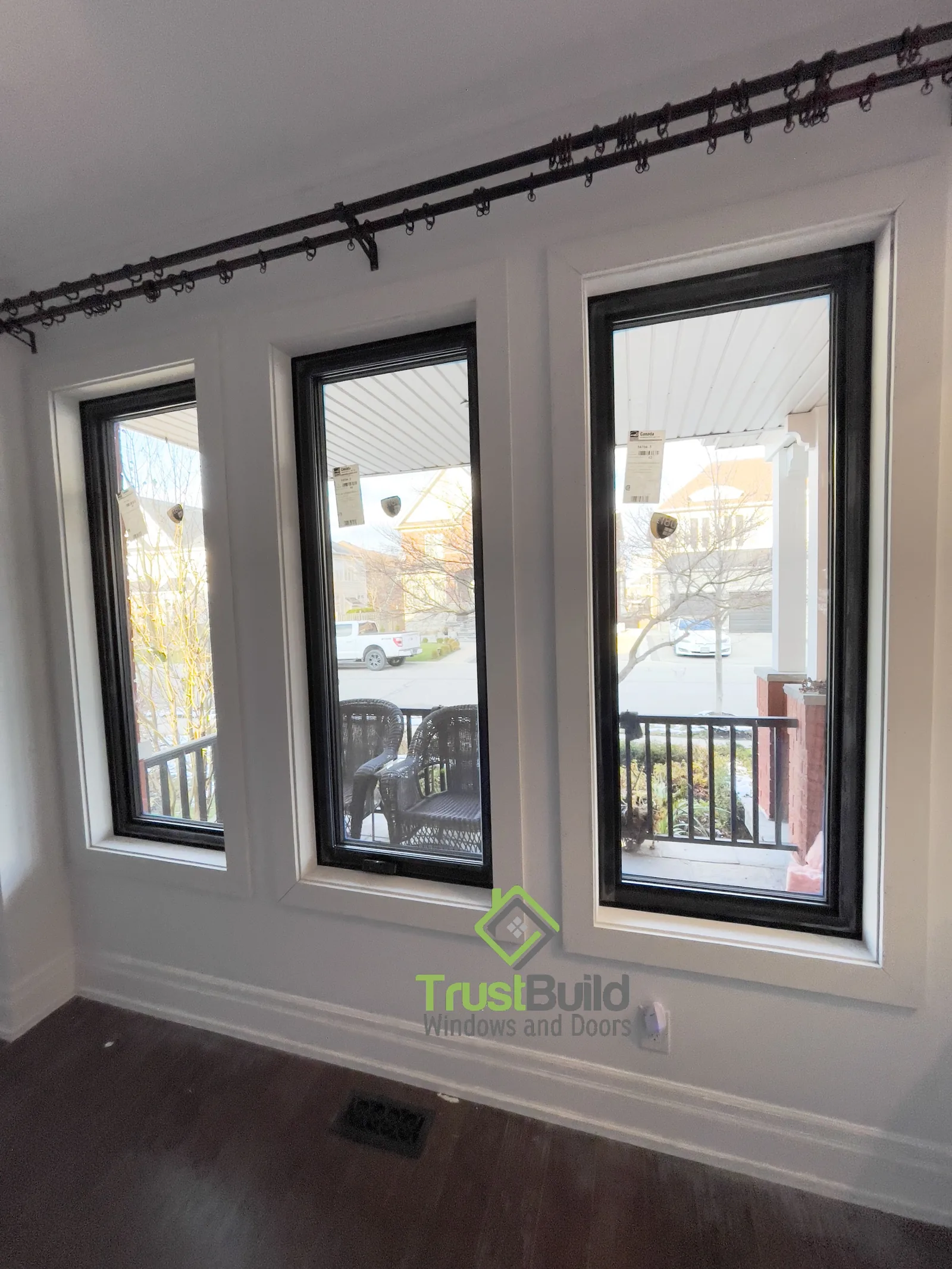
The home got a full brick-to-brick replacement, not an insert swapped into the old frame. That distinction matters more than most people think. Brick-to-brick means the crew pulled the brick mould, took the entire old window and frame out down to the rough opening, stripped the old jamb extensions and interior casing, and worked from a bare, prepared opening rather than building around whatever the old frame left behind. The rough opening got cleaned, a Blueskin membrane went on to waterproof it, and the new unit — already carrying its own brick mould and jamb extension from the factory — went in, was shimmed plumb, level, and square, then sealed with low-expansion foam, trimmed flush, taped, and finished with new interior casing.
The replacement unit was a picture-and-slider combination — a large fixed pane on top for light, with an operable slider underneath for ventilation without a sash swinging outward. It’s a good match for a wall that wants more glass than a fully operable window but doesn’t need to open completely, though it’s worth saying plainly: a fixed picture section means that portion of the window never opens, so it’s the wrong call on a wall where airflow matters more than view.
Older homes closer to Main Street and the historic downtown core often still have plaster-and-lath walls behind that casing rather than drywall, and plaster is more brittle to work around. A careful crew scores the paint line before pulling trim and expects the occasional hairline crack at the casing joint on a century-old wall — a small, honest cost of doing the job right on an older house, and one worth knowing about before the crew shows up. Interior casing on jobs like this one is solid wood, never MDF, so it takes stain or paint the way the original trim did.
Newer subdivisions aren’t immune either
It’s tempting to assume this is only a downtown-core, century-home problem. It isn’t. Builder-grade vinyl windows in subdivisions like Stonehaven-Wyndham, Glenway Estates, and Bristol-London are old enough now that their original sealed units are hitting the age where seal failure — the third, real type of condensation — starts showing up. Vinyl frames don’t rot, but the glass units inside them have the same lifespan limits as any sealed unit, and a home built in a 1990s or 2000s-era Newmarket subdivision is due for that check regardless of the frame material.
Why fall isn’t the wrong time to call
A lot of homeowners wait for spring, assuming cold-weather installation is a compromise. It isn’t a reason to delay, but it does mean the crew works differently — sealing one opening at a time rather than leaving a house open to the weather, and building in extra cure time for low-expansion foam, which sets slower in cold air than it does in July. None of that changes the process; it just changes the pace. Waiting until a rotted sill gets worse, or a failed seal lets more moisture into a wall cavity over another winter, costs more than adjusting a work schedule.
If you’re not sure which kind of “foggy” you’re looking at, the quickest test is the one that started this whole story: press your thumb into the sill on a cool, damp morning. If it gives, that’s your answer — and it isn’t a humidity problem.