Not every window replacement is about upgrading style — sometimes it's about stopping active damage before it spreads. This Newmarket home's original wood window had reached that point: visibly rotted framing, failed paint, and deteriorating sashes at the sill. Here's a look at the full brick-to-brick replacement, including why the wood failed and what replaced it.
Why the Original Wood Window Failed
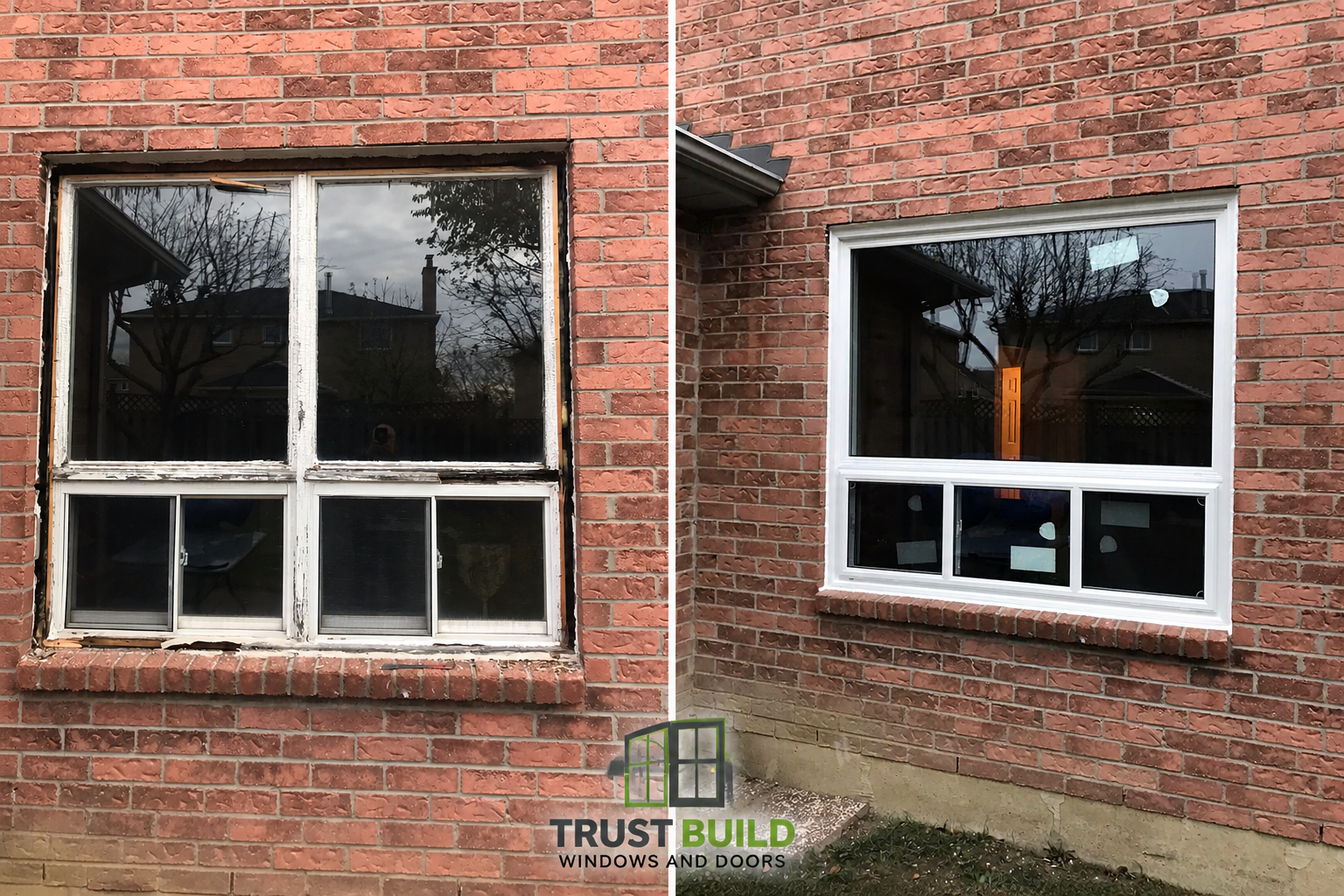
Wood windows can look good for years and still be failing where you can't easily see it. On this window, the damage was visible: peeling and cracked paint, soft and discoloured wood at the bottom corners and sill, and glazing that had loosened around the panes. Once paint fails on an exterior wood sill, the wood underneath is exposed to rain, snow, and freeze-thaw cycles every winter — and untreated wood in that position rots from the inside out long before it looks obviously damaged from a distance.
By the time rot is visible at the surface, as it was here, the wood has typically been absorbing moisture for years. At that stage, patch repairs and repainting don't solve the underlying problem — replacement is the only real fix.
What Replaced It: A Picture Window with Slider
The new window is a combination unit — a large fixed picture window on top paired with an operable slider below. Trust Build catalogs this configuration as a Type C combination window, and it's a popular choice for a specific reason: it maximizes the unobstructed view and natural light through the fixed upper pane, while the slider below still gives you a way to open the window for airflow, without a sash swinging outward the way a casement would.
It's a practical fit for locations where you want more glass and more light but don't need the entire window to open — a backyard-facing wall, a window near a walkway, or, as here, an opening where a full operable window isn't necessary for ventilation.
What "Brick-to-Brick" Actually Means
This was a full brick-to-brick installation, not an insert replacement. That means:
- Removing the existing brick mould, jamb extensions, and interior casing entirely, rather than fitting a new window inside the old frame.
- Vacuum cleaning the stud opening and applying Blueskin membrane.
- Installing a fully assembled window that arrives with its own brick mould and jamb extension.
- Shimming and securing the unit to studs, then applying low-expansion foam and red tape over the foam.
- Finishing the interior with new wood casing and the exterior with capping.
The result, visible in the after photo, is a clean, properly sealed opening with new trim meeting the brick directly — not a smaller window fitted inside an old, potentially compromised frame.
Why This Matters in Newmarket
Newmarket has plenty of homes from decades when wood-framed windows were standard, and many are now reaching the age where sills and sashes start to show exactly this kind of wear. York Region's mix of humid summers and cold, snow-heavy winters is hard on painted wood exposed to the elements — repainting slows the damage but doesn't stop moisture from eventually finding a way into unprotected wood.
What Trust Build Installed
Every window Trust Build installs, including picture and slider combination windows, is Energy Star certified for the Canadian climate zone and fitted by trained, certified crews. Interior finishes use solid wood casing options, never MDF or particleboard. 0% financing is available for larger brick-to-brick projects like this one.