When homeowners shop for new windows, they compare the things they can see — the number of panes, the Low-E coating, the frame colour, the price. Almost nobody asks about the thin band running around the very edge of the glass. Yet that narrow strip, called the spacer, quietly determines how warm a window feels, whether it fogs up in January, and how many years it lasts before the seal gives out. Warm-edge spacer technology like Super Spacer® is one of the biggest reasons a modern window outperforms an older one, and it's worth understanding before you invest. This guide explains what a warm-edge spacer is, how Super Spacer works, and why it matters for homes across Southern Ontario.
Every window Trust Build Windows and Doors installs is built around Super Spacer® Premium warm-edge technology — that's our standard, not an upgrade.
What a Window Spacer Actually Does
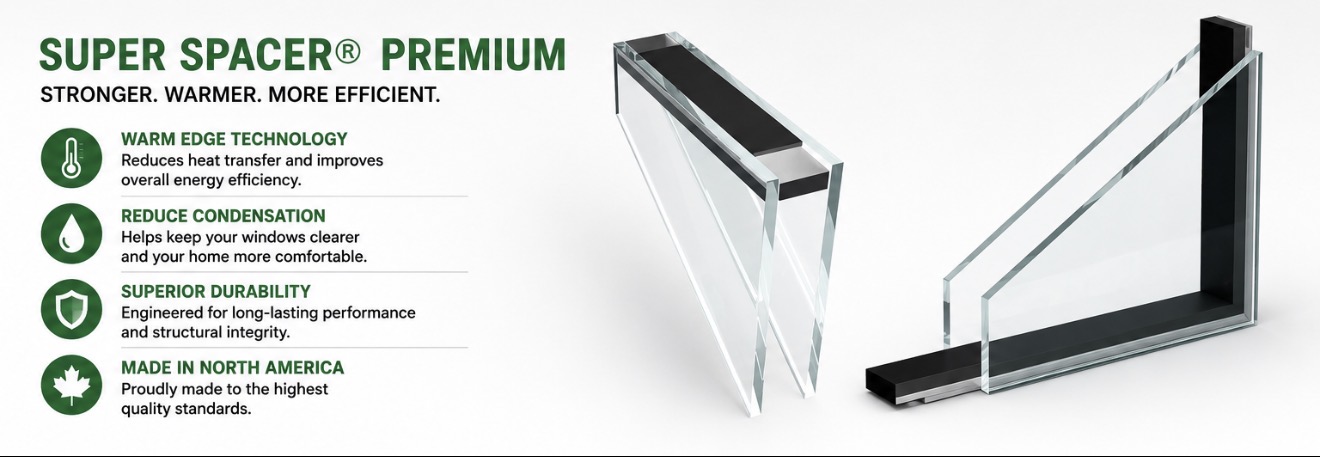
Every energy-efficient window is built around an insulated glass unit, or IGU — two or three panes of glass sealed together with a gap between them. That gap is filled with an insulating gas such as argon, and the panes are held precisely apart by the spacer. The spacer does three jobs at once: it keeps the panes the right distance apart, it seals the insulating gas inside, and it keeps moisture out so the unit doesn't fog from within. If the spacer fails, the whole sealed unit fails — which is why this small component carries far more weight than its size suggests.
Why the Edge of the Glass Is the Weak Point
The middle of a good double- or triple-glazed unit insulates beautifully. The perimeter is a different story. The edge is where the panes meet the spacer and the frame, and it's the spot where heat escapes fastest and where cold migrates inward. On a freezing Ontario morning, the edge of the glass is the first place you'll feel a chill or spot a line of condensation. Improve the edge, and you improve the whole window.
Warm-Edge vs. Aluminum Spacers
For decades, the standard spacer was a hollow aluminum bar. Aluminum is strong and cheap, but it's also an excellent conductor — exactly the wrong quality at the edge of a window. A metal spacer pulls heat straight out of the home and lets cold travel in, creating what engineers call a thermal bridge around the glass. That cold edge is the source of the frost lines and perimeter condensation many people remember from older windows.
Warm-edge spacers were developed to break that bridge. Instead of conductive metal, they use low-conductivity materials that slow heat transfer at the edge. The difference between a Super Spacer and an aluminum spacer shows up as warmer glass edges, a more comfortable room, and far less condensation in cold weather.
How Super Spacer® Works
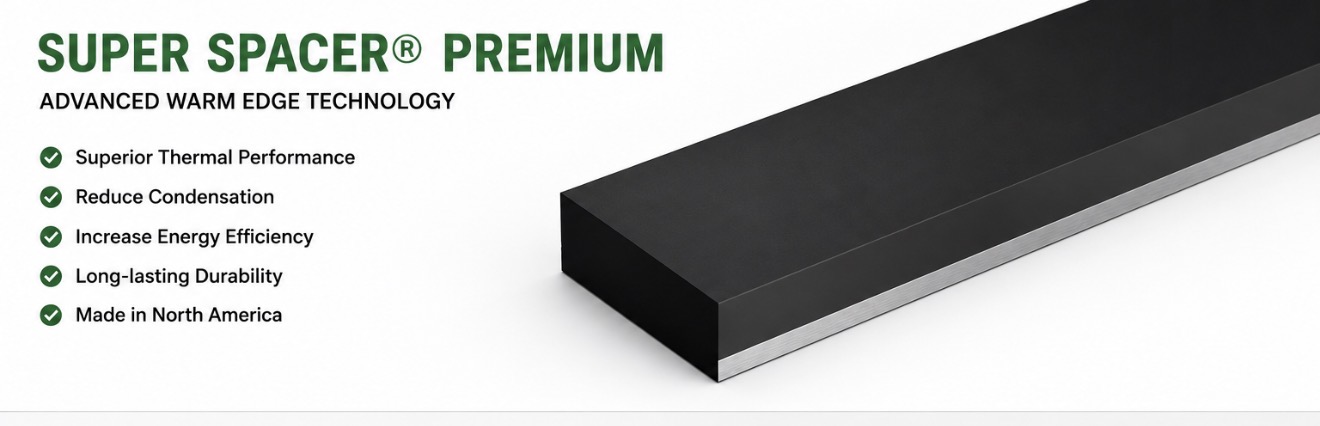
Super Spacer takes the warm-edge idea further than most by removing metal from the equation entirely. It's a flexible silicone-foam spacer — an all-foam design with no metal core — so it resists conducting heat and cold by its very nature. That foam structure creates a genuine thermal barrier exactly where windows need it most.
A few engineered details make it durable as well as efficient:
- A built-in desiccant runs through the spacer, absorbing any trace moisture inside the unit so the glass stays clear instead of fogging.
- A vapour barrier and a dual sealant system lock the insulating argon inside and keep humidity out, which is what keeps an IGU performing for the long haul.
- The flexible foam moves with the natural expansion and contraction of the sealed unit through Ontario's temperature swings, rather than fighting against it. That flex is a major reason warm-edge units resist the seal failures that eventually fog out rigid metal-spacer windows.
This technology has been proven in demanding climates for more than three decades, which is exactly the track record you want behind a window meant to last.
What Warm-Edge Technology Means for Your Home
For an Ontario homeowner, the benefits are practical and easy to feel:
Comfort. Warmer edge-of-glass temperatures mean fewer cold drafts radiating off the window and rooms that hold their heat more evenly through winter.
Condensation resistance. Because the glass edge stays warmer, condensation-resistant windows are far less likely to develop the interior fogging and frost that lead to damp sills, peeling paint, and eventually mould or mildew. This is one of the most noticeable everyday improvements over older windows.
Lower energy use. By reducing heat loss at the most vulnerable part of the window, warm-edge spacers help the whole unit hit the efficiency targets behind Energy Star windows in Ontario — which translates to a heating system that doesn't have to work as hard.
Longevity. Fewer seal failures means the insulated glass stays sealed, clear, and efficient for far longer. A unit that doesn't fog out is a unit you're not replacing early.
The Spacer Is One Part of a Larger System
A warm-edge spacer doesn't work alone. High-performance window glass comes from several components working together: the spacer at the edge, the Low-E coating on the glass, the insulating gas fill in the gap, and the frame around it all. The type of glass and coatings inside the unit determines how much heat and light pass through, while the spacer protects the seal and warms the edge. Judge a window as a complete system, not by any single spec on a brochure.
Should You Look for Super Spacer in Your Next Windows?
If you're researching replacement windows, warm-edge spacer technology is one of the clearest markers of a quality insulated glass unit — and worth asking about directly. Every window Trust Build installs uses Super Spacer® Premium as standard, is Energy Star certified for the Canadian climate zone, and is fitted by trained, certified crews, because even the best glass package underperforms if the installation lets air and water past it. The work is backed by a lifetime transferable warranty, and because doing the whole house at once is a real investment, 0% interest financing lets homeowners complete the job properly in one project. More than 8,700 Ontario homeowners have already upgraded to windows built for this climate. If you want to understand the full range of energy-efficient window options, that's the place to start.
Talk to Trust Build About High-Performance Windows
If you're weighing your options and want straight answers about warm-edge glass, insulated glass units, and what actually performs in Ontario winters, reach out at hello@trustbuildwindows.com.