By Trust Build Windows and Doors ·
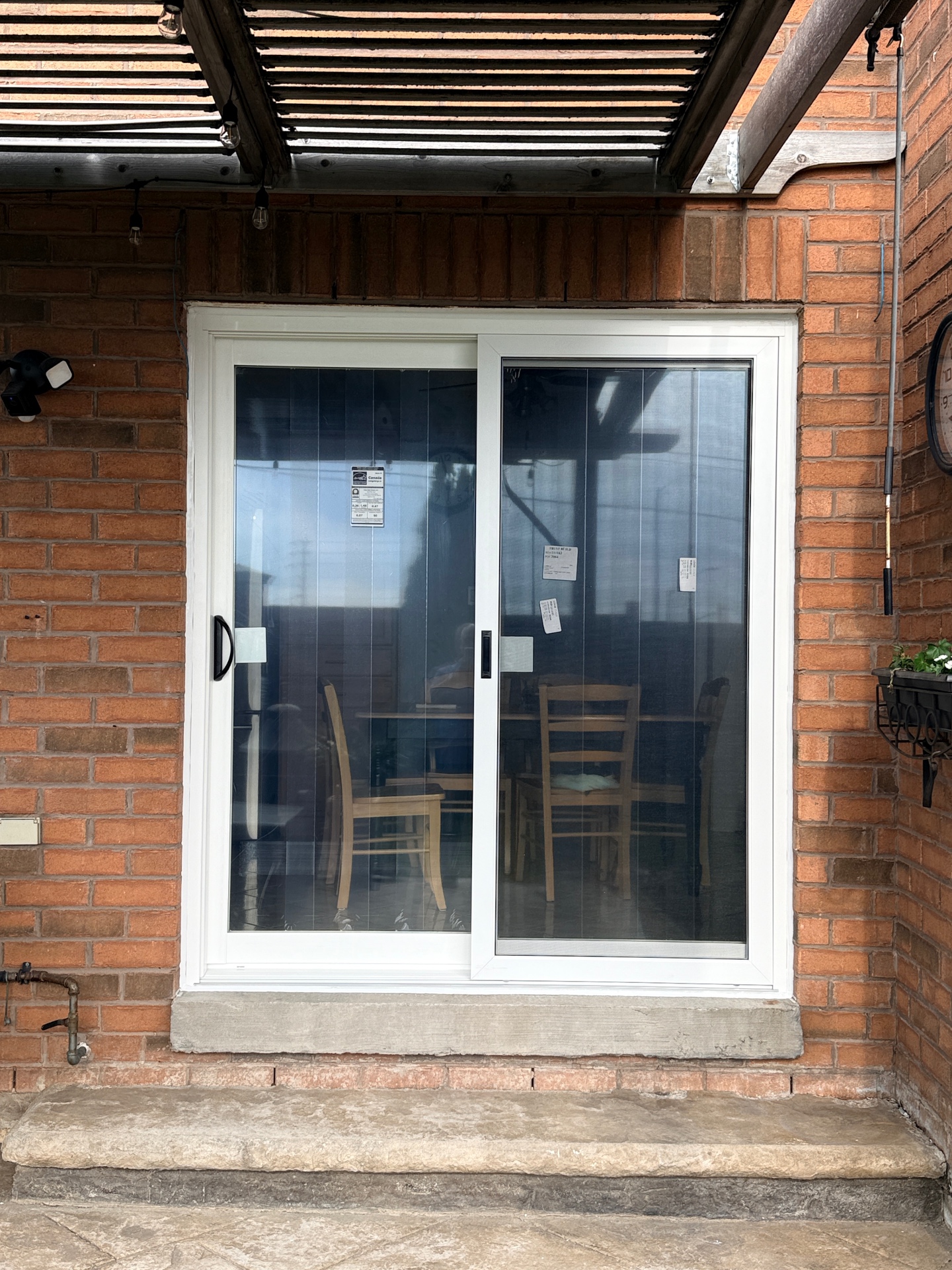
A homeowner on a ravine lot near the Glen Abbey golf course wrote in last month with a familiar complaint: their twenty-year-old sliding patio door was sticking in the track every October, the weatherstripping had gone flat, and by November there was a faint haze between the panes. Nothing dramatic. Just a door that had quietly stopped doing its job.
What made the conversation interesting wasn't the door itself — it was the backyard. Mature maples on three sides, a slope down toward the ravine, maybe three hours of direct sun on a good July afternoon. They'd been planning to redo the deck for two summers and kept circling back to the same question: another slider, or finally put in the French garden doors they actually wanted.
That question comes up a lot in this part of Oakville, and not only in Glen Abbey. River Oaks, the older pockets near Sixteen Mile Creek, anywhere a lot backs onto trees or a ravine — the shade changes more than curb appeal. A yard that stays cool and damp through the fall stresses a door differently than one baked by afternoon sun: track hardware stays wetter longer, leaves and pine needles collect in the sill, and a frame that never gets direct solar gain tends to run colder on the inside face — which is exactly the setup that produces condensation around the glass edges in January.
Why a swing door often outperforms a slider on a shaded lot
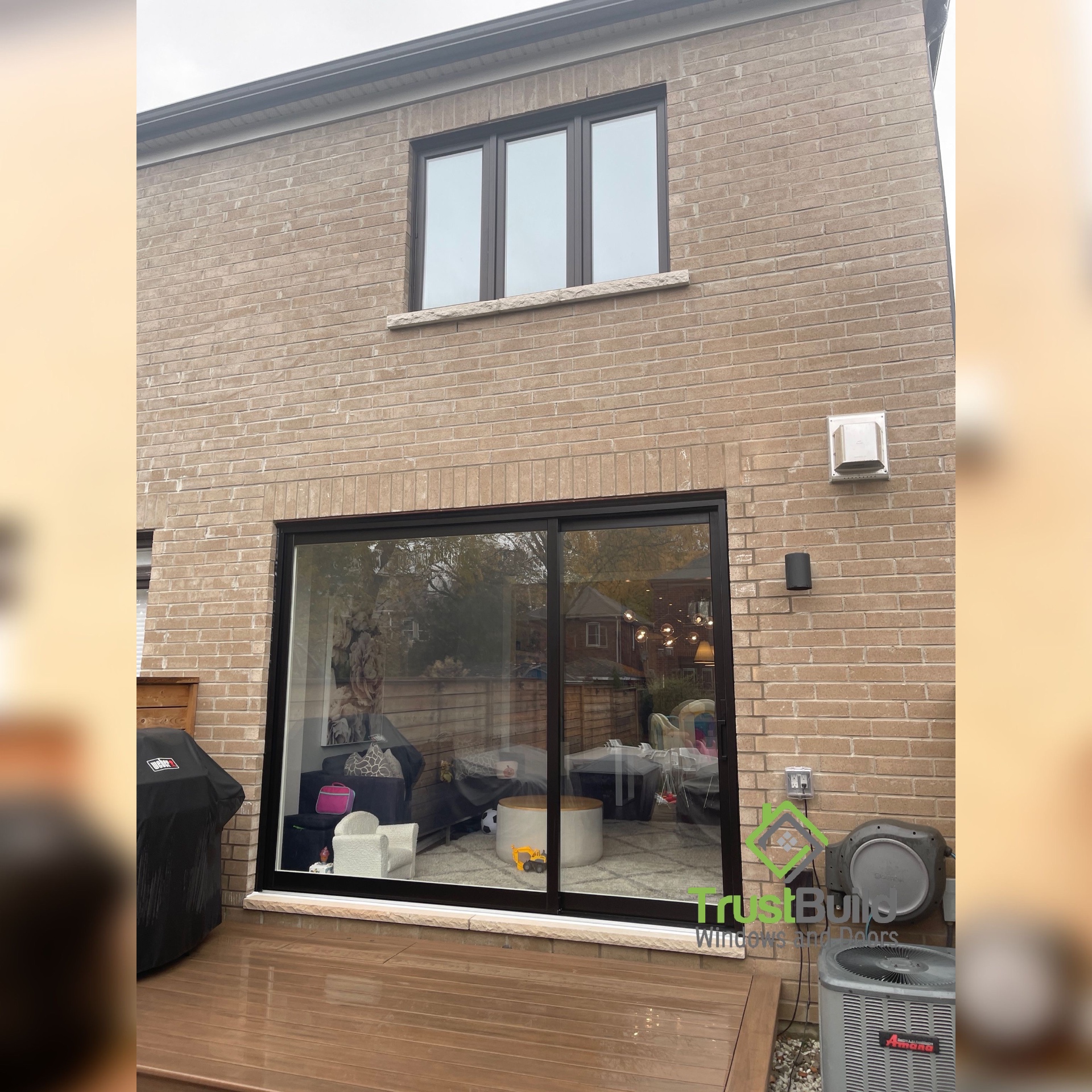
A sliding patio door seals against its track with a brush gasket that has to stay clean to work. On a sun-exposed patio, that's manageable upkeep. On a shaded lot where debris sits damp instead of drying out, the track fills faster and the seal degrades sooner — more or less what happened to the Glen Abbey homeowner.
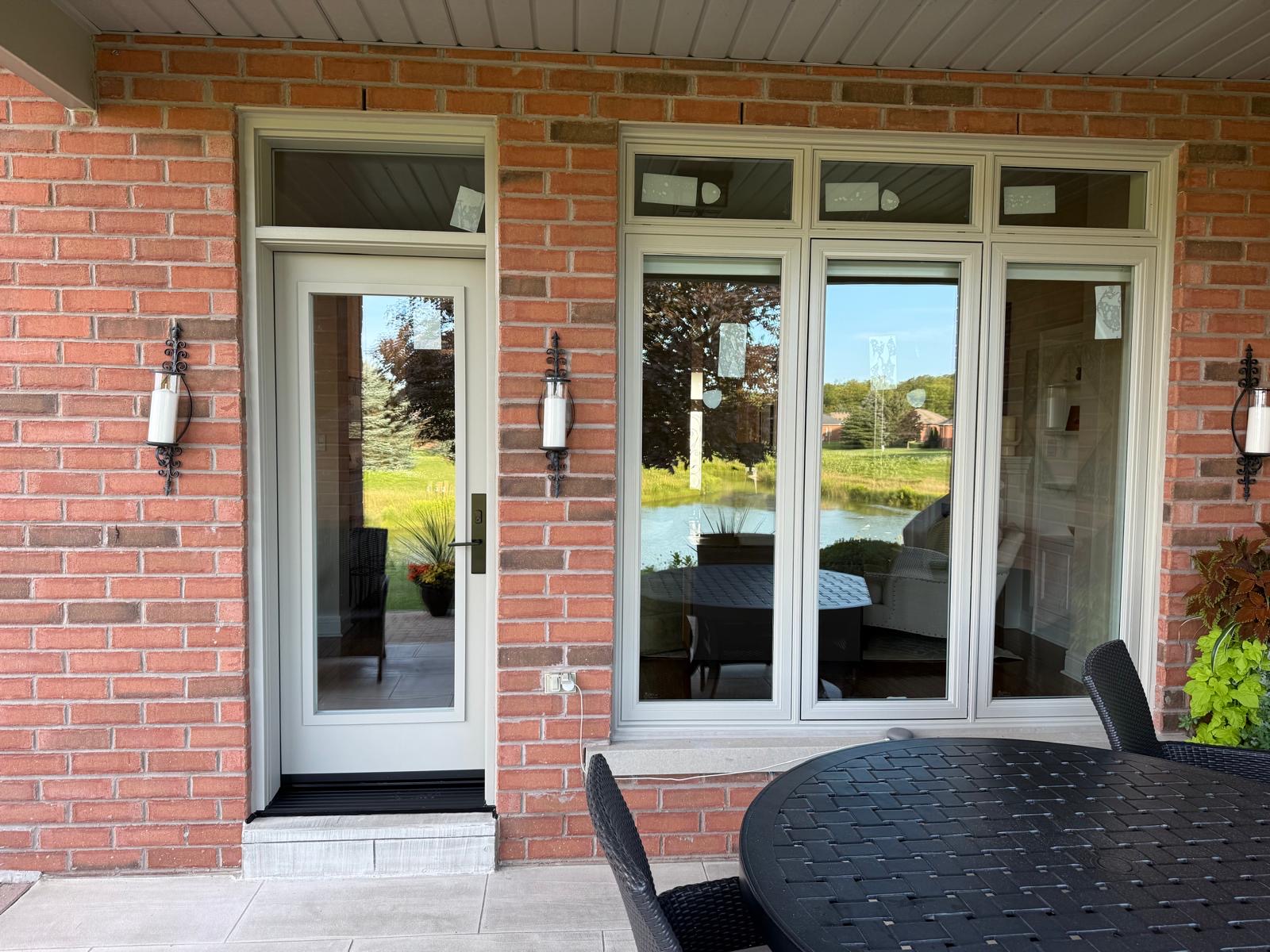
French garden doors seal differently. Each panel closes against compression weatherstripping on all four sides, the same principle as a swing entry door, so there's no track for moisture and debris to collect in. That's a real advantage on a treed lot, independent of style. It's also why garden door requests skew toward the older, heavily landscaped sections of Oakville rather than the newer, more open subdivisions — the practical case is stronger there, not just the aesthetic one.
Steel or fiberglass — the shade changes the answer
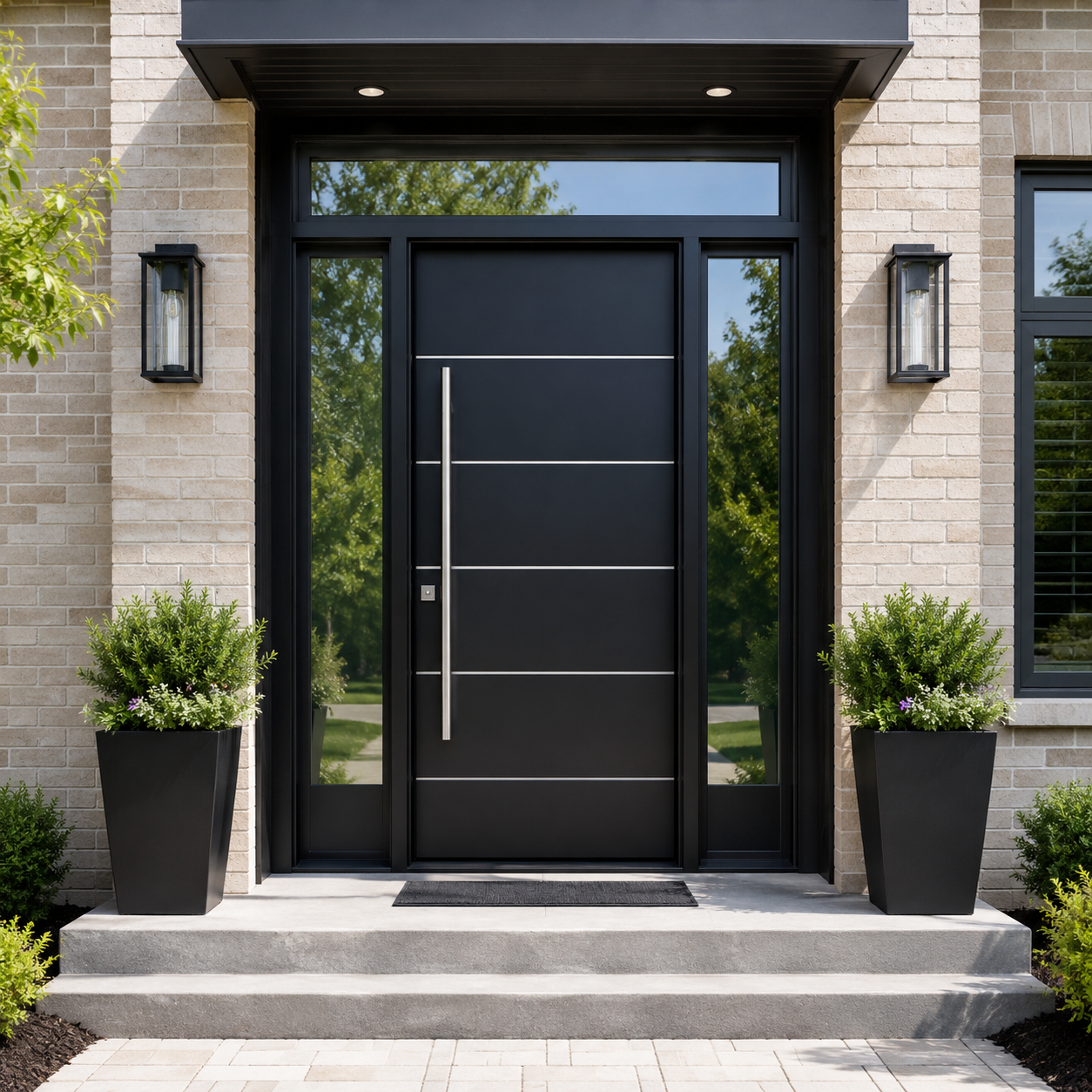
For a sun-drenched backyard, steel and fiberglass French garden doors perform fairly similarly day to day. For a shaded, damp lot, the gap widens.
Steel costs less up front and holds its shape well, but it conducts cold faster than fiberglass, and a frame that never warms in direct sun stays colder on the interior side through winter. Combined with Ontario's humidity swings, that's a recipe for condensation forming right at the frame edge — not a defect, just physics, but a recurring nuisance rather than a one-time fix.
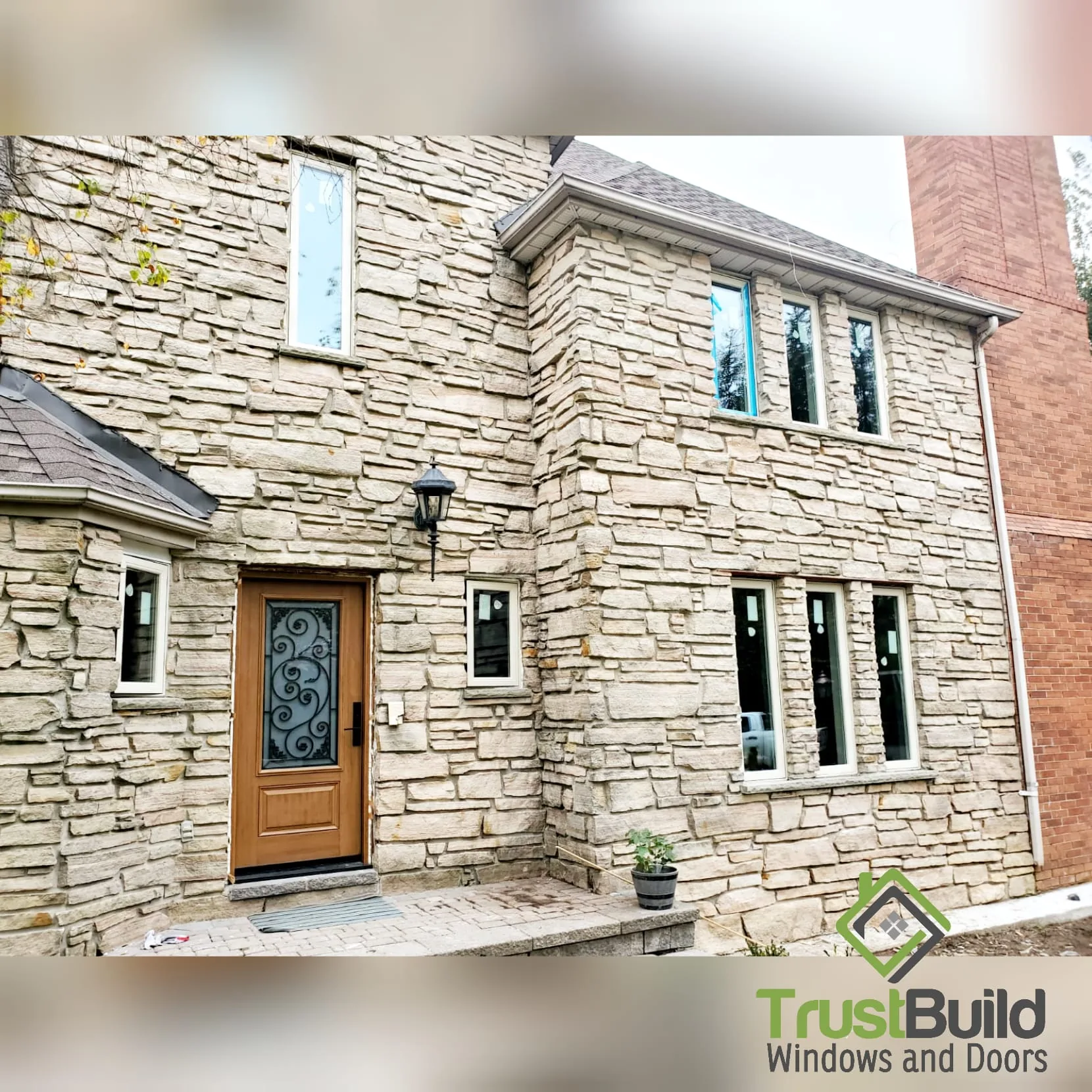
Fiberglass costs more but doesn't rust, doesn't dent the way steel can from a dropped planter, and holds paint and woodgrain finishes well in exactly the damp, shaded conditions a ravine lot produces. If I'm giving a straight opinion rather than hedging: for a backyard like this one, fiberglass is the better long-term bet almost every time. Steel still makes sense on a sunnier lot where budget is the deciding factor.
The glass matters as much as the frame. A shaded yard gets little passive solar gain through a garden door's window area, so the glazing carries more of the insulating load. Double-glazed units with a strong Low-E coating — Cardinal's Lowe²-272, for instance — perform well here, and triple-glazed is worth pricing if the doors face north or stay shaded most of the day, since there's no seasonal assist from the sun the way a south-facing opening gets.
What this costs, and how it's installed
Trust Build installs Energy Star-certified steel and fiberglass garden doors across Oakville, with certified installers handling the frame and weatherstripping detail that actually determines how a door performs on a shaded lot like this one, backed by a lifetime transferable warranty. Financing through Financeit is available at 0% for qualifying terms, useful on a garden door swap that often gets bundled with deck or patio work. We've worked on more than 8,700 homes across Ontario, in exactly the freeze-thaw, humidity-swing conditions Glen Abbey's tree cover produces.