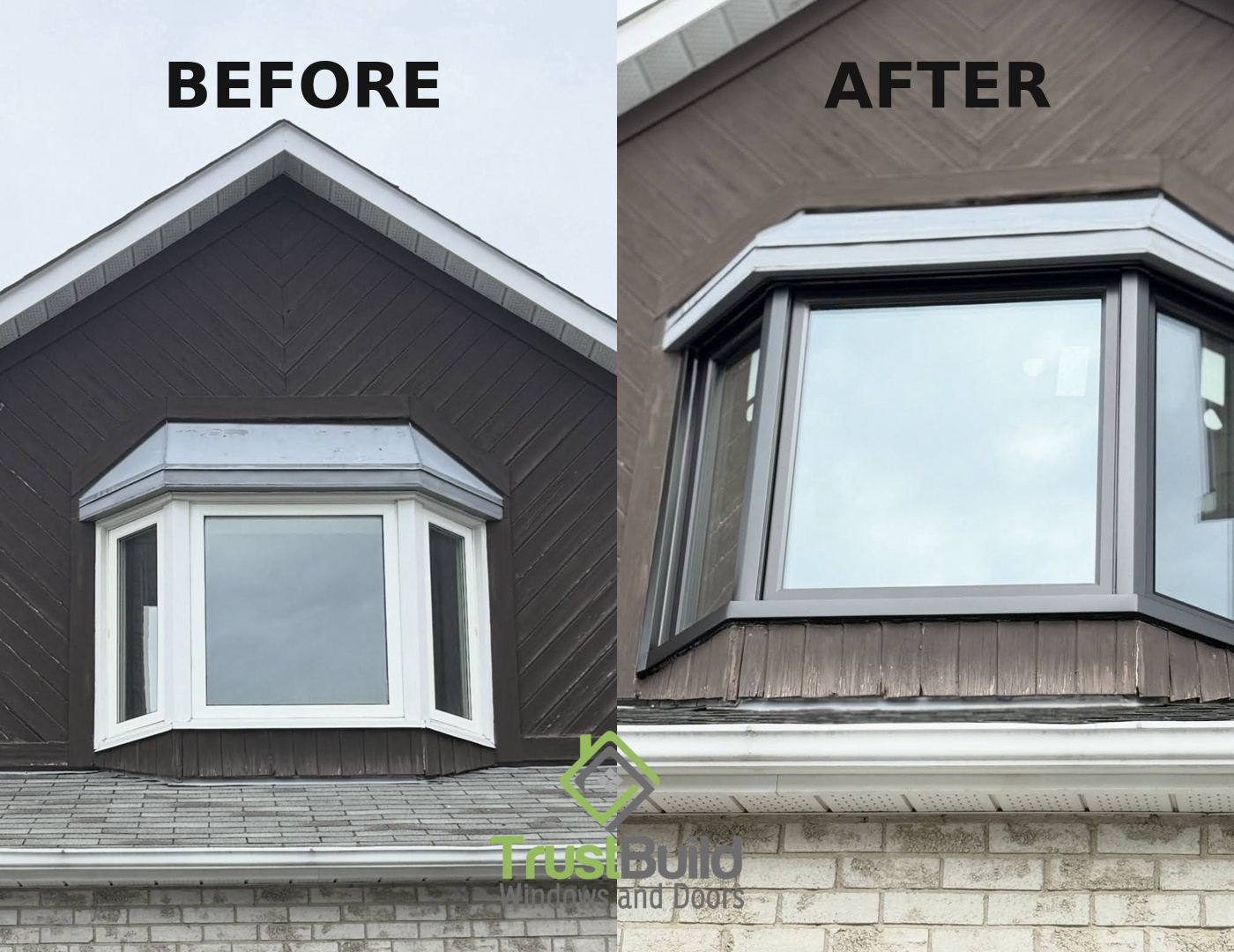
Look at the aluminum capping above the old bay in the before photo — scuffed, oxidized, its finish worn through in patches. Capping doesn't age like that on its own. It ages like that when the assembly beneath it has been moving, shedding water badly, and cycling through decades of freeze and thaw. On this Richmond Hill home, that tired white vinyl bay sat in the most punishing spot a window can occupy: projecting out of a gable, directly above the garage.
Why bays above garages fail first
Most windows sit in a wall with heated rooms behind and beside them. A bay mounted over a garage gets none of that help. The space below is unconditioned, so cold attacks the seat board from underneath. The unit projects into the wind instead of hiding flush in the wall, so every surface — head, seat, and three glass planes — loses heat simultaneously. And because these bays are often original to the house, the cavities around them were typically framed with minimal insulation, if any.
The homeowners felt exactly what that physics predicts: a room that ran colder than the rest of the upper floor, glass you could feel the chill radiating from in January, and a window that had visibly given up on the outside long before it stopped working on the inside.
Stud to stud — not sash for sash
There were two ways to approach this project. The quick route: slide a new insert into the existing frame and walk away by lunch. The right route for this window: open the assembly back to the studs and rebuild it. We took the second.
Here's the sequence the crew followed:
1. Full removal
The old bay came out completely — sashes, frame, seat and head — exposing the rough structure of the gable opening. This is the only way to actually see what forty-plus years of weather have done behind a window, rather than guessing at it.
2. Re-framing and insulating the projection
With the opening bare, the crew checked and corrected the framing, then insulated the cavities around the entire projection — including the seat area sitting over the unheated garage. This step is invisible in the after photo and it's the single biggest reason the room will feel different next winter. A retrofit insert can never touch these cavities. This is the stud-to-stud (full-frame) method in practice — read more about how it compares to a retrofit installation.
3. The new bay: triple-pane in black frames
The replacement is a vinyl bay window with a fixed centre lite for the view and operable flankers for airflow, glazed throughout with a triple-pane glass unit. Three panes create two insulating gas chambers, which keeps the interior glass surface dramatically warmer than the old unit ever managed — the difference between a window seat you avoid in February and one you actually use. The black exterior frames replace dated white against the dark gable siding, and the whole assembly is ENERGY STAR® certified for Ontario's climate.
4. New capping, properly tied in
Fresh aluminum capping was formed and installed at the head, lapped into the gable siding so water sheds past the assembly instead of finding a path behind it. That detail is what failed visibly on the old window — and what protects the new one for decades.
What this means for your energy bill
An over-garage bay is a heat-loss multiplier: more glass area, more exposed surfaces, less help from the house around it. Fixing the glass, the frame, and the surrounding insulation in one pass — rather than any single piece alone — is what turns the coldest window in the house into an ordinary one. In Richmond Hill's climate, where a bay like this faces months of sub-zero nights, that compounds into real comfort and real savings every year the family owns the home.
Rebate note: Window and door replacements like this one may qualify for up to $100 per rough opening under the Home Renovation Savings™ program when you bundle two or more eligible upgrades — ENERGY STAR® certified products are required, and the energy assessment must happen before work begins.
Have a bay that's given up?
If the bay window in your Richmond Hill home runs cold, sweats in winter, or wears capping that looks like the before photo, it's worth finding out what's happening behind the frame. Every Trust Build installation is completed by our own crews, with 0% financing available.
Get a free quote: request a quote online. Or reach us at hello@trustbuildwindows.com · 1-800-563-1273.