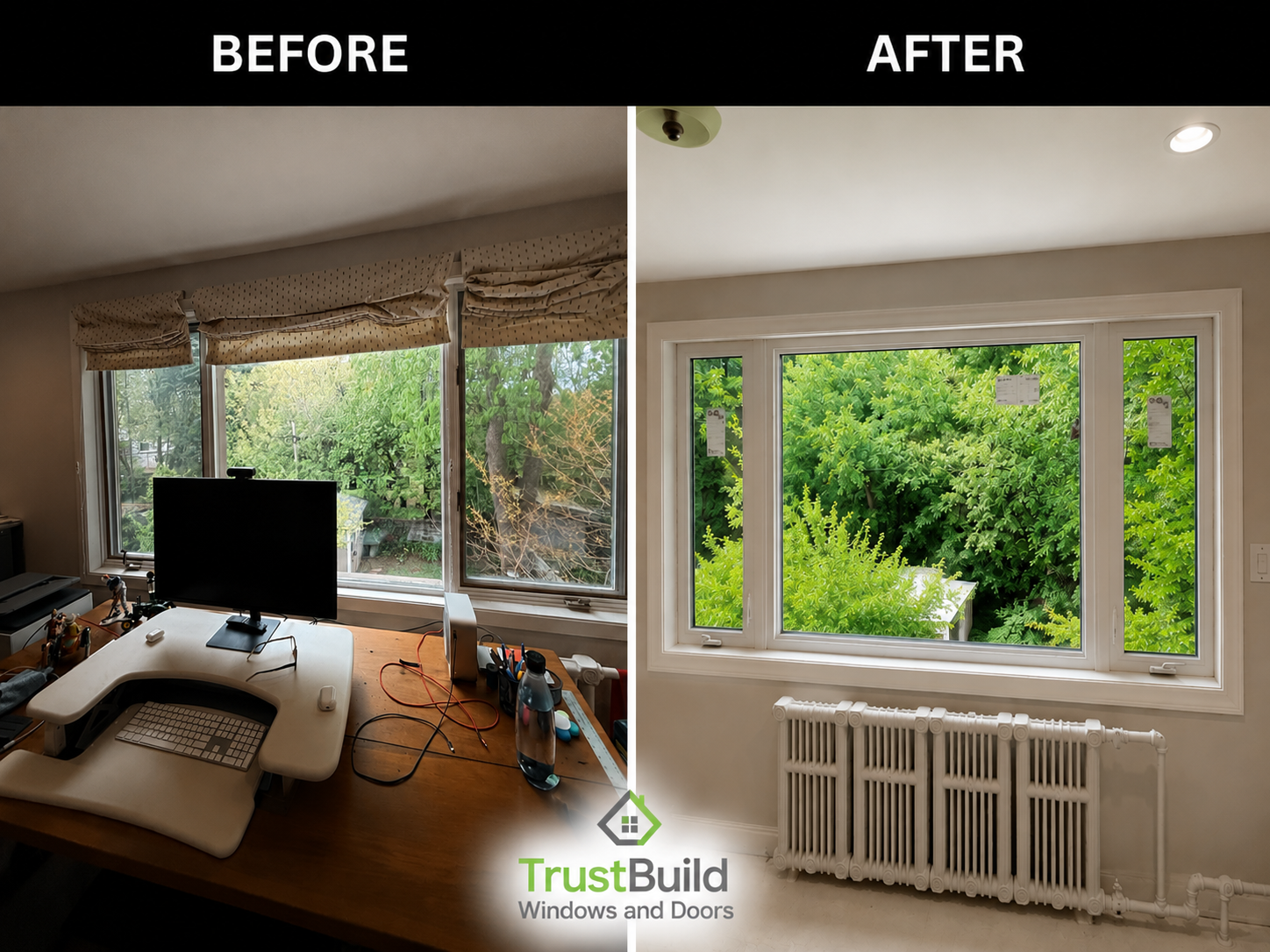
Fabric roman shades bunched above wide wood casement frames — that's the detail that stands out in the before photo of this home office window. The wood sashes on either side of the centre pane are noticeably thick, eating into the glass area and leaving a smaller actual view than the window opening suggests. It's a common trait of older wood windows: a lot of frame, not as much glass. This Toronto homeowner wanted the opposite for a room they work in every day.
The problem with wide old sashes
Older wood casement windows were often built with substantial sash frames around the operable sections, both for structural reasons and because wood simply needs more material than modern vinyl to hold its shape over time. The tradeoff is glass area: every inch of sash is an inch of view and daylight the room doesn't get. In a home office where someone spends a full workday facing that window, the difference between a wide-framed wood casement and a slim modern one isn't cosmetic — it's the difference between staring at painted wood or staring at the trees behind it.
Full removal, not a partial swap
This installation was completed fully stud to stud — the entire old window, including the original frame and trim, came out down to the structural wall studs. That's a meaningfully different scope than an insert replacement, where the old frame stays in place and a new window is fit inside it. Going to the studs let the crew inspect the wall cavity directly, insulate it properly, and set the new window without being constrained by the dimensions or condition of the old wood frame. New interior trim was installed afterward for a clean, finished edge around the opening.
Narrow casements, a wider view
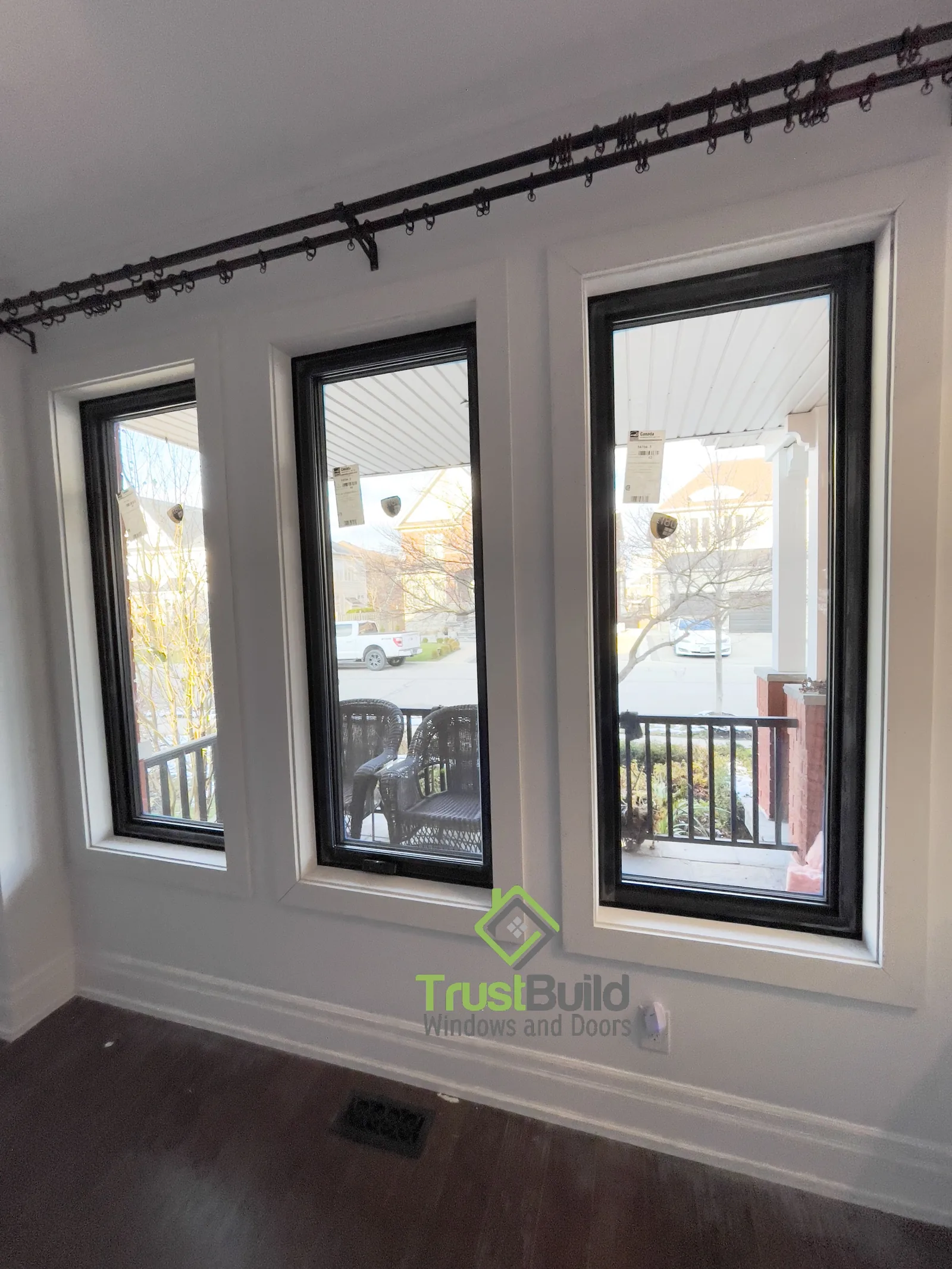
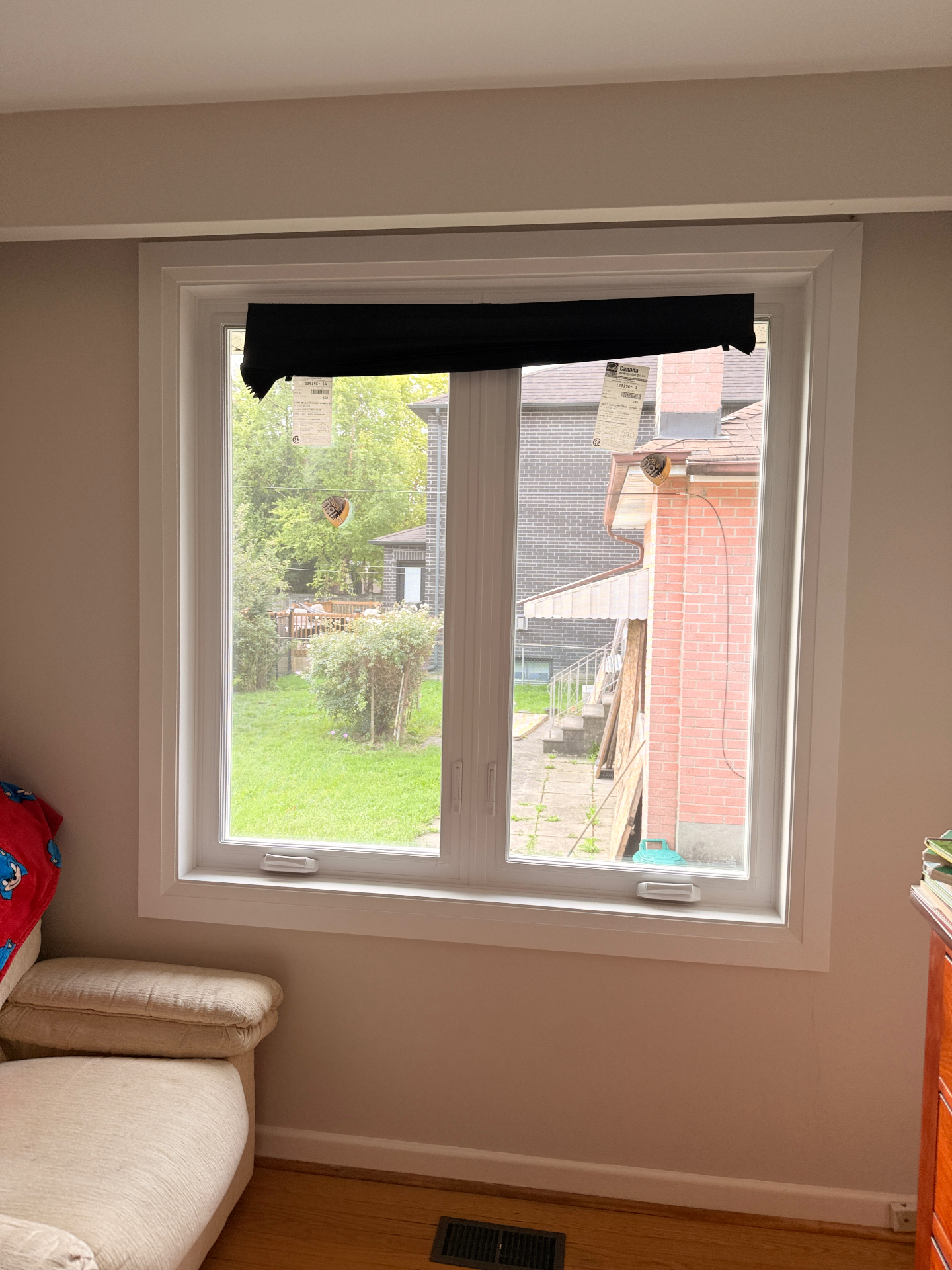
The replacement is a three-unit combination: reinforced casement windows on each side with a centre fixed pane, all in slim vinyl sightlines that free up noticeably more glass area than the old wood sashes ever allowed. The casements use a roto lock system, engaging multiple points around the sash perimeter to pull the window tight against the frame when closed — a meaningful upgrade over older single-point wood window hardware. In the after photo, the certification stickers are still on the glass, but even through that you can see how much more of the trees behind the house are now visible than in the before shot.
Why it matters for a room you work in daily
A home office window does more work than most windows in a house — it's the backdrop for video calls, the source of daylight for hours at a stretch, and often the only real connection to outside during a workday. A stud-to-stud replacement with properly insulated cavities and a tight-sealing roto lock casement addresses both the comfort side, less draft and temperature swing near the desk through Toronto's winters, and the daylight side, since narrower sashes let in more usable light across the same size opening.
Rebate note: Window replacements like this one may qualify for up to $100 per rough opening under the Home Renovation Savings™ program when you bundle two or more eligible upgrades — ENERGY STAR® certified products are required, and the energy assessment must happen before work begins.
Working with an outdated window?
If a room you spend real time in still has a dated wood window with oversized sashes eating into your view, a full stud-to-stud replacement can change both how the room feels and how it looks from the inside. Every Trust Build installation is completed by our own crews, with 0% financing available.
Get a free quote: request a quote online. Or reach us at hello@trustbuildwindows.com · 1-800-563-1273.