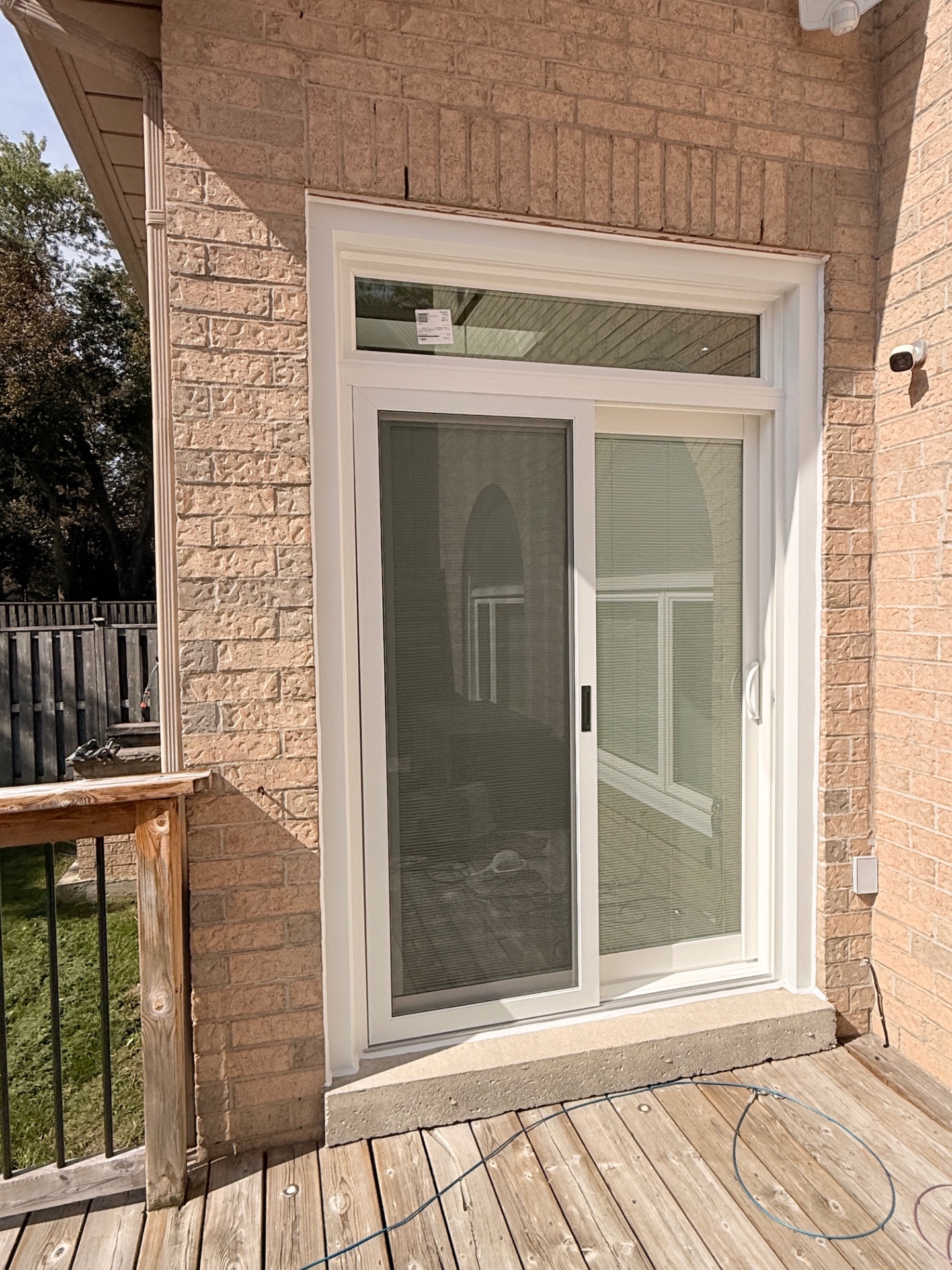
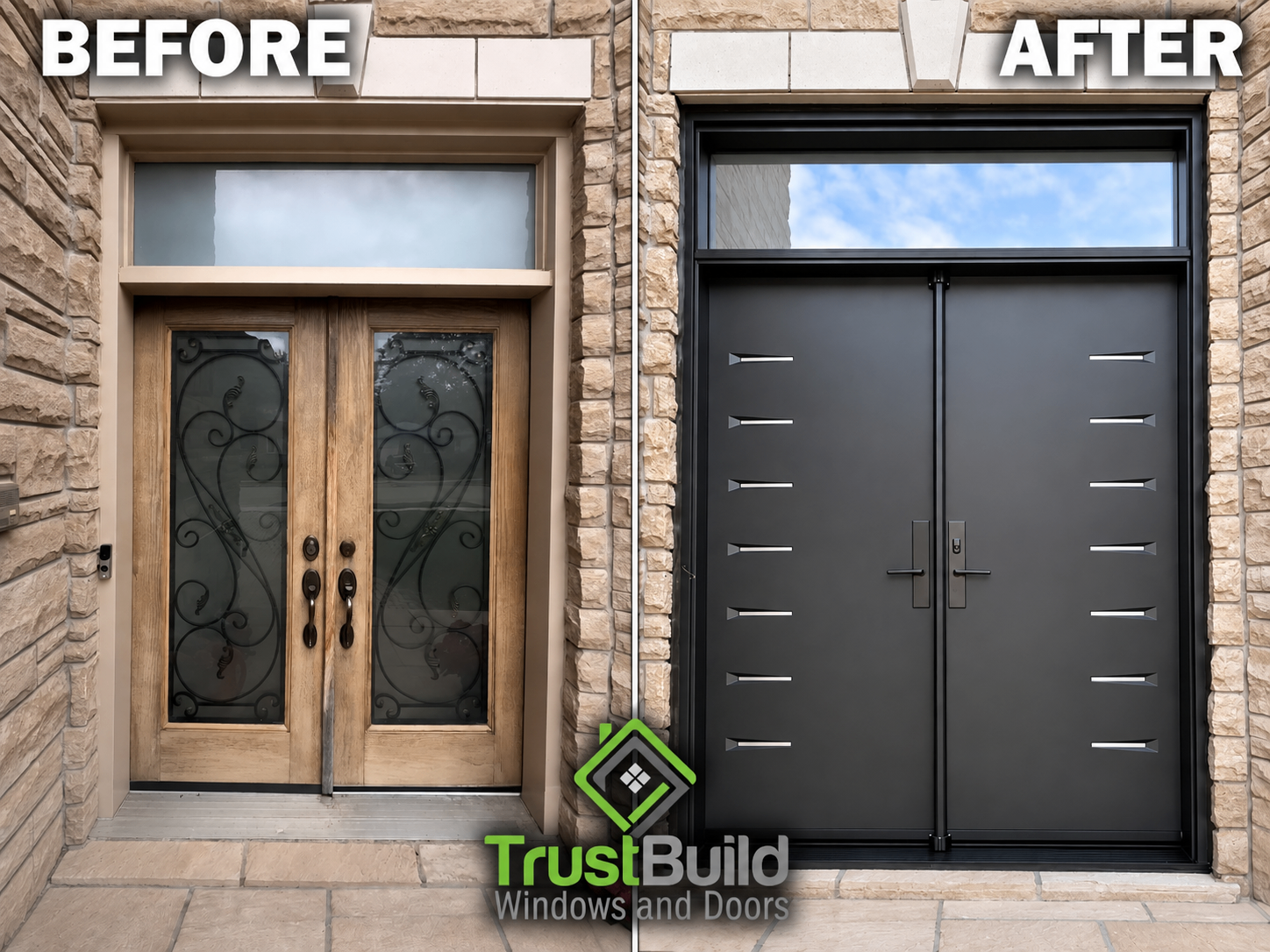
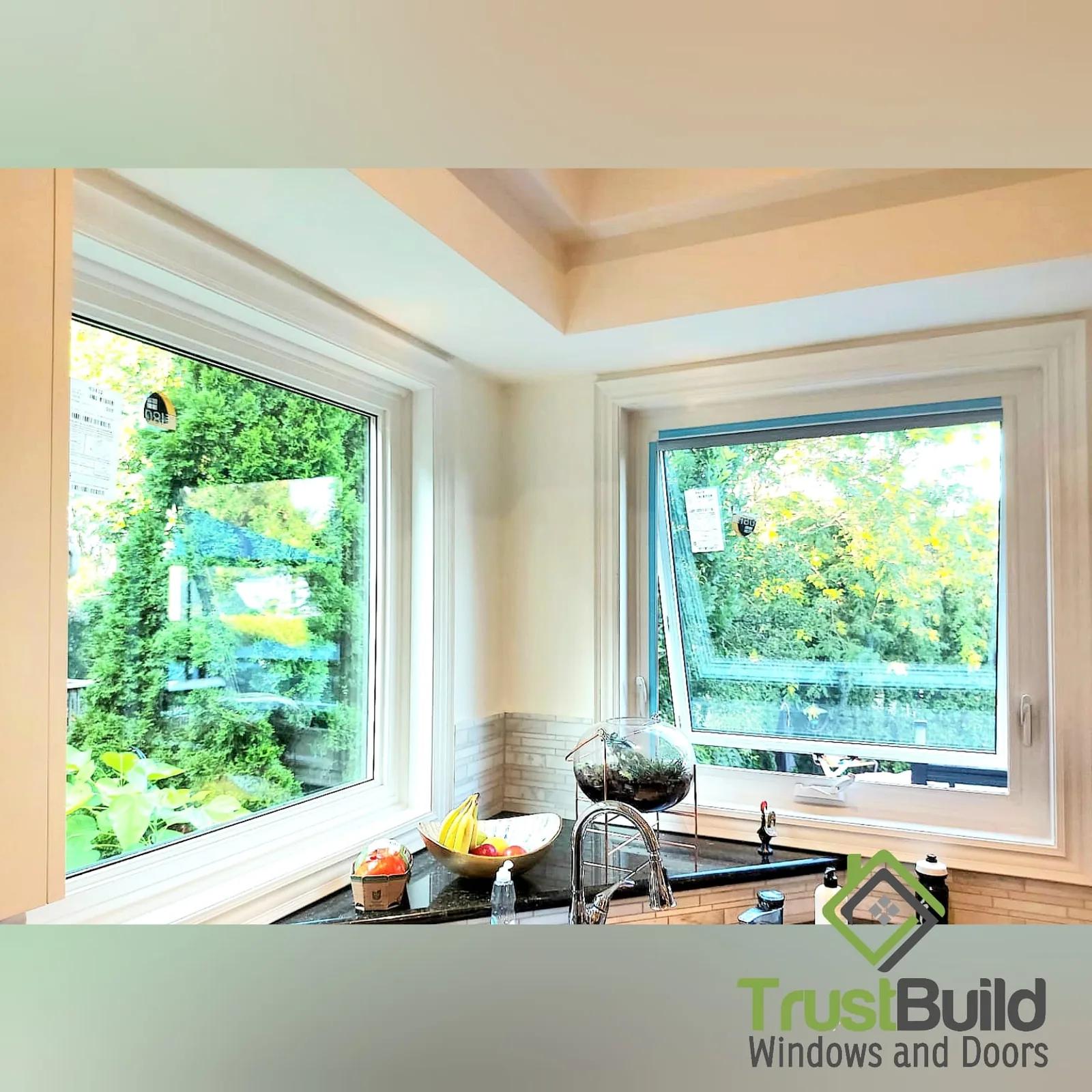
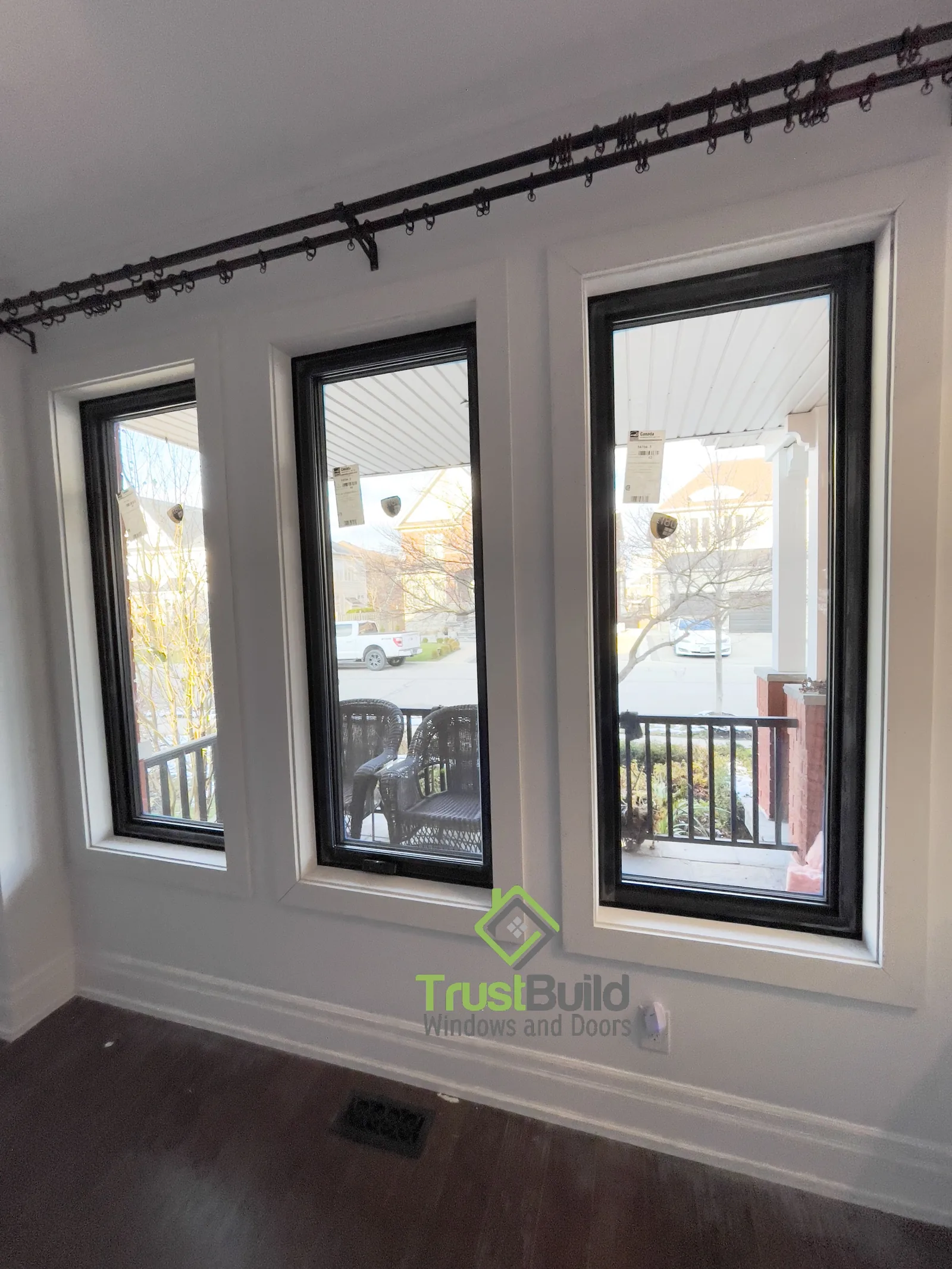
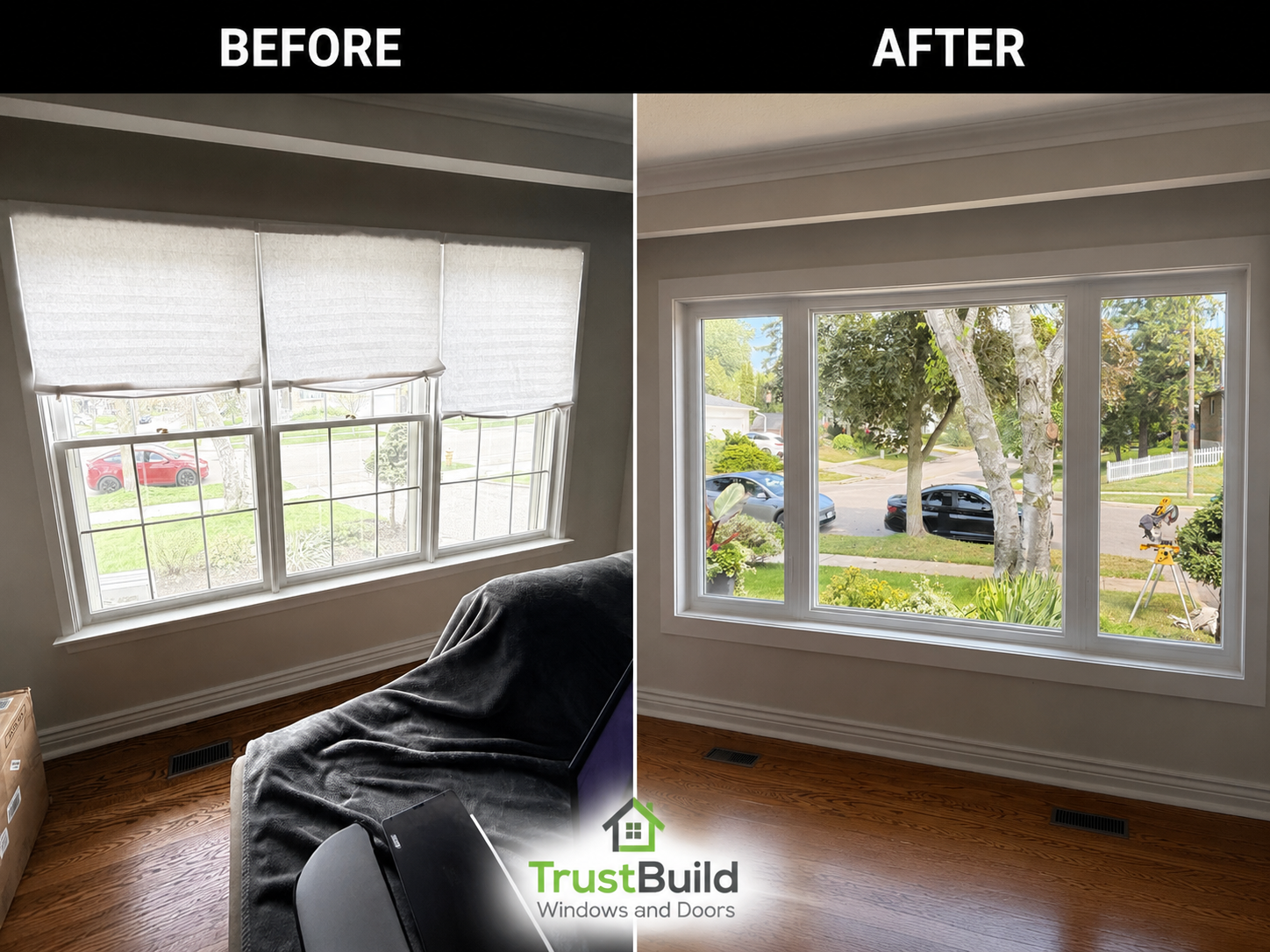
Three roman shades, drawn evenly across three identical windows — that's the giveaway in the before photo. The original window was built in equal thirds: three single-hung units of the same width, each doing the same modest job. In the after photo, the proportions have changed entirely. One wide fixed pane now commands the centre of the view, flanked by two narrower casements. Same opening, same wall, completely different relationship between the room and what's outside it.
Why equal thirds rarely serve the view well
Splitting a window opening into three identical panels is a builder default, not a design decision. It's simple to manufacture and install, but it treats the centre of the view exactly the same as the edges, when in most rooms the centre is what actually matters. A single-hung window also brings its own limitations regardless of how it's proportioned: the sash slides vertically in a track, which wears over time and never seals as tightly as a window that closes by compression.
Reproportioning the opening: half view, quarter ventilation, quarter ventilation
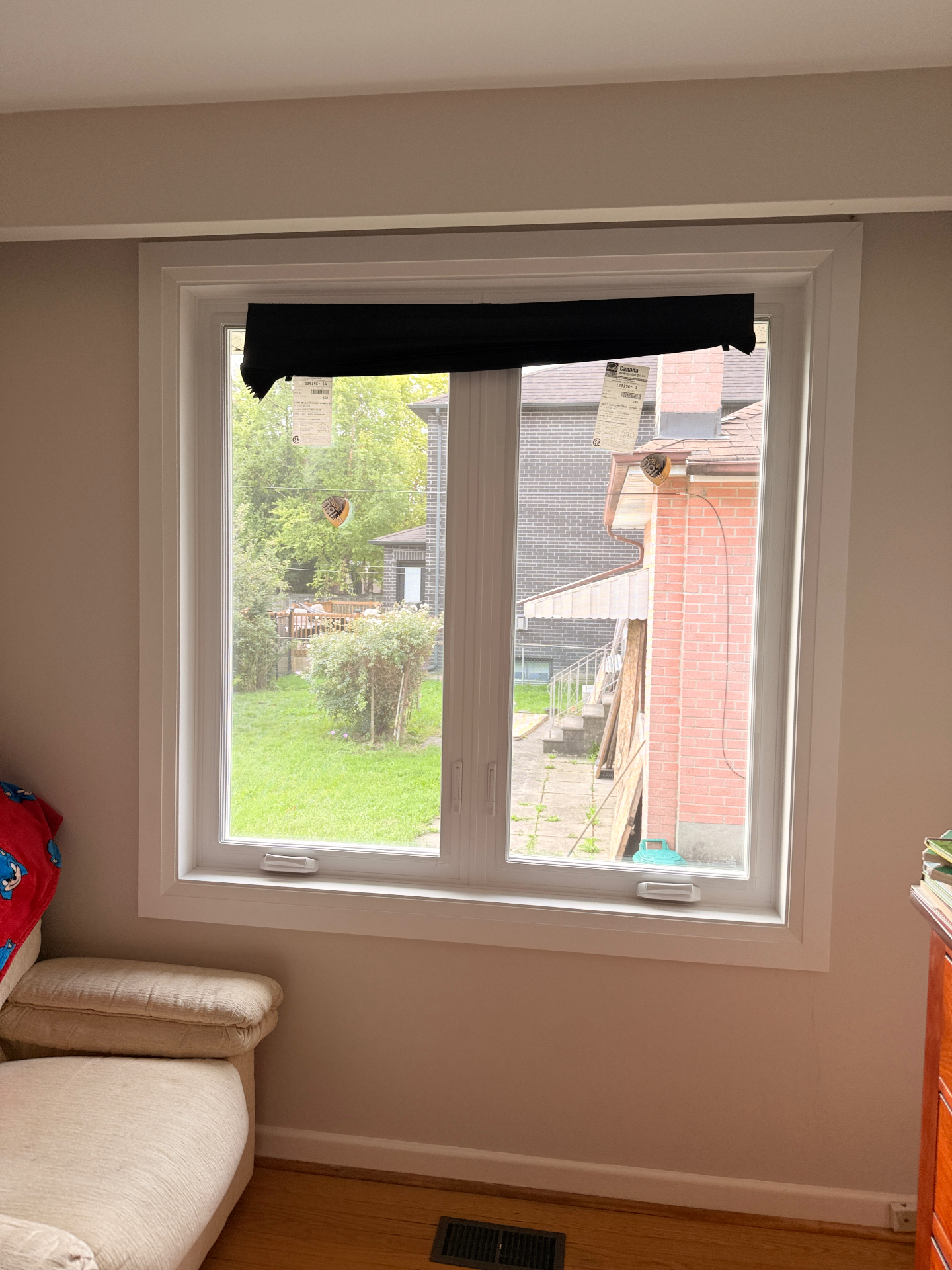
The new window keeps the same three-part structure but changes the math. The centre section, now roughly half the total width, is a fixed pane dedicated entirely to the view, uninterrupted by any sash lines or hardware. Each side section, at roughly a quarter of the width, is a casement window with roto crank hardware, engaging the sash tightly against the frame for consistent sealing. The result gives the room a genuine picture-window view at the centre while keeping full ventilation control at both sides, rather than splitting the opening into three windows that each compromise on both.
The part that actually worried the homeowner: the trim
Window replacement projects create anxiety around one detail more than any other: what happens to the plaster and trim around the opening once the old window comes out. In this Scarborough home, the original casing was removed with enough care that the surrounding plaster wall came through the process undamaged. That's not automatic. Older plaster is more brittle than modern drywall and doesn't tolerate careless demolition around a window opening. Once the new window was set, the opening was finished in modern flat casing — a clean-lined trim profile that reads as a deliberate upgrade rather than a patch job.
Why this matters beyond the window itself
A window replacement that damages the surrounding plaster or leaves mismatched trim creates a second, unplanned project: patching and repainting walls that were never supposed to need attention. Doing the removal cleanly and finishing with new casing that suits the room means the window upgrade is the only project, not the first of two. For an older Scarborough home with original plaster walls, that distinction matters more than it does in a newer build with drywall throughout.
Rebate note: Window replacements like this one may qualify for up to $100 per rough opening under the Home Renovation Savings™ program when you bundle two or more eligible upgrades — ENERGY STAR® certified products are required, and the energy assessment must happen before work begins.
Considering a window upgrade in an older home?
If your home has original plaster walls, the trim work around a window replacement matters as much as the window itself. A careful removal and a finish that suits the room can mean the difference between one clean project and two. Every Trust Build installation is completed by our own crews, with 0% financing available.
Get a free quote: request a quote online. Or reach us at hello@trustbuildwindows.com · 1-800-563-1273.